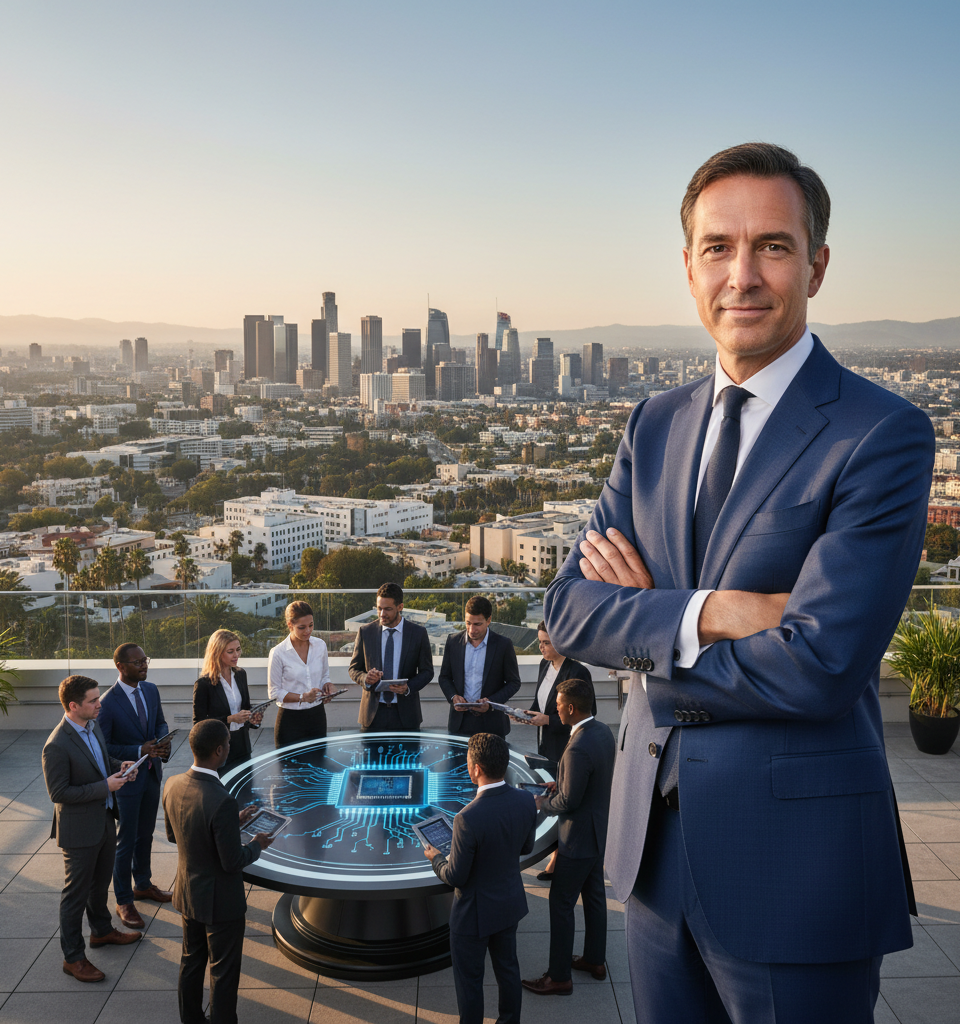
Beverly Hills, CA – Christophe Fouquet, who assumed the role of CEO at ASML Holding N.V. in 2024 after more than a decade within the company, offered a candid assessment of the global semiconductor equipment landscape during an interview on Tuesday morning. Speaking from a rooftop deck at his Beverly Hills hotel, prior to his appearance at the prestigious Milken Institute Global Conference, Fouquet projected an air of calm confidence. Dressed impeccably in a blue suit and white shirt, his composure remained unruffled, even as the discussion turned to potential rivals and ASML's dominant industry position.
Contextualizing ASML's Dominance
ASML's unprecedented market share in advanced lithography tools, particularly extreme ultraviolet (EUV) systems, is a critical bottleneck for the production of the most advanced semiconductor chips. These machines, which can cost upwards of $200 million per unit and weigh more than two Boeing 747 jumbo jets, are essential for manufacturing the cutting-edge processors found in everything from smartphones and AI data centers to advanced military systems. The company's unique technological expertise, accrued over decades of intensive research and development, has effectively created a formidable moat around its business, underpinning its near-monopoly status in this highly strategic sector.
Key Details and Executive Perspective
Fouquet's remarks, characterized by a relaxed demeanor, highlight ASML's internal belief in its technological lead. While specific quotes from the interview were not immediately released, his reported confidence directly addresses the persistent industry and geopolitical scrutiny surrounding ASML's pivotal role. The company's technology is so advanced that it has become entangled in international trade disputes and export controls, most notably between the United States and China. Despite these pressures, Fouquet's stance suggests a deep-seated assurance in ASML's innovation pipeline and its ability to outpace any credible challengers for the foreseeable future. ASML reported €27.6 billion in net sales for 2023, showcasing its financial strength and market penetration.
Industry and Market Impact
ASML's near-monopoly has profound implications across the semiconductor industry. Chipmakers like TSMC, Samsung, and Intel are heavily reliant on ASML's EUV machines to fabricate their most advanced nodes, which are 5nm, 3nm, and potentially future 2nm processes. This dependency grants ASML significant leverage but also places immense pressure on the company to continuously innovate and scale production. The lack of viable alternatives means any disruptions to ASML's operations or supply chain could have cascading effects throughout the global technology ecosystem, impacting everything from consumer electronics availability to national security infrastructure. The global semiconductor market, valued at over $500 billion annually, hinges significantly on ASML's output.
Expert and Analyst Perspectives
Industry analysts largely corroborate Fouquet's assertions regarding ASML's competitive insulation. Institutions like Gartner and IDC consistently highlight ASML's unassailable lead in EUV lithography, with no competitor currently possessing a comparable technology offering. Developing an equivalent EUV system would require decades of research, tens of billions of dollars in investment, and a deeply specialized engineering talent pool that is exceptionally rare. Analysts at Bernstein Research, for instance, often point to the complexity and cost barriers as insurmountable for any new entrant. While companies like Nikon and Canon compete in older, less advanced lithography segments, they are many generations behind ASML in EUV.
Future Implications and Developments
Looking ahead, ASML is not resting on its laurels. The company is actively developing High-NA (Numerical Aperture) EUV systems, which promise even greater precision and smaller feature sizes for chips. These next-generation machines are expected to be commercially available later this decade and will further solidify ASML's technological lead. The ongoing geopolitical climate, however, continues to shape ASML's operational narrative, particularly concerning export restrictions to certain markets. Despite these challenges, Fouquet's vision underscores a strategic focus on relentless innovation and maintaining the technological gap that has defined ASML's success, ensuring that its unparalleled position remains secure for years to come.