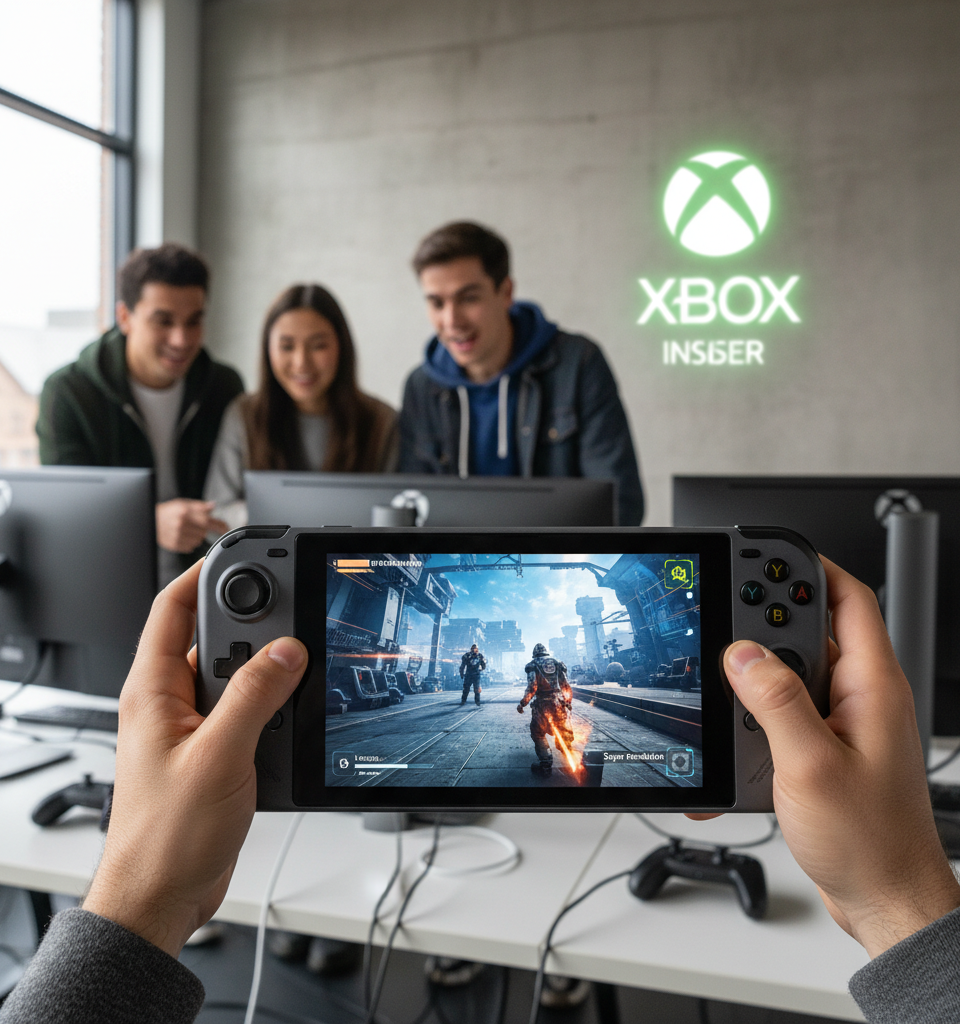
ASUS has unveiled a substantial set of enhancements for its ROG Ally X handheld gaming device, prominently featuring the integration of Automatic Super Resolution, a key development poised to redefine portable gaming performance. These updates, developed in collaboration with Microsoft, are currently accessible to Xbox Insiders, allowing a select group of users to test the new capabilities before a broader rollout. The move underscores a strategic effort to bolster the Ally X's competitive edge in the rapidly expanding handheld PC market, addressing both graphical fidelity and power efficiency concerns.
This initiative arrives at a crucial juncture for handheld gaming, with devices like Valve's Steam Deck and Lenovo's Legion Go vying for market dominance. The introduction of Automatic Super Resolution is not merely an incremental update; it represents a significant technological leap, enabling the device to intelligently upscale game resolutions to deliver sharper images without the traditional performance overhead. This technology dynamically adjusts rendering resolutions, allowing for higher frame rates and more detailed visuals on the Ally X's native display, a critical factor for an optimal mobile gaming experience.
The core of the new update lies in its intelligent application of super resolution. Microsoft's integration allows games to automatically trigger upscaling when performance demands it, ensuring a balance between visual quality and smooth gameplay. This seamless, user-agnostic implementation differentiates it from manual settings often found in individual game menus. While specific performance metrics are still under evaluation by Insiders, early indications suggest a noticeable improvement in graphically intensive titles. Additionally, the update encompasses broader system optimizations, potentially including improved battery management for the Ally X's larger 80Wh battery and fine-tuned control schemes, though the Automatic Super Resolution remains the headline feature.
The impact on the broader gaming hardware market could be substantial. By embedding automatic upscaling at the operating system level, Microsoft and ASUS are setting a precedent for future handheld devices. This could pressure competitors to integrate similar system-wide performance enhancers or risk falling behind in the race for superior portable gaming. The convenience of automatic optimization, eliminating the need for users to tweak individual game settings, presents a compelling user experience advantage, potentially widening the appeal of high-performance handhelds to a more casual gaming audience. Analyst firm IDC projects the handheld gaming PC market to grow by over 20% year-over-year in 2024, reaching an estimated $1.5 billion, making these technical advancements critically important for market share.
Industry analysts have largely praised the strategic foresight behind this update. "This isn't just about a one-off performance boost; it's about future-proofing the handheld experience," noted Dr. Emily Chen, a senior tech analyst at GlobalData. "By leveraging software-driven enhancements, ASUS and Microsoft are extending the longevity and performance ceiling of their hardware, offering a more compelling value proposition to consumers. The 'automatic' aspect is key here, simplifying the often-complex world of PC graphics settings for the average gamer." Others point to Microsoft's broader strategy of integrating Xbox services and features across various hardware platforms.
Looking ahead, the successful integration and reception of Automatic Super Resolution could pave the way for similar AI-driven performance optimizations across Microsoft's ecosystem, including future Windows updates for desktop PCs. ASUS is likely to closely monitor feedback from the Xbox Insider program, with a general public rollout anticipated in the coming months. Further iterations of this technology could include more advanced AI learning to adapt to individual game engines or even user playstyles, incrementally pushing the boundaries of what portable devices can achieve. This collaborative effort could significantly influence the design philosophies of future generations of handheld gaming hardware.