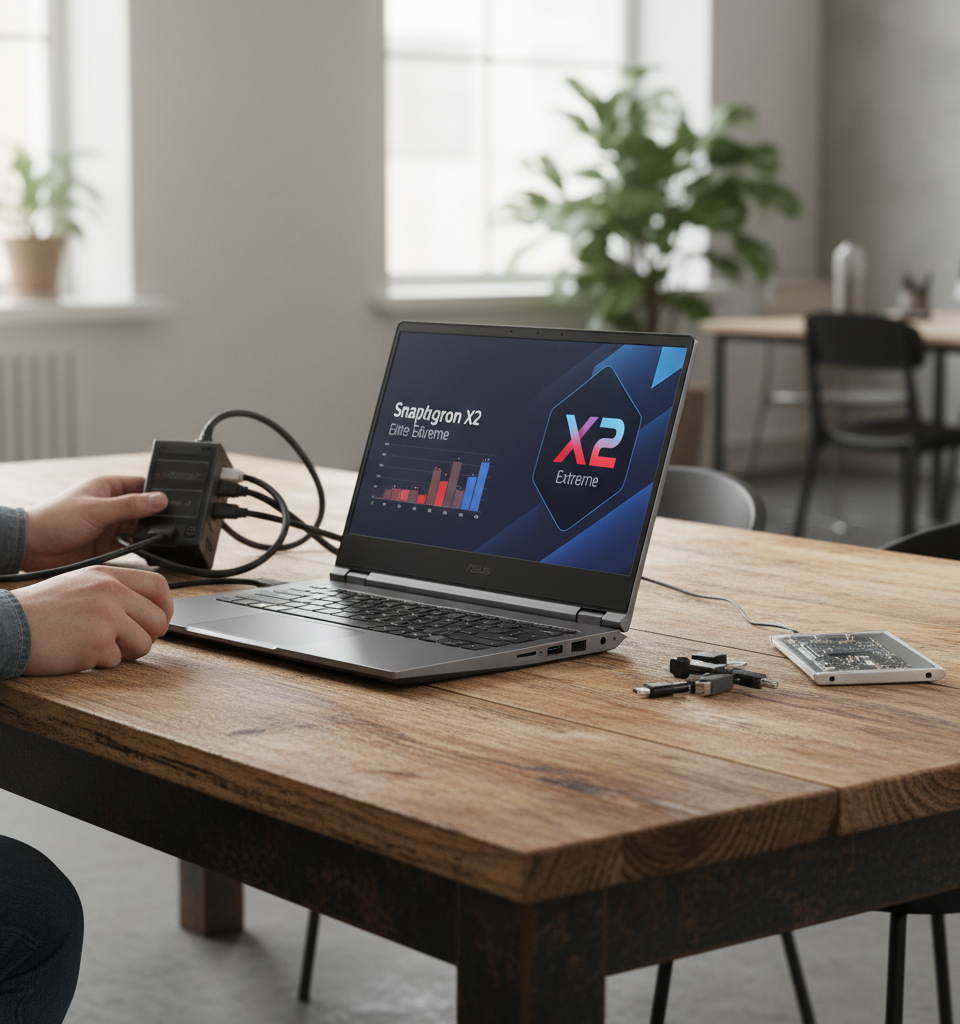
Asus has launched its much-anticipated Zenbook A16 (2026), a high-performance laptop priced at $2,000, featuring Qualcomm's cutting-edge Snapdragon X2 Elite Extreme processor. While the device delivers breathtaking performance, initial reviews spotlight a dichotomy where computational prowess is lauded, but other critical aspects, particularly design and material quality, fall short of expectations for a product in this premium category. This strategic shift towards an Arm-based powerhouse underscores a significant evolution in the personal computing landscape.
The Strategic Shift to Arm in Premium Laptops
This release from Asus is not just another laptop; it represents a crucial moment in the ongoing narrative of Arm-based processors challenging the long-dominant x86 architecture in the high-end computing space. For years, Arm's efficiency has been recognized in mobile devices, but its transition to powerful, full-fledged laptops has been gradual due to software compatibility and raw performance gaps. Qualcomm's Snapdragon X2 Elite Extreme aims to bridge this gap, promising desktop-class performance with superior power efficiency. Asus, by anchoring its flagship Zenbook A16 around this chip, is making a bold statement about the future direction of premium portable computing and its commitment to innovating beyond traditional paradigms. The $2,000 price point firmly places it alongside established contenders from Apple and Intel-based Windows OEMs.
Performance Triumphs and Design Tribulations
The core of the Zenbook A16's appeal undoubtedly lies in its Snapdragon X2 Elite Extreme processor. Benchmarks reveal exceptional multi-core performance and impressive power efficiency, allowing for extended battery life under heavy loads—a testament to Qualcomm's engineering. This makes it a compelling option for professionals demanding significant computational horsepower in areas like AI acceleration, video editing, and complex data analysis on the go.
However, this technical marvel is reportedly housed within a chassis described by reviewers as "beige" and aesthetically uninspiring. Concerns have been raised about the build quality, keyboard ergonomics, and display fidelity, which reviewers suggest do not align with the premium price point or the high-performance internals.
Implications for the PC Market and Rivalry with Apple Silicon
The introduction of the Zenbook A16 with the Snapdragon X2 Elite Extreme intensifies the competition in the premium laptop segment, particularly against Apple's highly successful M-series chips. While Apple has demonstrated the viability of high-performance Arm processors with integrated hardware-software ecosystems, Windows on Arm has historically struggled with software compatibility and driver support. The performance of the X2 Elite Extreme suggests that Qualcomm is now a formidable rival in raw processing power. The challenge for Asus and Microsoft will be to ensure seamless application compatibility and optimization, preventing the "brawn without brains" pitfall that plagued earlier Windows on Arm devices. A successful integration could potentially catalyze a broader shift in the Windows ecosystem, encouraging more developers to target Arm native applications.
Expert Perspectives on Future Viability
Industry analysts are closely watching the Zenbook A16's reception, viewing it as a bellwether for Windows on Arm's commercial viability in the high-end. "Qualcomm has delivered a truly impressive piece of silicon with the X2 Elite Extreme," states Dr. Anya Sharma, a principal analyst at Tech Insights Group. "The crucial test now is whether OEMs like Asus can wrap that power in a product that justifies its premium price through an all-encompassing user experience, not just raw speed. If the design and secondary features don't match the processor's innovation, initial sales may be limited to early adopters and niche professional users." Other experts highlight the ongoing importance of developer support, emphasizing that even the fastest chip needs a robust software ecosystem to unlock its full potential.
The Road Ahead for Asus and Windows on Arm
Looking forward, the success of the Zenbook A16 will depend not only on its raw performance but also on Asus's willingness to rapidly refine its design and quality assurance for subsequent iterations. Feedback from initial reviews—particularly concerning the device's aesthetics and perceived material quality—will be critical. Furthermore, Microsoft's continued efforts to improve Windows on Arm's application emulation layer and encourage native Arm development will play a pivotal role.
The burgeoning AI PC market, where Arm's efficiency in NPU-accelerated tasks could offer a significant advantage, presents a strong long-term opportunity. However, for the Zenbook A16 (2026), the immediate future will likely see a focused effort from Asus to address the reported design shortcomings while doubling down on the impressive performance delivered by its new Snapdragon heart, aiming to convert early performance advantages into broader market appeal.