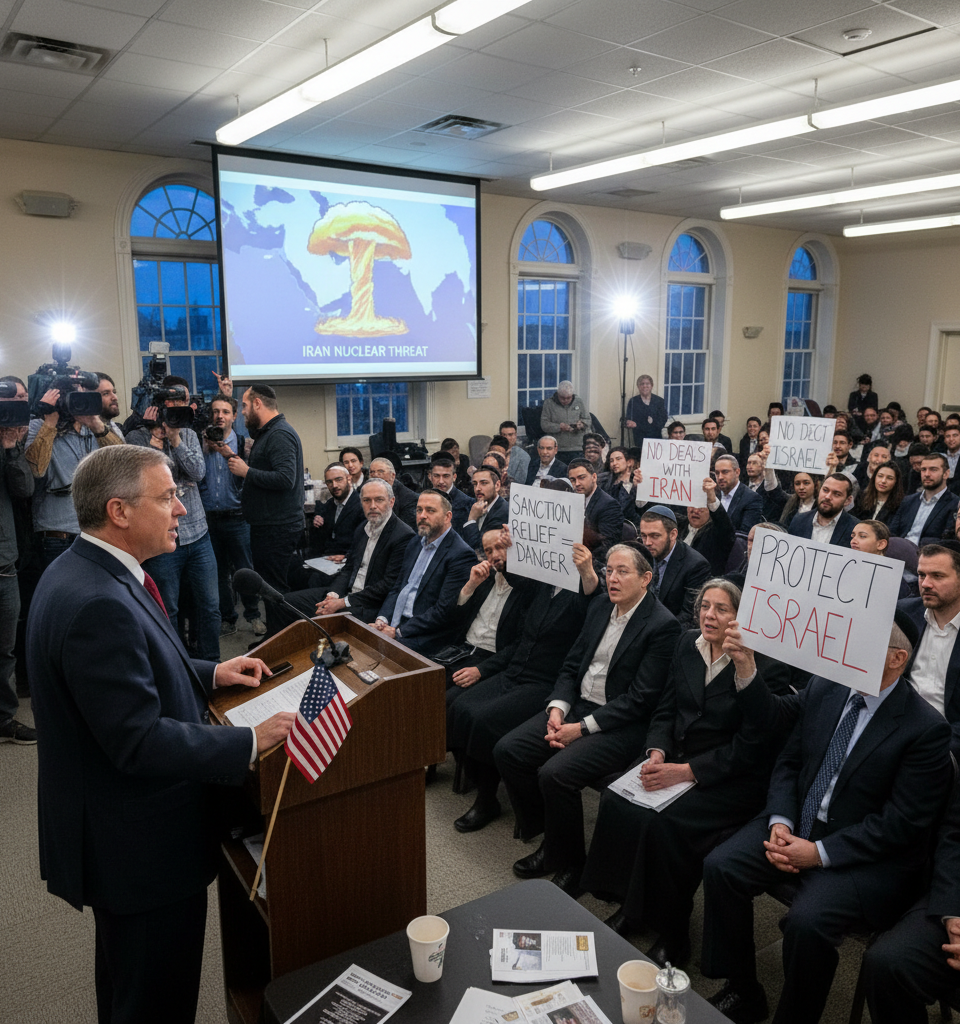
In a vivid demonstration of the political volatility surrounding international affairs, Representative Mike Lawler, a Republican seeking re-election in New York's competitive Hudson Valley district, recently faced intense constituent questioning over his stance on the ongoing conflict in Iran. The event, held today, May 19, 2026, saw a noticeable pushback from attendees, signaling a potential brewing dissatisfaction that could impact his bid for another term.
The confrontation underscores the increasingly complex calculus facing federal lawmakers, particularly those in swing districts, as global geopolitical events reverberate through domestic politics. Lawler's district, known for its political moderation and tendency to shift between parties, is a microcosm of broader national sentiment where foreign policy positions can significantly influence local electoral outcomes. As the conflict in Iran continues to draw international attention and elicit strong opinions, constituents are increasingly holding their representatives accountable for their legislative and public postures on such sensitive issues.
The event’s atmosphere, described by attendees as charged, revolved primarily around what constituents perceived as Lawler’s firm or potentially hawkish position on the situation in Iran. While specific details of his previous statements or votes were not provided in reports from the event, the nature of the questions strongly suggests a constituency eager for clarity and, in some cases, outright disagreement with the direction of U.S. policy or Lawler's advocacy. Such public challenges are not uncommon in politically engaged districts but gain heightened significance when a representative is campaigning for re-election in a race projected to be tightly contested.
Broader Implications for Swing District Campaigns
The backlash experienced by Representative Lawler is indicative of a wider trend where foreign policy issues, once largely confined to national discourse, are becoming potent local campaign fodder. For incumbents in swing districts, navigating these complex issues requires a delicate balance of party loyalty, constituent expectations, and a clear articulation of their rationale. The Hudson Valley district, due to its mixed demographic and political leanings, often reflects national political winds, making Lawler's experience a key bellwether for how other similar races might unfold across the country.
From a strategic perspective, the incident highlights the imperative for campaigns to meticulously prepare for town hall-style events, anticipating contentious questions not just on domestic matters but also on international crises. For Republican candidates, in particular, the Iran situation presents a nuanced challenge, as the party's traditional stance on international relations often contrasts with a growing segment of the electorate that may prefer engagement over confrontation, or simply demand more transparency regarding military and diplomatic actions. The internal dynamics within the Republican party regarding foreign policy are also at play, potentially creating fissures that opponents can exploit.
The Road Ahead for Lawler's Re-election Efforts
Lawler’s campaign will likely need to address this constituent feedback proactively, either by clarifying his position on Iran, engaging in more direct dialogue with skeptical voters, or recalibrating his public statements. Ignoring such strong signals from the electorate in a swing district could prove detrimental. The episode underscores that in the current political climate, voters are increasingly sophisticated in their understanding of global events and are ready to hold their representatives to account for their choices on the world stage.
As the 2026 election cycle progresses, the focus on foreign policy, particularly concerning flashpoints like Iran, is expected to intensify. Lawler's experience serves as a cautionary tale and a blueprint for other candidates on the importance of having a well-defined and well-communicated stance on international issues, especially when those issues become deeply personal to the electorate. The ability to effectively articulate and defend foreign policy positions will undoubtedly be a crucial factor in determining the outcomes of close congressional races nationwide.