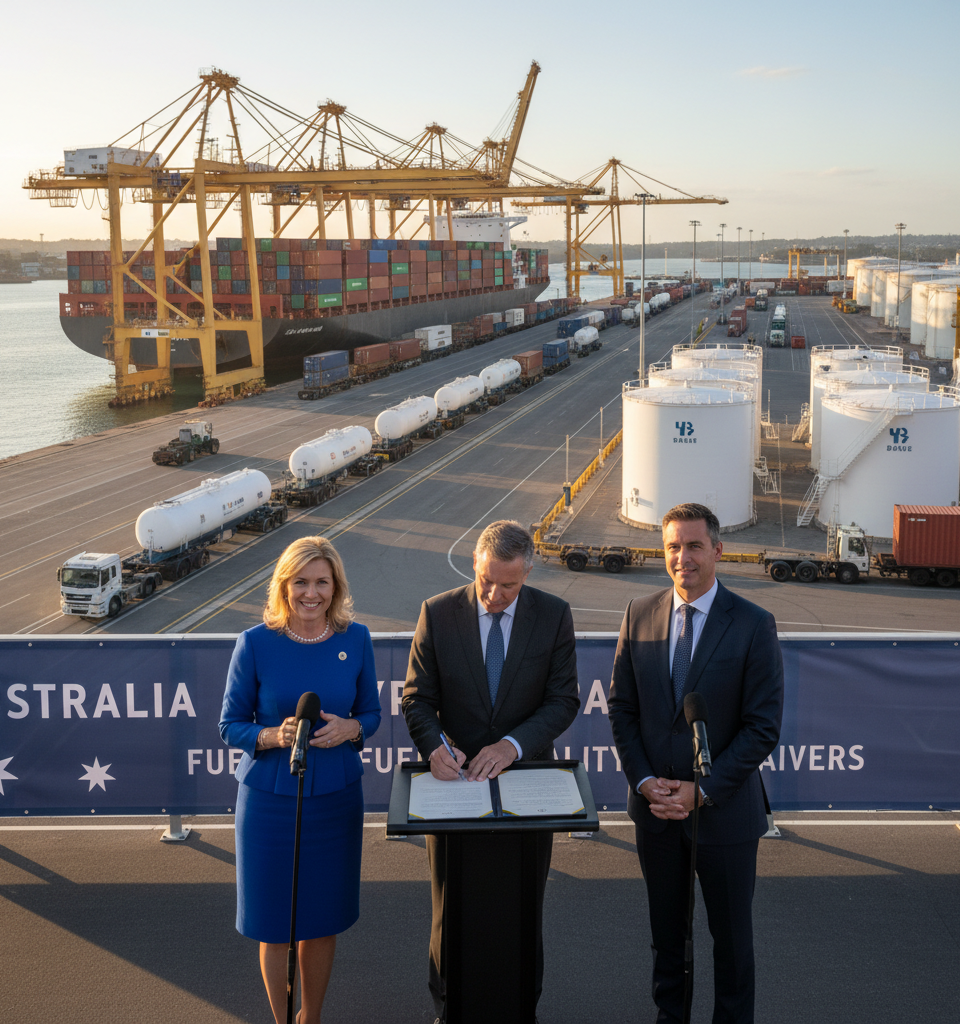
Canberra, Australia – [Date] – The Australian government has announced a further three-month extension of emergency fuel quality waivers, a critical measure designed to safeguard domestic fuel supply amidst ongoing global supply chain disruptions. This decision, extending the waivers until at least mid-2024, highlights a proactive approach by Canberra to maintain fuel security for essential services and industries, effectively acknowledging the lingering impact of international logistical bottlenecks and geopolitical instability on refined petroleum product availability.
Persistent Supply Chain Fragility Spurs Action
This marks the latest in a series of extensions, signaling that the initial triggers for these waivers — largely stemming from the disruptions of the war in Ukraine and subsequent re-routing of global energy flows — remain potent. Australia, a net importer of refined fuels, is particularly vulnerable to such international pressures. The waivers allow for the temporary import and distribution of fuels that may not strictly meet Australia's stringent quality standards, such as sulfur content limits, under normal circumstances. This flexibility is crucial in preventing potential fuel shortages that could cripple transportation, agriculture, and other vital sectors of the Australian economy.
Details of the Extension and Regulatory Context
The extended waivers pertain primarily to specifications for sulfur content and other chemical properties in petrol and diesel. While Australia has made significant strides in upgrading its domestic refinery capabilities, increasing local production of ultra-low sulfur fuels, it still relies heavily on imports from Singapore, South Korea, and other Asian refining hubs. The government has emphasized that these extensions are temporary and are continually reviewed, with public health and environmental impacts remaining a key consideration. The Department of Climate Change, Energy, the Environment and Water (DCCEEW) confirmed the extension, stating that it provides necessary operational flexibility for fuel importers and distributors navigating a challenging international market.
Broader Market Implications and Industry Response
For the Australian energy market, this extension provides a crucial buffer. Fuel retailers and distributors can continue to source from a broader pool of international suppliers, mitigating the risk of price spikes driven by scarcity. Industry body, the Australian Institute of Petroleum (AIP), has generally welcomed the pragmatic approach, noting that it helps to maintain continuity of supply without compromising the long-term goal of cleaner fuels. However, there are underlying concerns within the industry about the prolonged reliance on such waivers, which could potentially delay investments in infrastructure needed to universally meet Australian standards with locally refined or specialty imported products.
Expert Insights on Global Energy Security
Energy analysts widely view Australia's move as reflective of a broader global trend where nations are prioritizing energy security over immediate, strict adherence to all environmental specifications in times of crisis. Dr. Eleanor Vance, a senior energy economist at the Australian National University, commented, “While Australia is committed to lowering emissions and improving air quality, the overriding priority in the current geopolitical and economic climate is securing reliable and affordable fuel supplies. These waivers are a temporary, albeit necessary, compromise to ensure the lights stay on and the economy keeps moving.” She highlighted the ongoing volatility in crude oil prices and refinery margins as factors contributing to the precarious supply landscape.
Pathways Toward Sustainable Fuel Resilience
Looking ahead, the government's long-term strategy involves continued investment in domestic refining capabilities and diversifying import sources. Initiatives like the Fuel Security Services Payment (FSSP) are designed to support Australia's remaining refineries to continue production, ensuring a baseline of domestic fuel supply. There is also increased emphasis on building strategic fuel reserves, a lesson learned from recent global events. The current waiver period offers a window for the industry and government to further collaborate on sustainable solutions that balance economic resilience with environmental goals, reducing the future necessity for such emergency measures.
Future Outlook and Monitoring
The situation remains dynamic, with ongoing monitoring of global supply chains, international crude oil and refined product markets, and geopolitical developments. The Australian government will continue its assessment of the need for these waivers, with the expectation that they will be phased out once the global market returns to a more stable and predictable state. The focus remains on strengthening Australia's energy independence and resilience, ensuring that while temporary measures are in place, the strategic path forward is towards higher quality and more secure fuel supplies for the nation.