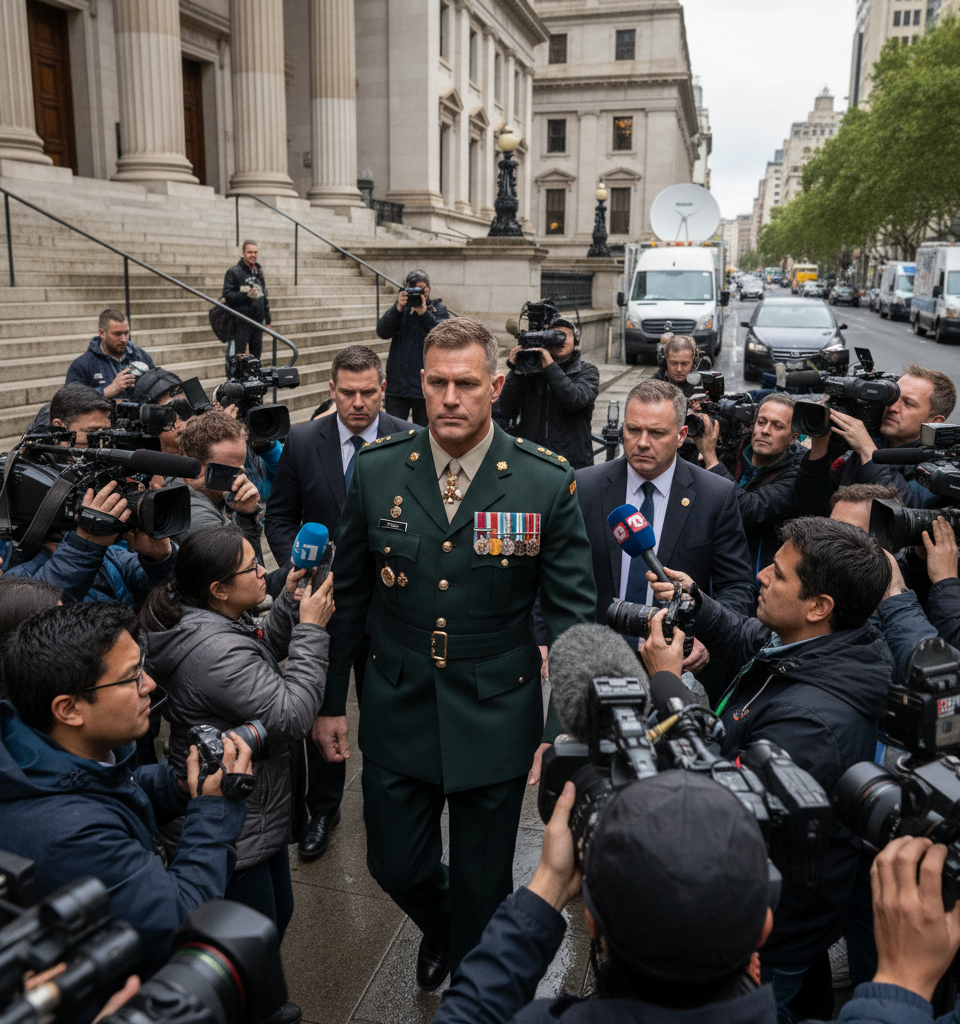
CANBERRA, Australia – Ben Roberts-Smith VC MG, Australia's most highly decorated living soldier, has reportedly been arrested by Australian Federal Police (AFP) in connection with an ongoing investigation into alleged war crimes committed during his service in Afghanistan. The arrest, first reported by local media outlets, marks a pivotal moment in a protracted legal and public saga surrounding the former Special Air Service Regiment (SASR) corporal. While details surrounding the arrest remain scarce and formal charges unconfirmed by authorities, the development underscores the intensifying scrutiny on allegations of unlawful killings by Australian special forces members.
A Nation Grappling with Its Military Past
This latest development is the culmination of years of intense public debate and legal proceedings that have forced Australia to confront uncomfortable truths about its military conduct abroad. Roberts-Smith, a recipient of the Victoria Cross – the highest award for gallantry in the face of the enemy – has vehemently denied all allegations of wrongdoing since they first surfaced. The accusations, primarily stemming from media reports, ignited a landmark defamation lawsuit that Roberts-Smith lost in June 2023. The Federal Court found that several media outlets had proven, to the civil standard, that Roberts-Smith was involved in the unlawful killing of unarmed Afghan civilians and was complicit in bullying and domestic violence. This civil judgment, while distinct from criminal proceedings, significantly shaped public perception and bolstered calls for criminal investigation.
Key Allegations and Legal Ramifications
At the heart of the allegations are claims of Roberts-Smith's involvement in the execution of unarmed Afghan prisoners and civilians, often referred to as 'blooding' or 'unlawful killings'. These incidents reportedly occurred during his multiple deployments with the SASR in Afghanistan between 2006 and 2012. The AFP launched its investigation following the release of the Brereton Report in November 2020, an independent inquiry commissioned by the Inspector-General of the Australian Defence Force. The Brereton Report found credible evidence of 39 unlawful killings by Australian special forces soldiers, recommending that 19 individuals be referred for criminal investigation. While the report did not name individuals, it cast a long shadow over the elite unit, leading to profound institutional reforms and a national reckoning.
Impact on Australia's Defence Force and Public Trust
The ongoing investigations and the dramatic arrest of such a prominent figure have had a profound impact on the Australian Defence Force (ADF). Recruitment rates have faced challenges, and the morale of currently serving personnel, particularly within special forces, has been a significant concern. The scandal has also damaged Australia's international reputation, particularly regarding its commitment to international humanitarian law. Public trust in the military, an institution historically held in high regard, has been eroded, with polls indicating a growing segment of the population demanding greater accountability for alleged misconduct in wartime operations. The financial cost of these investigations, legal battles, and associated reforms is estimated to be in the tens of millions of Australian dollars, diverting resources from other critical defence priorities.
Expert Perspectives on Justice and Accountability
Legal experts and international human rights advocates view the arrest as a crucial step towards upholding justice and accountability. Professor Kevin Boreham, an expert in international criminal law at the Australian National University, commented, "This arrest signals a clear intent by Australian authorities to pursue these allegations vigorously, regardless of the individual's rank or decorated status. It sends a message that no one is above the law, even in the complex context of military operations." Others emphasize the challenges of prosecuting such cases, citing the difficulty in securing evidence from wartime environments and the historical reluctance of militaries to prosecute their own. However, the precedent set by the Brereton Report and the subsequent establishment of the Office of the Special Investigator (OSI) indicates a new era of enforcement.
The Road Ahead: Potential Charges and Future Proceedings
Following the arrest, the AFP will likely conduct further questioning and prepare relevant documentation for the Director of Public Prosecutions (DPP). If charges are laid, Roberts-Smith would face a potential criminal trial, which carries a far higher burden of proof – beyond a reasonable doubt – compared to the civil standard applied in his defamation case. The legal proceedings are expected to be lengthy and complex, drawing immense national and international attention. The outcome will have significant implications not only for Roberts-Smith personally but also for the Australian legal framework concerning military conduct, wartime accountability, and the protection of international human rights. This case stands as a testament to the ongoing struggle to balance national heroism with moral and legal obligations in modern warfare.
Broader Implications for Global Military Ethics
Beyond the immediate legal proceedings, this case resonates globally, contributing to a broader discourse on military ethics, oversight, and accountability in contemporary conflicts. Nations worldwide are grappling with similar challenges regarding alleged misconduct by their forces in foreign territories. The Australian experience, particularly the thoroughness of the Brereton Inquiry and the subsequent legal actions, may serve as a model – or a cautionary tale – for other countries facing similar allegations. It reinforces the principle that even in the fog of war, adherence to humanitarian laws remains paramount and that justice, however delayed, will ultimately be pursued. The legacy of Australia's special forces, long lauded for their bravery, now faces a profound re-evaluation based on the outcomes of these unprecedented legal battles.