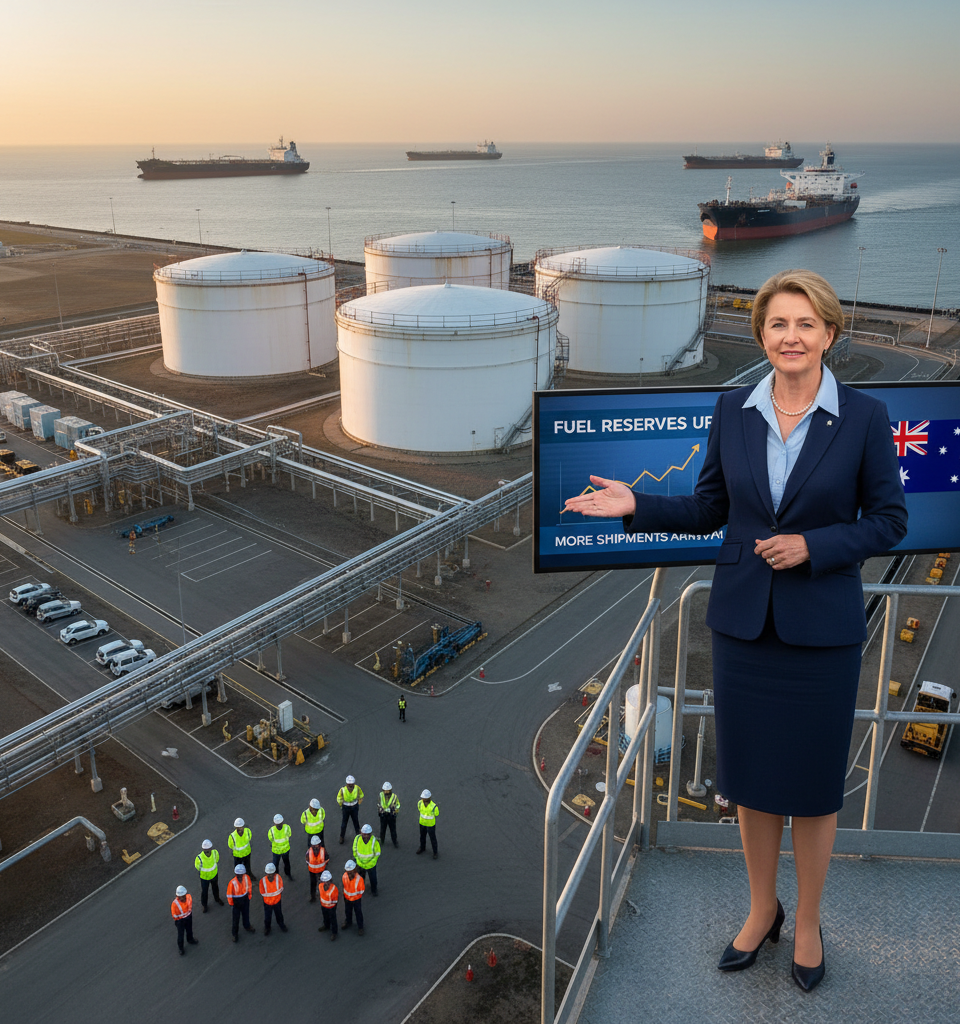
Australia's critical fuel reserves have recorded a material uplift in the past week, with Energy Minister Chris Bowen confirming that further bolstering shipments are actively en route to the continent. This positive development swiftly addresses burgeoning anxieties regarding fuel security in the highly import-reliant nation, signaling a strengthened position against potential supply chain disruptions. The announcement underscores a concerted effort by the Australian government to fortify its strategic petroleum reserves (SPR) and ensure national energy resilience in an increasingly volatile global market.
Strategic Reserve Enhancement Efforts
For years, Australia has faced scrutiny for its relatively low levels of liquid fuel reserves, heavily dependent on international seaborne supply chains. This vulnerability became acutely apparent during periods of geopolitical instability and global logistical challenges. The recent uptick in reserves, coupled with inbound shipments, is a direct outcome of proactive measures implemented by the government to mitigate these risks. These efforts align with broader national security strategies aimed at reducing reliance on single points of failure within critical infrastructure and supply networks. The increase reflects both commercial stockholding adjustments and government-led initiatives to enhance storage capacity and access to emergency supplies.
Energy Minister Chris Bowen articulated the new figures, stating, "Our national fuel reserves have seen a healthy increase over the past seven days, and importantly, several additional cargoes are currently making their way to our shores." While specific numerical detail regarding the exact volume increase was not immediately disclosed, the minister's statement provides a robust assurance to both industry stakeholders and the general public. He emphasized the government's commitment to maintaining transparency and resilience in the nation's energy supply, particularly given the ongoing complexities in global energy markets. This transparency is crucial for public confidence and market stability.
Broader Market Implications
This positive news is expected to have a stabilizing effect on the domestic fuel market, potentially easing upward pressure on prices that can be driven by supply anxiety. For industries heavily reliant on consistent fuel supply, such as transport, logistics, mining, and agriculture, the enhanced reserves offer a greater degree of operational certainty. The shipping and aviation sectors, foundational to Australia's vast landmass and international connections, will particularly benefit from this improved outlook. Furthermore, the development could marginally reduce Australia's reliance on the US-held SPR, from which Australia has previously drawn in coordinated international releases, although this remains a key component of its long-term strategy.
Energy analysts have largely welcomed the news, citing it as a necessary step towards building long-term energy independence. "Any increase in strategic reserves is a step in the right direction for an island nation like Australia," noted Dr. Eleanor Vance, a senior energy consultant with APAC Energy Dynamics. "It reduces exposure to external shocks and provides a valuable buffer. However, the long-term solution still involves diversifying supply sources and accelerating the transition to alternative fuels." Other experts highlighted the importance of not just quantity, but also the quality and accessibility of these reserves, ensuring they can be rapidly deployed in a crisis.
Future Outlook and Policy Direction
Looking ahead, the Australian government is expected to continue its focus on bolstering fuel security through a multi-pronged approach. This includes not only increasing physical stockholding but also exploring advanced fuel technologies, expanding domestic refining capabilities where economically viable, and forging stronger international partnerships. Discussions are also ongoing regarding potential investments in biofuels and hydrogen as future energy sources to further diversify the nation's energy mix and reduce its reliance on traditional fossil fuels. The immediate priority, however, remains strengthening conventional fuel supply resilience.
The trajectory of fuel security in Australia will be closely watched by international observers and domestic businesses alike. The government's proactive communication and tangible actions, such as the confirmed rise in reserves and inbound shipments, are vital in managing market expectations and ensuring uninterrupted economic activity. While the immediate concern of shortages appears to be abating, the underlying strategic imperative to build enduring energy independence remains a high-priority item on the national agenda, with ongoing policy development and investment anticipated in the coming months and years.