[CITY, STATE] – [DATE] – Manufacturers across the globe are increasingly turning to advanced automation solutions to tackle a persistent challenge: the financial drain and production bottlenecks caused by frequent product changeovers. In an era where consumer demand for personalized and diverse products is skyrocketing – commonly referred to as mass customization – the ability to rapidly and efficiently switch production lines between different product variants has become a critical differentiator. This technological pivot promises to unlock significant productivity gains, reduce downtime, and fundamentally alter the economics of modern manufacturing.
The imperative for streamlined changeovers is not new, but its urgency has intensified with evolving market dynamics. Historically, manufacturers achieved scale through long production runs of standardized products. However, the rise of e-commerce, global supply chains, and demanding consumer preferences has shifted the paradigm. Companies are now expected to offer a vast array of product options, often with shorter lead times, making laborious manual changeovers a significant impediment to profitability and market responsiveness. Surveys indicate that unoptimized changeovers can account for up to 20% of a production line's available time, translating into millions of dollars in lost revenue annually for large-scale operations.
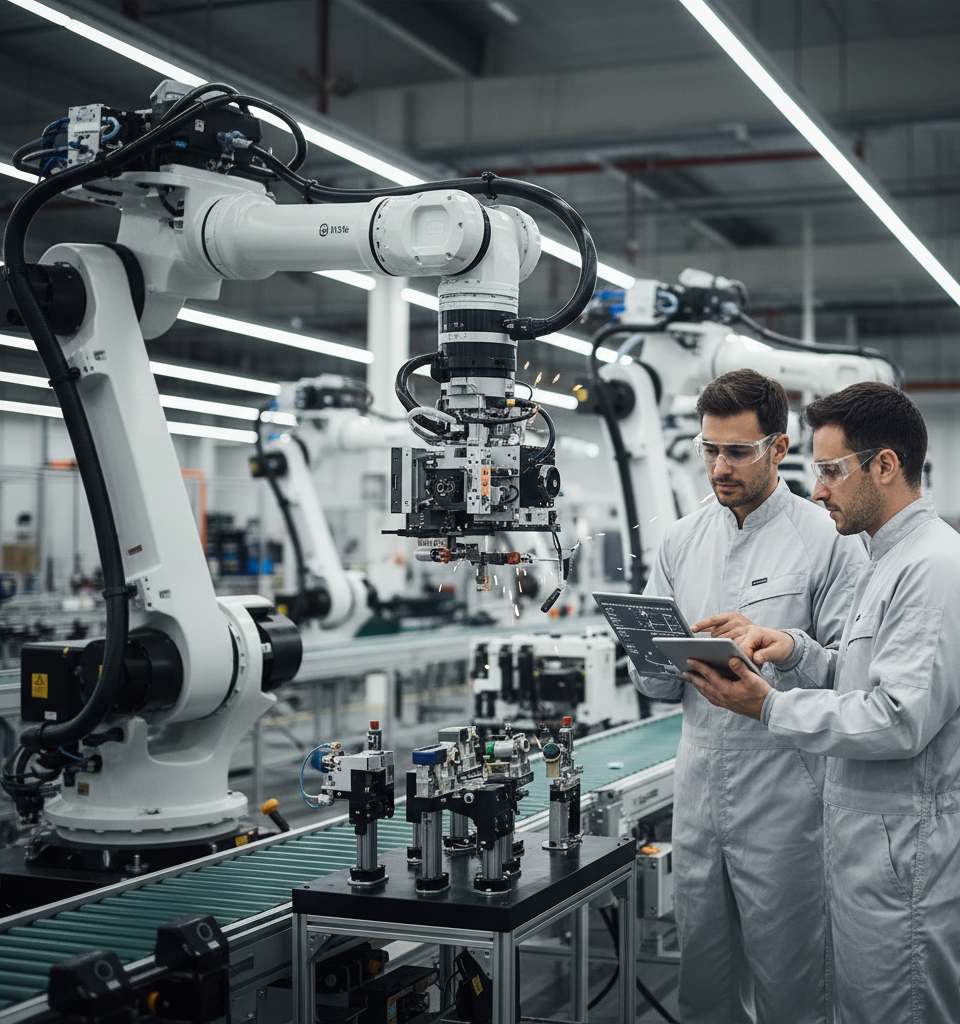
The current wave of automation addresses this challenge through several key innovations. Robotic systems equipped with quick-change tooling can rapidly swap out components specific to a product variant. Advanced vision systems, combined with artificial intelligence (AI) and machine learning (ML), can autonomously detect product attributes and adjust machine parameters with minimal human intervention. For instance, a leading automotive parts manufacturer reported a 40% reduction in changeover times for a stamping line, from 90 minutes to 54 minutes, after implementing a combination of automated guided vehicles (AGVs) for tool delivery and robotic end-effectors for component exchange. Furthermore, modular production lines, designed with plug-and-play components, allow for swift reconfiguration, reducing physical retooling efforts.
This shift profoundly impacts the broader manufacturing landscape. Smaller batch sizes, once economically prohibitive, are now becoming viable, enabling companies to cater to niche markets and respond dynamically to fluctuating demand. The increased flexibility fosters innovation, allowing for faster product development cycles and quicker market entry for new designs. This agility is a game-changer for industries like food and beverage, pharmaceuticals, and consumer packaged goods, where product variations and regulatory requirements necessitate frequent line adjustments. The global market for industrial automation, already projected to reach $350 billion by 2027, is seeing a significant portion of this growth driven by solutions directly impacting changeover efficiency.
Industry experts emphasize the strategic importance of these advancements. "The economic argument for automating changeovers is no longer aspirational; it's foundational," says Dr. Anya Sharma, a senior analyst at Manufacturing Insights Inc. "Companies that fail to embrace this will struggle to compete on cost, delivery, and customer satisfaction. We're moving from a 'time-is-money' economy to a 'minutes-are-gold' economy when it comes to production efficiency." She points to case studies where investments in changeover automation have yielded a return on investment (ROI) within 18-24 months, primarily through reduced downtime and increased throughput.
Looking ahead, the integration of digital twin technology and predictive maintenance will further optimize changeover processes. Digital twins will allow manufacturers to simulate changeovers virtually, identify potential bottlenecks, and optimize sequences before execution on the physical line. Predictive analytics, leveraging sensor data and AI, will anticipate maintenance needs or potential component failures, scheduling changeovers during planned downtime rather than reacting to unforeseen interruptions. The continued development of collaborative robots (cobots) also promises to enhance human-robot interaction during complex changeovers, blending the precision of automation with the adaptability of human operators.
The coming decade will likely see these technologies mature, becoming standard practice rather than competitive advantages. Manufacturers that proactively invest in and integrate these automated changeover solutions will be best positioned to thrive in an increasingly fragmented and demand-driven market, ultimately redefining the possibilities of mass customization while maintaining cost competitiveness. The era of cumbersome, time-consuming changeovers is rapidly drawing to a close, replaced by a more agile and intelligent manufacturing future.