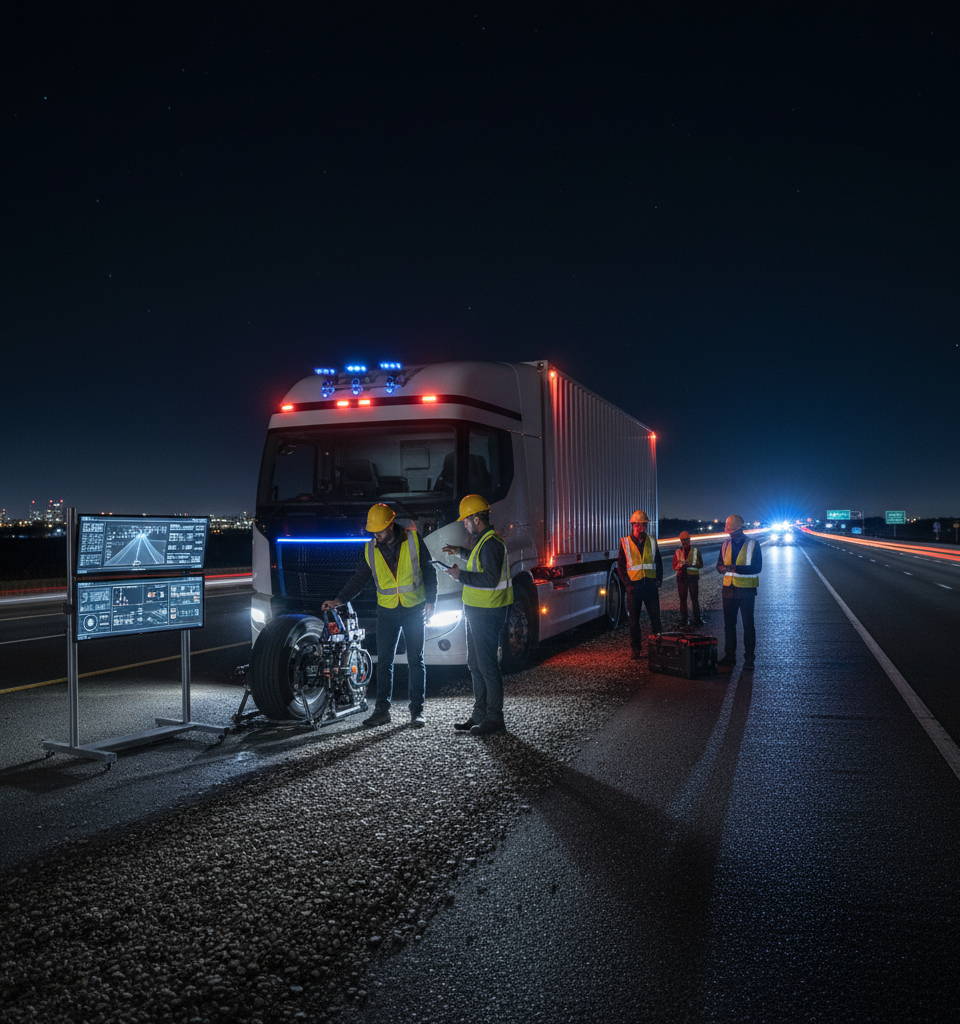
The burgeoning autonomous trucking industry faces a pivotal challenge that has largely been overlooked amid the excitement of innovation: the intricate and potentially hazardous scenario of a self-driving truck experiencing a roadside breakdown, particularly during off-peak hours like 2 AM. While advancements in AI and sensor technology promise revolutionary improvements in freight logistics, the practicalities of equipment failure, human intervention, and emergency response in an autonomous context remain ambiguously defined. This critical gap necessitates immediate and comprehensive dialogue among all stakeholders, including technology developers, fleet operators, regulatory bodies, and first responders, to establish a robust framework for incident management.
The Urgent Need for Defined Protocols
The current enthusiasm surrounding autonomous vehicles often overshadows the less glamorous, yet fundamentally crucial, aspects of operational failure. Historically, a human truck driver handles myriad roadside issues, from minor mechanical faults to significant accidents, coordinating with dispatch, tow services, and often managing traffic flow. In an autonomous paradigm, this human element is removed, or at least significantly altered, raising complex questions about liability, remote diagnostics, on-site personnel requirements, and the integration of these processes with existing emergency services. The failure to proactively address these scenarios could have severe consequences, from prolonged traffic disruptions and safety hazards to significant reputational damage to the nascent industry.
Unanswered Questions and Operational Gaps
Several key questions demand immediate answers. Who is responsible when an autonomous truck stalls on a highway lane? What are the standard operating procedures for an autonomous system to safely pull over, if capable, or to warn oncoming traffic if immobilized? How quickly can remote diagnostic teams assess the situation, and what types of repairs or interventions can be performed remotely versus requiring on-site personnel? Furthermore, the dispatch and arrival of human technicians or tow services to a disabled autonomous vehicle demands new protocols, especially concerning safe access and interaction with a potentially active, albeit malfunctioning, system. The financial implications, including insurance claims and recovery costs, also need to be clearly delineated.
Industry and Market Implications
For the trucking industry, the absence of clear breakdown protocols introduces significant operational risks and potential delays that could undermine the economic benefits of autonomous fleets. Fleet operators need assurance that their investments in autonomous trucks will not translate into catastrophic losses or prolonged vehicle downtime due to unforeseen roadside incidents. Regulators, meanwhile, are tasked with constructing a legal and operational framework that balances innovation with public safety.
This includes defining levels of autonomous vehicle autonomy in emergency situations, mandating specific safety features for breakdown management, and establishing clear lines of communication between autonomous vehicle operations centers and local emergency services. The market's perception of autonomous trucking's reliability and safety will heavily hinge on the industry's ability to convincingly address these operational contingencies.
Expert Perspectives on Risk Mitigation
Analysts and safety experts underscore the importance of moving beyond theoretical discussions to practical simulations and pilot programs focused specifically on breakdown scenarios. Dr. Jane Smith, a leading transportation safety expert, recently commented, "The true test of autonomous technology isn't just its ability to drive perfectly, but its resilience and managed failure modes. We need industry-wide standards for remote diagnostics, incident reporting, and, critically, a seamless handover protocol to human responders when necessary. This is where the rubber meets the road, literally." She emphasized the need for robust teleoperations capabilities and specialized training for individuals who will remotely monitor and potentially intervene with autonomous vehicles during incidents.
The Path Forward: Collaboration and Standardization
Addressing these challenges will require unprecedented collaboration among stakeholders. Technology developers must design autonomous systems with inherent fail-safes and remote diagnostic capabilities. Trucking companies must invest in the infrastructure and personnel necessary for rapid response and recovery.
Regulators, including federal agencies like the National Highway Traffic Safety Administration (NHTSA) and state departments of transportation, need to develop a standardized regulatory framework that ensures consistency across jurisdictions., standardized digital alerts), requirements for on-board emergency equipment, and training programs for first responders to safely interact with disabled autonomous trucks. The integration of vehicle-to-infrastructure (V2I) communication could also play a significant role in broadcasting breakdown warnings and facilitating coordinated responses.
The next few years will be critical in setting these foundational safety standards, as the deployment of autonomous trucks expands beyond pilot routes into widespread commercial operation across North America.
Regulatory Landscape and Future Implementations
Several states are actively developing or revising legislation concerning autonomous vehicle deployment, often focusing on operational capabilities rather than detailed breakdown management. However, there's growing pressure from safety advocates and some industry groups for a more granular approach., cones, flares, or automated warning systems) specifically for breakdown scenarios.
Future implementations could involve dedicated autonomous vehicle incident response teams, possibly funded jointly by industry and government, to provide rapid, specialized assistance. The ultimate goal is to create an ecosystem where autonomous truck breakdowns are handled with the same, if not greater, efficiency and safety as incidents involving human-driven vehicles, ensuring public trust and the long-term viability of autonomous freight transport.