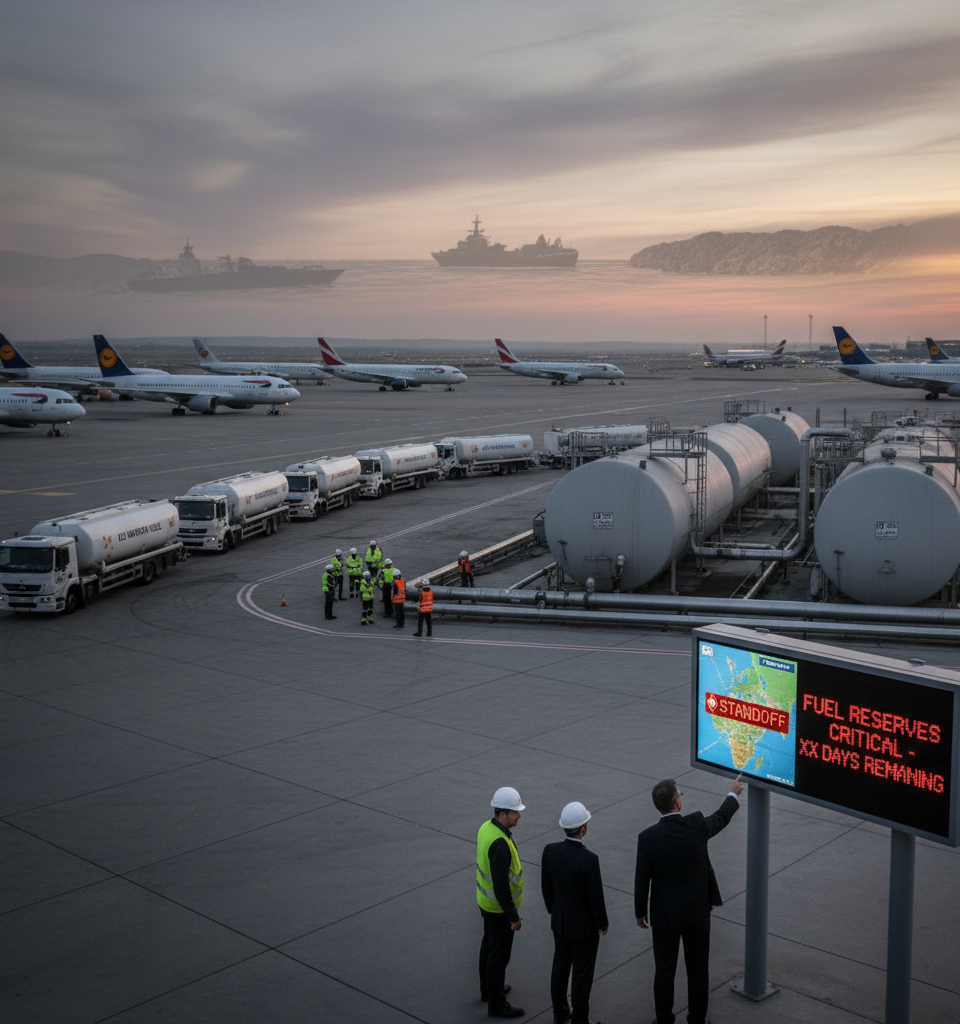
Brussels, Belgium – European airlines are on the brink of significant operational disruptions, with a prominent industry trade body sounding the alarm over potential jet fuel shortages if the Strait of Hormuz remains inaccessible for the next three weeks. The stark warning underscores the profound vulnerability of the global energy supply chain to geopolitical instabilities, threatening to ground flights and impose severe economic repercussions across the continent's vital aviation sector.
Geopolitical Tensions Strain Global Energy Lifeline
The Strait of Hormuz, a narrow maritime passageway connecting the Persian Gulf with the Arabian Sea and the broader Indian Ocean, is an unparalleled chokepoint for global oil and liquefied natural gas (LNG) shipments. Approximately one-fifth of the world's total oil consumption, including a substantial portion of Europe's crude oil and refined product imports, transits through this strategic waterway daily. Historical disruptions, often linked to regional geopolitical tensions, have consistently demonstrated the swift and dramatic impact on global energy markets, leading to price spikes and supply anxieties. The current apprehension stems from an unspecified but persistent blockage, the details of which remain largely unconfirmed by official sources, exacerbating market uncertainty.
Industry Voices Growing Alarm
According to a statement from the Airports Council International (ACI) Europe, the leading trade association for European airports, the cessation of normal traffic through the strait for more than three weeks would precipitate widespread jet fuel scarcity. A spokesperson for ACI Europe stated, “Our members are increasingly concerned. While immediate supplies are stable, the logistical pipeline for aviation fuel is not designed for prolonged interruptions of this magnitude. Beyond three weeks, we anticipate a severe tightening of supply, leading to potential flight cancellations and significant cost increases for airlines operating in and out of Europe.” This sentiment is echoed by major carriers, many of whom rely on long-term contracts and strategic reserves that, while substantial, are finite in the face of such a critical choke point closure.
Far-Reaching Economic & Operational Ramifications
The direct impact of fuel shortages would cascade throughout the European economy. Airlines would face substantial operational challenges, including forced route adjustments, reduced flight frequencies, and increased reliance on more expensive, alternative fuel sources transported via longer, costlier routes. This would inevitably lead to higher ticket prices for consumers, affecting tourism, business travel, and cargo operations. Beyond the aviation sector, a sustained energy crunch could trigger broader inflationary pressures on goods and services, potentially dampening economic growth already grappling with post-pandemic recovery efforts. The EU market alone accounts for an estimated 15-20% of global jet fuel demand, making the region particularly susceptible.
Expert Prognosis: A Race Against Time and Reserves
Energy market analysts are closely monitoring the situation. Dr. Elara Vance, a senior fellow at the European Institute of Energy Studies, commented, “The aviation industry's warning is credible. Refineries supplying Europe do hold strategic reserves and diversified sourcing agreements, but these are built for short-term contingencies, not weeks of complete disjunction from a primary supply artery. The critical period flagged by ACI Europe aligns with the typical logistical lead times for re-routing substantial volumes of refined products. Any continued closure would swiftly deplete these buffers, leading to real physical shortages rather than just price hikes.” She estimates that a three-week closure could see jet fuel prices spike by 25-40%, severely impacting airline profitability.
Contingency Planning and Diplomatic Efforts Underway
In response to the escalating concerns, European Union officials are understood to be engaged in high-level diplomatic discussions to de-escalate tensions and ensure the swift reopening of the Strait of Hormuz. Internally, national governments and major airlines are evaluating contingency plans, including potential rationing protocols, securing alternative fuel sources from North America and Africa via longer sea routes, and exploring rail and road transport where feasible, albeit at significantly higher costs and lower capacities. The International Air Transport Association (IATA) has also reiterated calls for governments to prioritize aviation fuel supplies in any allocation schemes, recognizing the industry's critical role in global connectivity and trade.
The Looming Deadline: A Critical Three Weeks
The aviation industry, along with global energy markets, now faces a critical three-week window. The ongoing closure of the Strait of Hormuz represents not merely a logistical challenge but a profound test of international cooperation and geopolitical stability. Failure to resolve the issue promptly could plunge Europe’s air travel into a crisis, with ripples felt across the entire global economy. Stakeholders are urgently hoping for a diplomatic resolution before the forecasted fuel shortages become a tangible and debilitating reality.