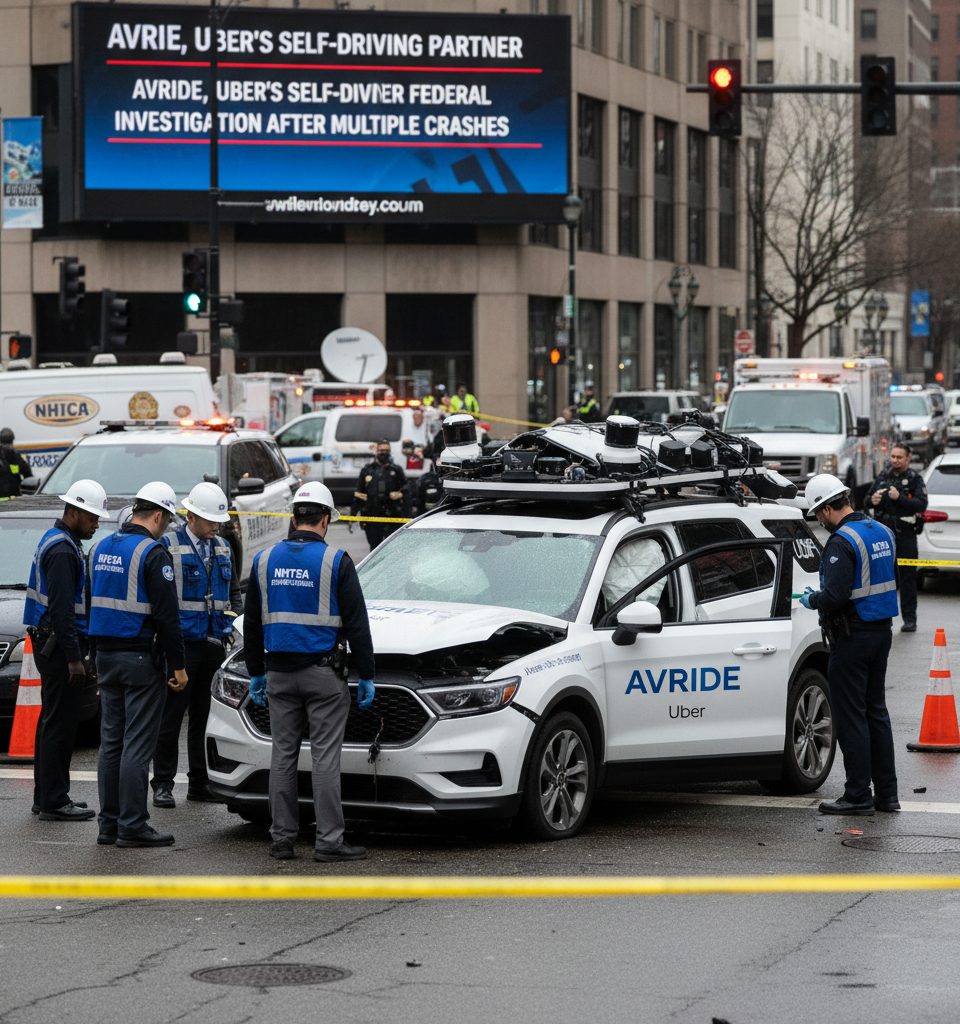
The National Highway Traffic Safety Administration (NHTSA) has initiated a preliminary evaluation into Avride, a prominent developer of autonomous driving technology and a significant partner in Uber's self-driving initiatives. This federal inquiry, announced this week, stems from reports detailing numerous incidents involving Avride's vehicles, including more than twelve crashes and at least one minor injury sustained by a passenger. The investigation aims to thoroughly assess the safety performance of Avride's automated driving systems, casting a critical eye on the operational integrity of a company at the forefront of autonomous mobility.
Context and Background
This development arrives at a pivotal moment for the autonomous vehicle industry, which has faced increasing regulatory scrutiny and public skepticism despite aggressive development and substantial investment. Avride, closely associated with Uber's high-profile efforts to integrate self-driving cars into its ride-sharing network, represents a significant player whose incidents could have far-reaching implications. The broader context includes past high-profile accidents involving autonomous vehicles from other companies, which have amplified calls for stringent safety standards and clearer regulatory frameworks. The industry is currently navigating a complex landscape where technological innovation intersects with critical safety concerns and public acceptance.
Key Details and Incidents
NHTSA’s investigation is specifically focused on understanding the root causes of the reported crashes. While specifics of each incident have not been fully disclosed, the agency noted that the twelve-plus crashes include instances where Avride's autonomous driving system was actively engaged. The lone reported minor injury, while not severe, underscores the potential human impact of these system malfunctions or operational errors. Investigators will be examining vehicle data recorders, operational logs, and potentially conducting interviews with personnel involved to reconstruct the events leading to each collision. The agency's preliminary evaluation is a standard first step, which could escalate to an engineering analysis if sufficient concerns are identified, potentially leading to a recall or further mandates.
Industry and Market Impact
The probe into Avride sends ripples across the nascent autonomous vehicle market. Companies like Waymo, Cruise, and Tesla, all vying for dominance in the self-driving arena, are acutely aware that safety incidents and subsequent regulatory actions can significantly impact public trust, investor confidence, and legislative momentum. A setback for one major player can dampen enthusiasm for the entire sector, potentially slowing down deployment timelines and increasing insurance costs for autonomous fleets. Furthermore, this investigation might prompt other autonomous vehicle developers to proactively review their safety protocols and incident reporting mechanisms to avoid similar scrutiny, especially as federal agencies intensify their oversight.
Expert Perspective
Industry analysts are weighing in on the implications. Dr. Eleanor Vance, a leading expert in autonomous systems ethics and safety at the Institute for Advanced Technology Policy, remarked, "This NHTSA investigation is a critical barometer for the industry. It signals that regulators are moving beyond passive monitoring to active intervention when a pattern of concern emerges. It emphasizes that while innovation is crucial, it cannot compromise safety. The industry needs to collectively demonstrate an unwavering commitment to safety, transparently sharing data and collaborating with regulators to build public confidence." Her sentiments echo a broader consensus that robust testing, transparent reporting, and continuous improvement are imperative for the long-term viability of autonomous technology.
What's Next
The NHTSA's preliminary evaluation is expected to take several months. During this period, Avride will be required to cooperate fully with the agency, providing detailed information about its technology, incident data, and safety protocols. Depending on the findings, NHTSA could escalate the investigation to an engineering analysis, which carries the potential for mandating recalls of specific software versions or hardware components, imposing operational restrictions, or issuing significant fines.
For Uber, this investigation could lead to a re-evaluation of its partnership with Avride and potentially impact its strategy for incorporating autonomous vehicles into its global ride-sharing platform. The overarching goal for regulators remains ensuring the safe deployment of autonomous technology, while for the industry, it's about navigating these challenges to deliver on the promised benefits of self-driving transportation.