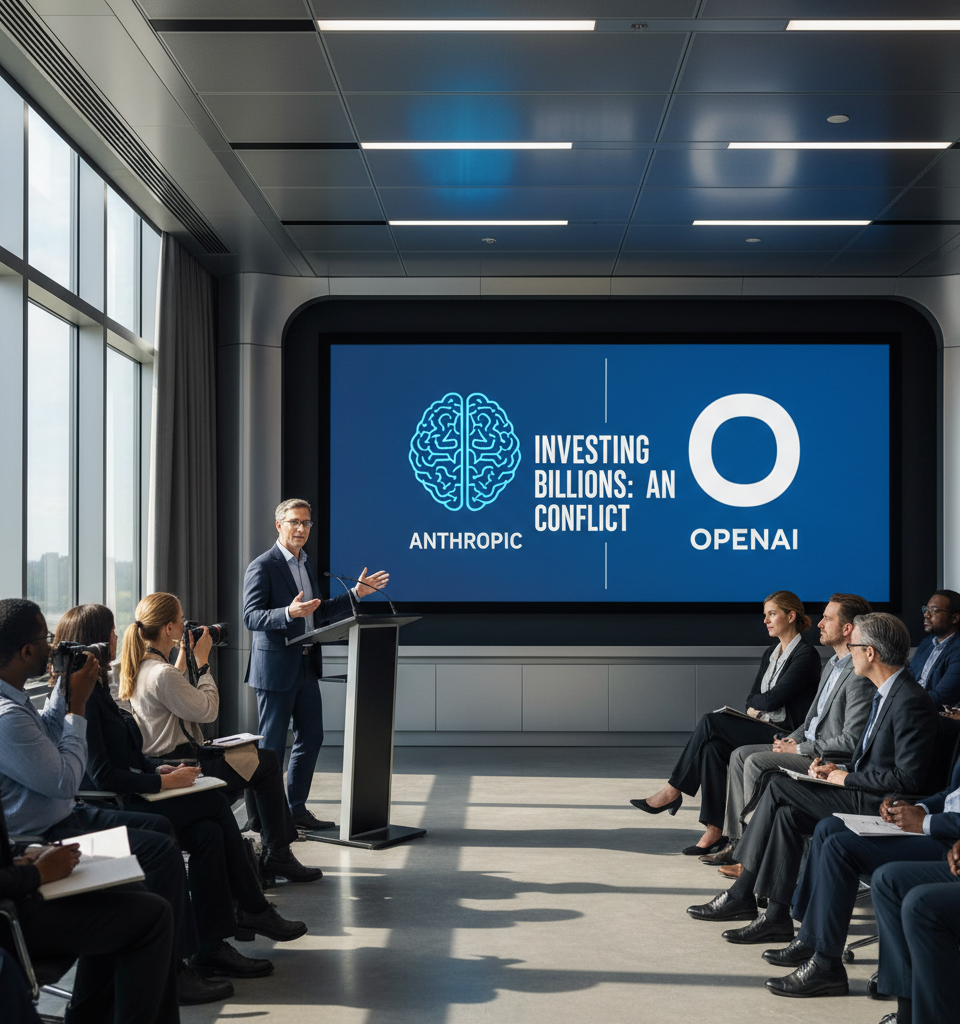
Amazon Web Services (AWS), a dominant force in cloud computing, is demonstrating a nuanced approach to the intensely competitive artificial intelligence (AI) sector by strategically investing substantial capital in both Anthropic and OpenAI. This financial backing of two pivotal, yet rival, AI development firms underscores AWS's belief that it can effectively manage intricate competitive dynamics, a practice reportedly ingrained within the cloud giant's operational ethos. The dual investment strategy highlights AWS's intention to remain a central facilitator across the AI ecosystem, without being singularly tied to one proprietary platform.
The Strategic Rationale Behind Dual Investments
The rationale behind AWS's substantial investments in both Anthropic and OpenAI is deeply rooted in its long-standing business model within the cloud computing industry. AWS frequently hosts and partners with companies that also compete with its own services or with each other. This operational philosophy, often described as an 'ingrained culture of handling competition,' allows AWS to position itself as a neutral, indispensable infrastructure provider, even as its financial interests extend to various, sometimes conflicting, ventures. The AI landscape, characterized by rapid innovation and a constantly shifting competitive matrix, perfectly exemplifies a scenario where such a strategy could yield significant benefits.
AWS aims to ensure that its cloud infrastructure remains the preferred platform for leading AI innovators, regardless of their competitive standing in the generative AI market. By supporting both Anthropic, a key developer of the Claude AI models, and OpenAI, known for its ChatGPT and GPT series, AWS is effectively hedging its bets and securing a prominent role in the foundational layer of AI development. This approach could allow AWS to offer a broader range of AI services and solutions to its vast client base, encompassing technologies from multiple leading AI developers.
Impact on the AI Ecosystem and Cloud Infrastructure
The ripple effects of AWS's bifurcated investment strategy are likely to be profound across the AI ecosystem and cloud infrastructure markets. For Anthropic and OpenAI, AWS's billions in funding provide crucial resources for research, development, and scaling their sophisticated AI models. This patronage not only accelerates their technological advancements but also solidifies their presence on AWS's cloud infrastructure, driving demand for AWS's compute, storage, and specialized AI services, such as its custom-designed Trainium and Inferentia chips.
From a broader industry perspective, this move could intensify the 'AI infrastructure wars,' where cloud providers compete fiercely to offer the best environment for AI development and deployment. Other cloud giants, like Microsoft (with its deep ties to OpenAI) and Google (with its own Gemini models), are similarly vying for dominance. AWS's strategy, however, differentiates itself by openly embracing a multifaceted partnership approach rather than solely relying on its internal AI offerings or exclusive external collaborations. This potentially creates a more diverse and competitive marketplace for AI foundational models, ultimately benefiting end-users and enterprises seeking flexible AI solutions.
Navigating Potential Conflicts of Interest
While potentially lucrative, this strategy is not without its complexities, particularly concerning potential conflicts of interest. Investing in direct competitors could raise questions about data security, intellectual property, and equitable access to AWS's resources. However, AWS's described experience in managing such scenarios with its cloud partners suggests that established protocols and clear demarcations are already in place or are being developed to mitigate these risks. The company's 'ingrained culture' refers to its ability to serve competing software vendors, data companies, and even retail businesses that rival Amazon's own e-commerce operations, all while maintaining strict data separation and neutrality in its cloud operations.
The challenge for AWS will be to transparently demonstrate to both original equipment manufacturers (OEMs) and developers that its commitment to each AI partner remains strong and unbiased, ensuring a level playing field within its cloud environment. This requires sophisticated governance and a robust framework for managing competitive data and services, a capability AWS claims to have refined over years of operations. Success in this delicate balancing act will be critical for maintaining trust and preventing perceptions of favoritism that could alienate one partner in favor of another.
The Road Ahead for AWS in AI
Looking ahead, AWS's dual investment strategy sets the stage for a dynamic future in the AI sector. The immediate implication is an accelerated pace of innovation from both Anthropic and OpenAI, likely driving demand for more advanced and specialized cloud infrastructure. AWS is positioning itself not just as a cloud provider but as a central enabler of the next generation of AI, offering unmatched flexibility and choice to developers and enterprises aiming to leverage leading-edge AI models.
This approach also suggests that AWS is preparing for a future where a multi-model, multi-provider strategy for AI consumption might become the norm, rather than a single, dominant AI solution. By investing in diverse AI capabilities, AWS can better cater to the varied needs of its global customer base, ensuring that its platform remains at the forefront of AI adoption and innovation. The coming years will reveal how effectively AWS navigates these complex relationships, solidifying its position as a critical player in the AI revolution.