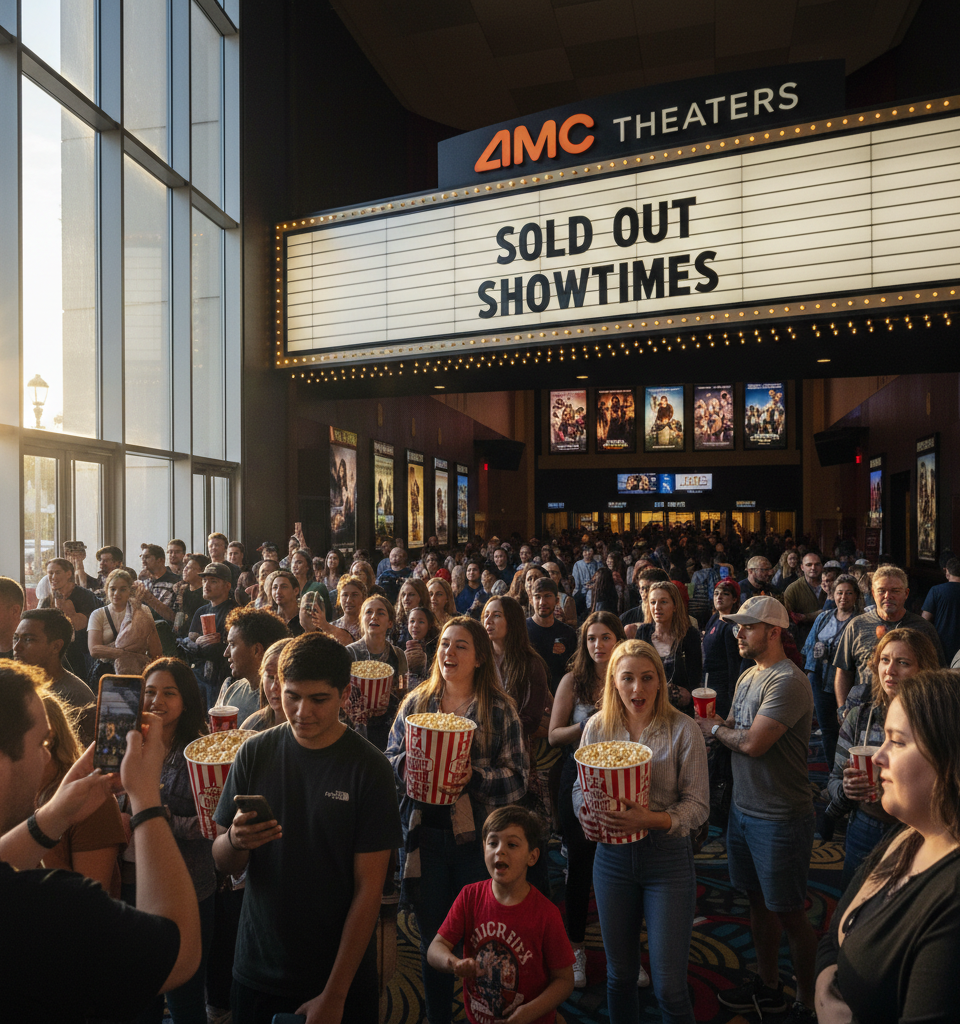
Investment firm B. Riley Securities has revised its price target for AMC Entertainment Holdings (NYSE: AMC) to $2 per share, up from its previous $1.50, driven by an observable strengthening in box office trends. The adjustment underscores a cautious yet optimistic outlook on the cinema industry's recovery, particularly as moviegoers return to theaters with increasing frequency. This shift in analyst sentiment provides a glimmer of hope for AMC, a company that has navigated significant financial challenges and captivated a dedicated base of retail investors.
Shifting Dynamics in the Entertainment Landscape
This upgrade is particularly significant given AMC's tumultuous journey over the past few years. Once on the brink of bankruptcy during the height of the COVID-19 pandemic, AMC became a prominent 'meme stock,' buoyed by massive retail investor interest. B. Riley's latest assessment suggests a pivot towards fundamental business improvements, indicating that the recovery of the theatrical exhibition sector is gaining tangible momentum. The firm's analysis likely incorporates factors such as sustained strong openings for major film releases, improved consumer confidence in public gatherings, and a more robust film slate following pandemic-induced production delays.
Behind the Numbers: A Closer Look at Box Office Performance
While specific data points from B. Riley were not immediately detailed in the announcement, the broader industry has indeed shown encouraging signs. Recent blockbusters have consistently outperformed expectations, drawing large crowds and generating substantial revenue. For example, several high-profile releases have achieved global box office totals exceeding pre-pandemic benchmarks in their respective genres. This resurgence is critical for AMC, as ticket sales and concession revenues directly impact its financial health. The company has also been actively managing its debt load and exploring alternative revenue streams, albeit with mixed results, making the core business's performance paramount.
Broader Implications for the Cinema Industry
The ripple effect of stronger box office numbers extends beyond just AMC. It signals a healthier ecosystem for film studios, distributors, and other exhibition chains. An optimistic outlook from a prominent investment firm like B. Riley can influence broader market sentiment, potentially attracting more institutional investment into the sector. This recovery is also crucial for the thousands of employees whose livelihoods depend on the sustained operation of cinemas. Furthermore, it challenges narratives that streaming services would permanently decimate the theatrical release model, suggesting a co-existence where the communal experience of cinema retains significant appeal.
Expert Insights on Recovery and Future Challenges
Analysts generally agree that while the improvement is welcome, the industry still faces hurdles. A representative from another investment bank, speaking anonymously due to company policy, noted, "The trajectory is positive, but AMC's debt structure remains a long-term concern. While box office trends are improving, they need to translate into consistent free cash flow generation to truly stabilize the company." Meanwhile, AMC CEO Adam Aron has frequently expressed confidence in the enduring power of the big screen, often highlighting the company's efforts to innovate and enhance the movie-going experience, from premium formats to loyalty programs.
What Lies Ahead for AMC and Theaters
Looking forward, the industry will be closely watching the consistency of new film releases and their ability to draw audiences. The coming quarters will feature a robust pipeline of highly anticipated movies, which will be critical in sustaining the current momentum. For AMC, managing its debt obligations remains a key challenge, even with improved revenue. The company's ability to capitalize on stronger box office performance to deleverage and invest in operational improvements will be paramount. Investors will also monitor the impact of any potential labor disputes in Hollywood, which could disrupt future film slates.
B. Riley's upgraded target, while modest in absolute terms given AMC's historical share price highs, represents a vote of confidence in the underlying business fundamentals. It suggests that the worst may indeed be over for the beleaguered exhibitor, positioning it to potentially capitalize on a resurgent theatrical market. However, the path to sustained profitability and long-term stability will undoubtedly require continued strategic execution and favorable market conditions.