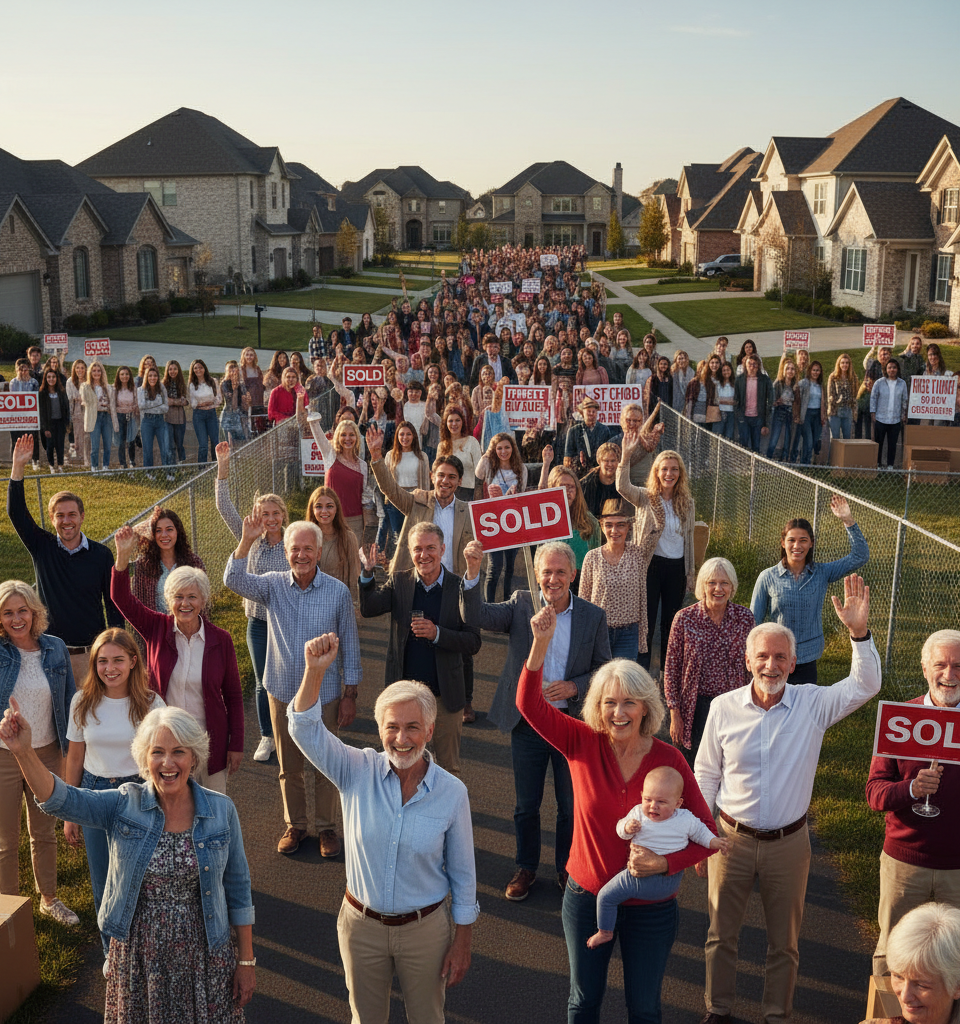
The landscape of the residential real estate market is undergoing a profound compositional shift, with first-time buyers now representing just 21% of all transactions. This figure establishes a new nadir, signifying the lowest proportion recorded since comprehensive data tracking commenced in 1981, and highlights the escalating barriers to homeownership for new market participants. The unprecedented decline coincides with an observed consolidation of housing assets within the Baby Boomer demographic, fostering concerns about intergenerational wealth transfer and market accessibility.
Generational Divide Deepens in Housing Market
This dramatic drop in first-time buyer participation is not merely a statistical anomaly but a critical indicator of a widening chasm within the housing sector. For decades, the aspiration of homeownership has been a cornerstone of the American dream and a primary vehicle for wealth accumulation. The current statistics suggest that this pathway is becoming increasingly inaccessible for younger generations, who are contending with a confluence of factors including escalating home prices, high interest rates, and stagnant wage growth relative to housing costs. The long-term implications for economic mobility and societal stability are considerable, prompting close scrutiny from economists and policymakers alike.
Historical Context and Current Trends
To contextualize the current situation, historical data reveals that first-time buyers have typically formed a more substantial segment of the market, often fluctuating around 30% to 40% in healthier economic climates. The recent descent to 21% underscores a significant departure from these historical norms, pointing to systemic challenges rather than cyclical variations. This trend is exacerbated by a limited inventory of affordable starter homes, as well as the competitive advantage held by older, more affluent buyers who often possess significant equity from previous home sales, enabling them to make all-cash offers or absorb higher prices.
Broader Economic and Social Implications
The dominance of Baby Boomers in the housing market, while a natural demographic progression to some extent, has been amplified by specific economic conditions. Many in this generation benefited from appreciative housing markets over several decades, often accumulating substantial home equity. This capital allows them to purchase new properties, often as down-sizers or second-home buyers, without the same financial constraints faced by those entering the market for the first time. The resulting equilibrium further constricts the supply of accessible housing, effectively pushing out potential first-time homeowners and contributing to a longer-term rental market dependency for a growing segment of the population.
Impact on Regional Economies and Market Dynamics
The implications of this generational imbalance extend beyond individual homeownership. Local economies, traditionally buoyed by the ancillary spending associated with first-time home purchases – such as furniture, appliances, and home improvement services – may experience a slowdown. Furthermore, the reduced turnover of properties by existing homeowners, many of whom are Baby Boomers content in their current residences, contributes to ongoing supply shortages. This stifles new construction incentives for entry-level housing and perpetuates an environment of upward price pressure on the limited available stock.
The Road Ahead for Aspiring Homeowners
Looking forward, the persistence of these trends could necessitate fundamental shifts in housing policy and market strategies. Without interventions aimed at increasing affordable housing stock, stabilizing prices, or making financing more accessible for younger demographics, the 21% figure may solidify as a new baseline rather than a temporary dip. Policy discussions are likely to intensify around initiatives such as incentives for new home construction, reforms to zoning laws that restrict density, and potential adjustments to lending criteria to better support first-time buyers. The long-term health of the housing market, and indeed the broader economy, hinges on addressing the structural imbalances that are increasingly marginalizing new generations of potential homeowners.