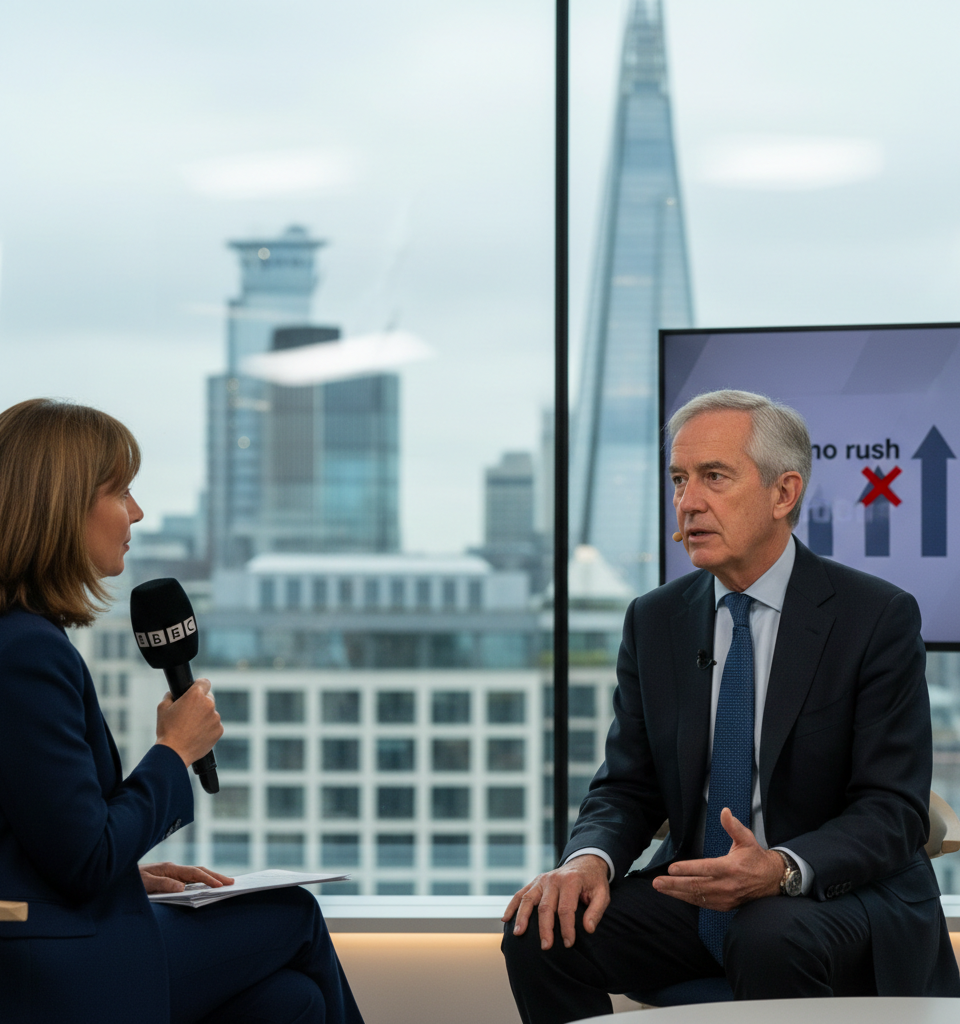
LONDON – Bank of England Governor Andrew Bailey has signaled a measured approach to future interest rate adjustments, acknowledging that the escalating energy crisis fueled by the conflict in Iran has rendered the central bank's upcoming monetary policy decision "very very difficult." Speaking to the BBC, Bailey's comments underscore a growing reluctance within Threadneedle Street to accelerate rate hikes, despite persistent inflationary pressures, as policymakers grapple with the complex interplay of geopolitical instability and economic stability.
This pronouncement comes at a critical juncture for the global economy. The conflict in Iran, which has intensified in recent months, has sent crude oil prices soaring and disrupted international energy supply chains, creating an immediate and stark challenge for central banks worldwide. For the UK, heavily reliant on energy imports, this shock translates directly into higher consumer prices and increased operational costs for businesses, threatening to stifle economic growth even as the Bank of England seeks to rein in inflation that has remained stubbornly above its 2% target.
The Geopolitical Dimension of Monetary Policy
Bailey's candid assessment highlights the extraordinary circumstances under which modern monetary policy is now being formulated. Traditionally, central banks focus on domestic economic indicators such as inflation, employment rates, and GDP growth. However, the current environment demands a broader perspective, where geopolitical events like the ongoing Iran conflict become central to economic forecasting and policy calibration. The "very very difficult" nature of the upcoming decision points to an internal debate within the Monetary Policy Committee (MPC) regarding the optimal balance between tackling inflation and preventing a deeper economic downturn exacerbated by energy price volatility.
The immediate impact on markets has been noticeable, with sterling experiencing some fluctuations against major currencies as investors digest the implications of a potentially more dovish stance from the Bank of England. Bond yields have also reacted, reflecting revised expectations for the pace and magnitude of future rate increases. The energy sector, in particular, remains highly sensitive to developments in the Middle East, and any further escalation could force the Bank's hand in unexpected ways, regardless of their current leanings.
Balancing Inflation and Economic Headwinds
Economists are pointing to the dilemma faced by the MPC: aggressive rate hikes, while potentially effective in cooling inflation, could significantly amplify the economic slowdown already being induced by the energy shock. Conversely, a prolonged period of high inflation, if left unchecked, risks embedding inflationary expectations into the economy, making it even harder to control in the long run. The Governor's concerns suggest that the Bank is heavily weighing the risk of an economic contraction against the imperative to stabilize prices.
The situation is further complicated by the fact that energy price increases are largely supply-side driven, meaning they are less responsive to conventional monetary policy tools. Raising interest rates can curb demand, but it does little to increase the global supply of oil or mitigate the geopolitical risks that are currently driving prices skyward. This limitation underscores the difficulty Bailey referred to, as the fundamental drivers of the current inflationary surge lie beyond the direct influence of the central bank.
Near-Term Outlook and Market Expectations
Looking ahead, market participants will be closely scrutinizing the Bank of England's forthcoming policy statements for further indications of its strategy. The next MPC meeting is expected to be a contentious one, with members likely to debate the merits of incremental tightening versus a more cautious, wait-and-see approach. The trajectory of the Iran conflict and its impact on global energy markets will undoubtedly be a paramount factor in their deliberations.
Businesses across the UK are closely monitoring these developments, understanding that borrowing costs and consumer demand are intrinsically linked to the Bank's decisions. Sectors heavily reliant on energy, such as manufacturing and transportation, are particularly vulnerable to continued price volatility. The Bank of England's cautious tone suggests a recognition of these broader economic fragilities, hinting that the path to monetary normalization may be even more protracted and turbulent than previously anticipated in the face of persistent geopolitical headwinds.