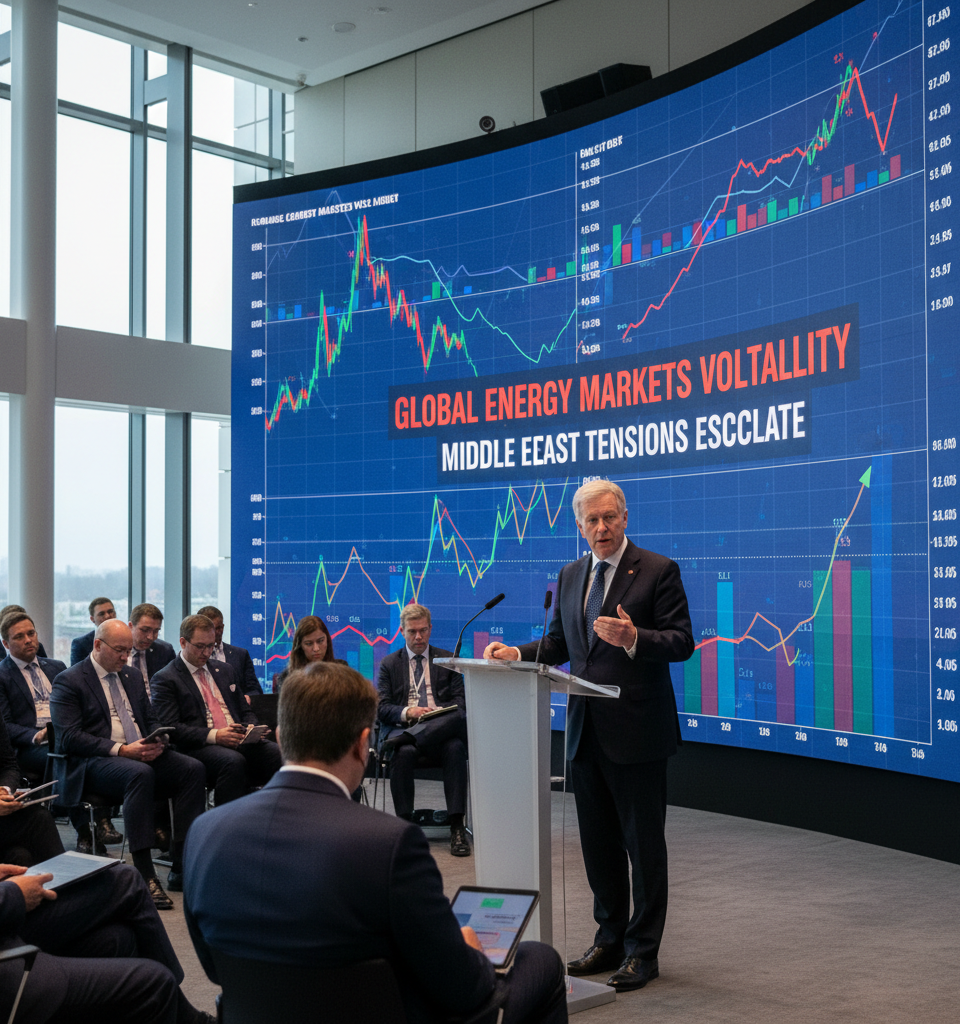
London, UK – Bank of England Governor Andrew Bailey has delivered a sobering alert, cautioning that the global economy faces the specter of a "very big energy shock" should the conflict in the Middle East, particularly involving Iran, continue to intensify. Speaking at a recent financial summit, Bailey's remarks highlight the palpable anxiety within central banking circles about the potential for geopolitical tensions to unravel years of economic recovery and stabilization efforts, particularly concerning energy supply and prices.
Geopolitical Tensions Reignite Economic Fears
Bailey's warning arrives at a critical juncture, as the world grapples with persistent inflationary pressures and a delicate post-pandemic economic recovery. The Middle East, a pivotal region for global energy markets, has seen a dangerous escalation of hostilities, notably following recent exchanges between Iran and Israel. Such developments raise immediate concerns over the security of vital shipping lanes, like the Strait of Hormuz, through which a significant portion of the world's oil transits daily. Any disruption to this flow would inevitably lead to a sharp surge in crude oil and natural gas prices, exacerbating costs for businesses and consumers worldwide.
The Echoes of Past Crises and Current Vulnerabilities
While specifics on the potential magnitude of the shock were not detailed, Bailey's language evokes memories of previous energy crises, such as the 1970s oil shocks, which triggered widespread stagflation. The current global economy, though more diversified, remains heavily reliant on fossil fuels. Furthermore, ongoing conflicts in other energy-exporting regions, notably the Russia-Ukraine war, have already strained global energy supplies and kept prices volatile. A fresh crisis originating from the Middle East would compound these existing vulnerabilities, potentially pushing economies, particularly in energy-importing nations like the UK and much of Europe, towards recession.
Market Reponse and Broader Economic Implications
Financial markets have already demonstrated hypersensitivity to developments in the region. Crude oil futures, such as Brent crude, saw spikes of over 5% in the immediate aftermath of certain escalation events, though they have since moderated. However, the persistent threat keeps a floor under prices. For the broader economy, higher energy costs translate directly into increased operating expenses for industries ranging from manufacturing to transportation, leading to producer price inflation that eventually filters down to consumer prices. This scenario would present central banks, including the Bank of England, with a renewed dilemma: combat inflation with tighter monetary policy at the risk of stifling economic growth, or tolerate higher inflation and risk its entrenchment.
Expert Prognosis: A High-Stakes Balancing Act
Economists and geopolitical analysts largely concur with Bailey's assessment, albeit with varying degrees of optimism regarding de-escalation. Dr. Eleanor Vance, a senior economist at Global Insight Group, noted, "The interconnectedness of energy markets means that even localized conflicts can have outsized global economic ripples. Central banks are already on a tightrope, and a significant energy shock could very well knock them off, forcing difficult trade-offs between price stability and economic stability." Analysts at major investment banks are reportedly stress-testing portfolios against scenarios involving Brent crude prices breaching $100-$120 per barrel for an extended period, a level not seen consistently in over a decade.
The Path Forward: Diplomacy and Preparedness
The immediate future hinges critically on diplomatic efforts to de-escalate tensions in the Middle East. International bodies and key global powers are under pressure to facilitate dialogue and prevent a wider regional conflagration. Domestically, governments and central banks are likely to re-evaluate their energy security strategies, potentially accelerating investments in renewable energy sources and exploring measures to buffer consumers and businesses from sudden price spikes. The Bank of England, in particular, will be closely monitoring energy market indicators and geopolitical developments, ready to adjust its monetary policy stance if the feared "very big energy shock" materializes, thereby navigating a complex and uncertain economic landscape.
Potential Policy Responses and Mitigation Strategies
Should the energy shock materialize as feared, central banks could face intense pressure to hike interest rates further to curb inflationary pressures, potentially pushing economies into recession. Governments might need to consider targeted subsidies for vulnerable households and businesses, or even strategize on replenishing strategic petroleum reserves. The UK, like many European nations, remains highly dependent on natural gas imports, making it particularly exposed to supply disruptions. This vulnerability underscores the urgent need for long-term energy diversification and resilience policies to mitigate future shocks, moving beyond short-term reactive measures.