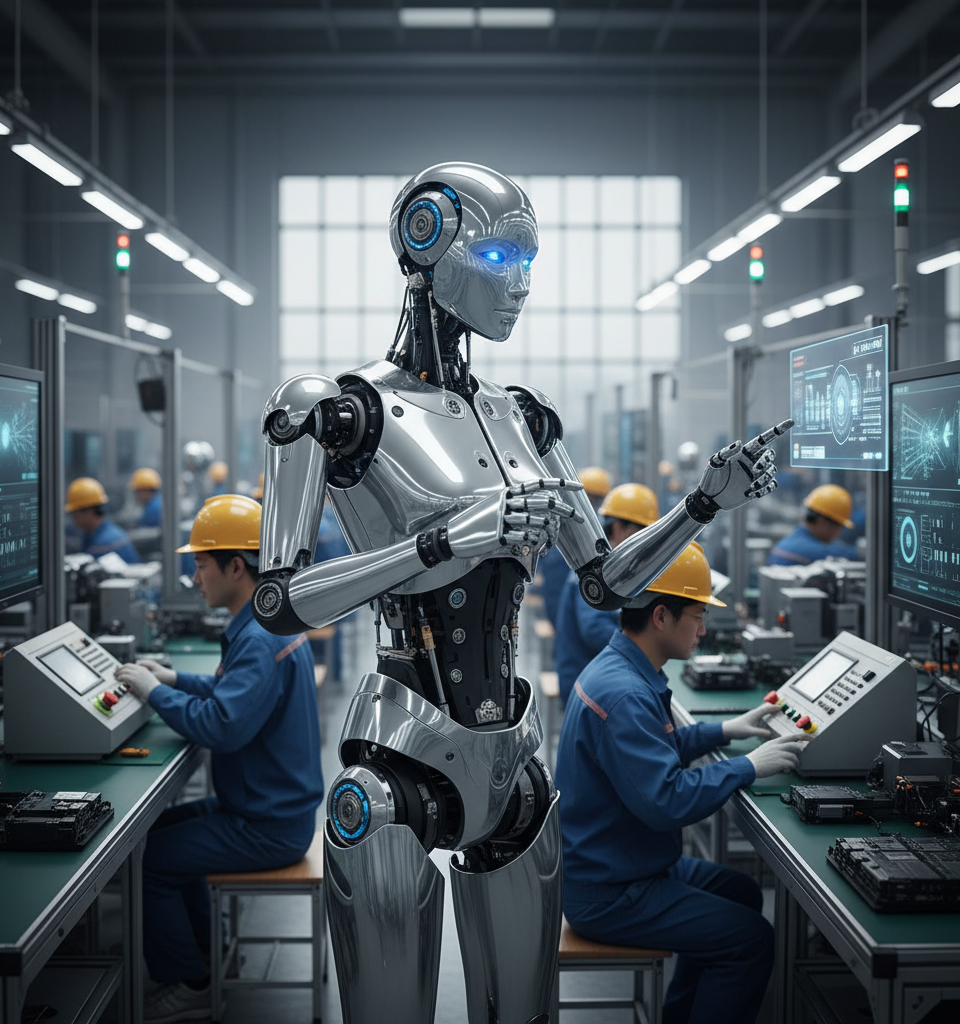
London, UK – May 19, 2026 – China's looming demographic challenge, characterized by a shrinking workforce, could find a substantial technological remedy in humanoid robots, according to a recent analysis by Barclays. The British financial institution's research note, published ahead of significant anticipated labor shifts, posits that these advanced machines could offset 60% of the country's projected 37 million worker shortfall by 2035. This innovative solution would necessitate the deployment of as many as 24 million humanoid units across the nation.
China's Workforce Dynamics and the Demographic Imperative
The prospect of a significant decline in its working-age population presents one of China's most formidable economic and social hurdles. Over the next ten years, the country is expected to see its labor force contract by an estimated 37 million individuals, a demographic shift that could have profound implications for its industrial capacity, economic growth, and global competitiveness. This decline is largely attributed to factors such as an aging population, lower birth rates, and historical one-child policies, creating an urgent need for strategic interventions to maintain productivity levels.
The Role of Humanoid Robotics
Barclays' analysis underscores the potential for humanoid robots to fill this critical gap, acting as a crucial labor supplement rather than a complete replacement. The financial firm's estimates suggest that for every 10 million workers China loses, approximately 6 million of those roles could hypothetically be managed or supplemented by humanoid robotic systems. This implies a strategic integration of robotics into various sectors to maintain operational efficiency and output. The scale of this integration, however, is immense, calling for millions of advanced machines to be manufactured, deployed, and maintained.
Economic and Industrial Implications
The deployment of millions of humanoid robots would not only address labor shortages but also ignite new economic opportunities within China's burgeoning robotics and artificial intelligence sectors. The demand for such a vast number of units, coupled with the need for associated infrastructure, software development, and maintenance services, would likely spur significant investment and innovation. This could further solidify China's position as a global leader in advanced manufacturing and technological adoption, creating a self-reinforcing cycle of development and implementation.
Challenges and Considerations
While the potential benefits are substantial, such a large-scale integration of humanoid robots presents significant challenges. These include the substantial capital investment required for manufacturing and purchasing 24 million units, the development of robust AI and autonomy needed for complex tasks, and the societal acceptance of a robotic workforce. Furthermore, the logistical complexities of deploying and maintaining such an extensive fleet across diverse industries, from manufacturing to services, would be considerable. Training workers to operate alongside or manage these robots would also be a critical factor.
Technological Readiness and Future Outlook
The feasibility of deploying 24 million humanoid robots by 2035 hinges heavily on the rapid advancement and cost-effectiveness of robotic technology. While significant strides have been made in robotics and AI, the pathway to mass production and widespread deployment of humanoids capable of performing a diverse range of tasks at an economically viable scale is still evolving. Barclays' report serves as a forward-looking assessment, highlighting a potential technological trajectory rather than a guaranteed outcome, dependent on continued innovation and strategic policy decisions by the Chinese government.
Global Precedent and Competitiveness
China's potential embrace of humanoid robotics as a solution to its labor crisis could set a global precedent. As other developed nations grapple with aging populations and shrinking workforces, the success or challenges faced by China in this endeavor would provide invaluable insights. This strategic move could also enhance China's long-term economic competitiveness by mitigating production costs and increasing efficiency in an era of demographic constraint, further cementing its role in the global supply chain dynamics. The report does not detail specific industries of focus, but the implications are broad, spanning manufacturing, logistics, healthcare, and services.