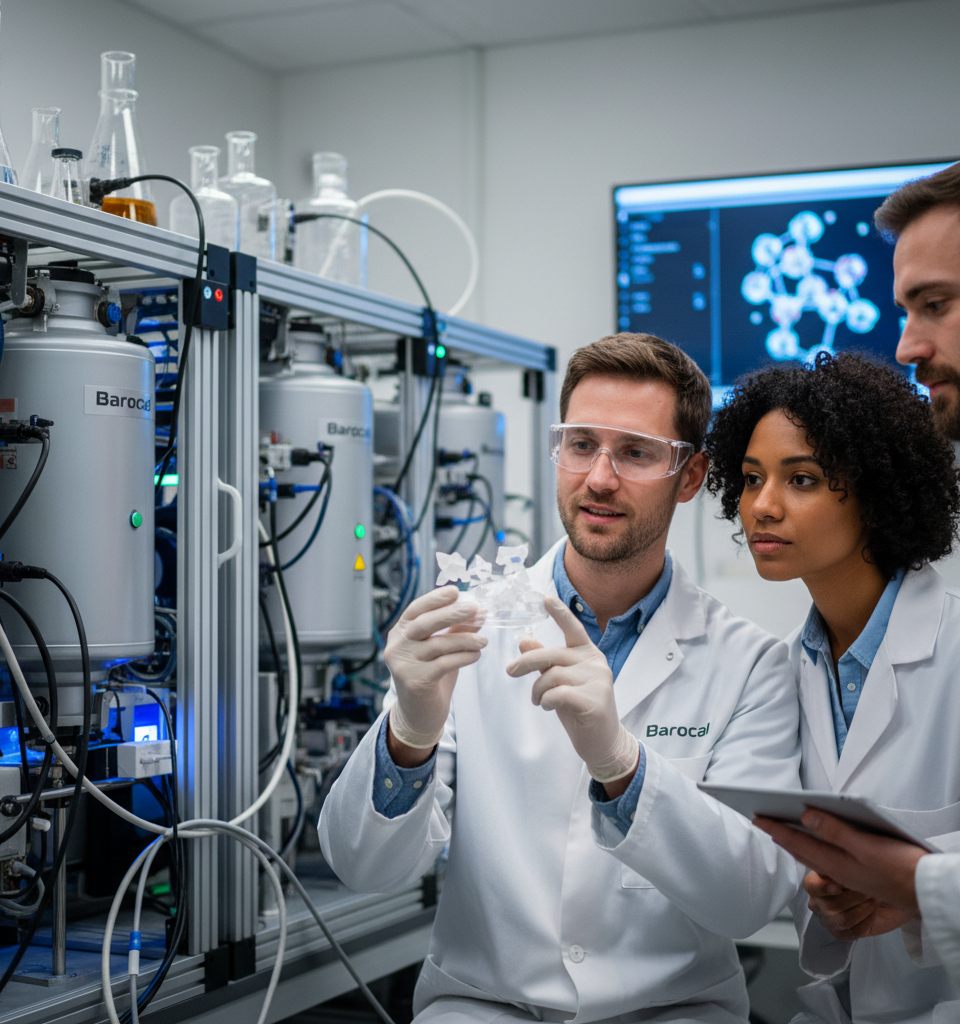
London, UK – Barocal, a burgeoning materials science firm, has recently unveiled a groundbreaking refrigeration technology that leverages the fascinating thermocaloric properties of specialized plastic crystals. This novel approach, departing significantly from the century-old vapor-compression systems, holds the promise of dramatically reducing energy consumption and eliminating the use of environmentally damaging refrigerants, offering a compelling vision for the future of cooling across domestic and industrial applications.
The Overlooked Imperative of Efficient Cooling
The quest for efficient and sustainable cooling solutions has never been more critical. Traditional refrigeration, while indispensable, accounts for approximately 10% of global electricity consumption and is heavily reliant on hydrofluorocarbons (HFCs) – potent greenhouse gases with global warming potentials thousands of times higher than CO2. As global temperatures rise and the demand for cooling intensifies across an expanding middle class worldwide, particularly in developing nations, innovations like Barocal's become not merely advantageous but imperative. The potential environmental impact, from reducing carbon footprints to mitigating ozone depletion, underscores the profound significance of this development.
Unpacking the "Plasticaloric" Phenomenon
At the heart of Barocal's innovation lies a class of materials known as plastic crystals. Unlike conventional solids, these organic compounds possess a unique molecular structure that allows them to deform and reform, or 'melt,' at relatively low temperatures under pressure, absorbing and releasing heat in a highly efficient manner. This "plasticaloric" effect creates a cooling cycle that is inherently simpler and potentially more efficient than current systems.
The process involves compressing these plastic crystals, which causes them to heat up. This heat is then dissipated, and upon releasing the pressure, the crystals cool significantly, absorbing heat from their surroundings. Crucially, these materials are abundant, non-toxic, and inexpensive to produce, sidestepping the supply chain complexities and environmental concerns associated with rare earth elements or hazardous chemicals often found in other emergent cooling technologies.
Early prototypes demonstrate a cooling capacity up to 10 times higher than liquid refrigerants and operate across temperature ranges suitable for household refrigerators and industrial chillers.
Paving the Way for a Cooler, Greener Industry
This development has far-reaching implications for a global refrigeration market currently valued at over $150 billion annually and projected to exceed $200 billion by 2027. If successful, Barocal's technology could fundamentally reshape manufacturing processes, supply chains, and consumer expectations. Refrigerator manufacturers could drastically simplify their designs, reducing reliance on complex compressors and intricate piping systems, potentially leading to smaller, lighter, and more durable appliances.
The logistical advantages are also considerable, particularly in regions where access to established refrigerant supply chains is limited, and the cost of electricity is a major concern. Furthermore, the technology’s scalability suggests applications beyond domestic kitchens, extending into medical cold storage, data center cooling, and even air conditioning for buildings and vehicles, each currently a significant energy sink.
Expert Insights on the Thermocaloric Potential
Industry experts and materials scientists have largely reacted with cautious optimism to Barocal's announcement. Dr. Emily Carter, a professor of Materials Engineering at Imperial College London, notes, "The elegance of using plastic crystals for thermocaloric cooling is their relative abundance and tunable properties.
While scaling up and achieving long-term stability and efficiency in diverse operational environments will be key challenges, the fundamental science is sound and the energy efficiency potential is undeniable. " Analysts suggest that gaining regulatory approvals and establishing robust manufacturing processes will be critical hurdles, but the promise of a sustainable alternative is too significant to ignore.
The Road Ahead: Commercialization and Impact
Barocal is currently focused on optimizing its proprietary plastic crystal formulations and scaling up production for pilot programs. The company anticipates initial commercial applications within the next 3-5 years, likely targeting niche industrial cooling before expanding into the high-volume consumer market. Partnerships with major appliance manufacturers are reportedly under discussion, aiming to integrate the technology into next-generation refrigerators and freezers. Beyond immediate product development, the broader implications include accelerating the phase-out of harmful HFCs under international accords like the Kigali Amendment, contributing significantly to global climate goals. This innovation isn't just about making things cold; it's about making a cleaner, more sustainable future for a world that increasingly relies on cooling.
Addressing the Challenges of Disruption
While the potential is vast, disrupting an entrenched industry like refrigeration comes with its own set of challenges. The capital investment required for manufacturing infrastructure, the need to convince consumers and industry of the technology's reliability and longevity, and competition from other emerging cooling methods (such as magnetic refrigeration or thermoacoustic systems) are all factors Barocal must navigate. However, the sheer simplicity, cost-effectiveness, and environmental benefits of plasticaloric cooling, if successfully brought to market, position Barocal as a dark horse contender to redefine how the world stays cool. The impact on energy grids, greenhouse gas emissions, and even global access to reliable cold chains could be profound, marking a significant stride towards a more sustainable planet.