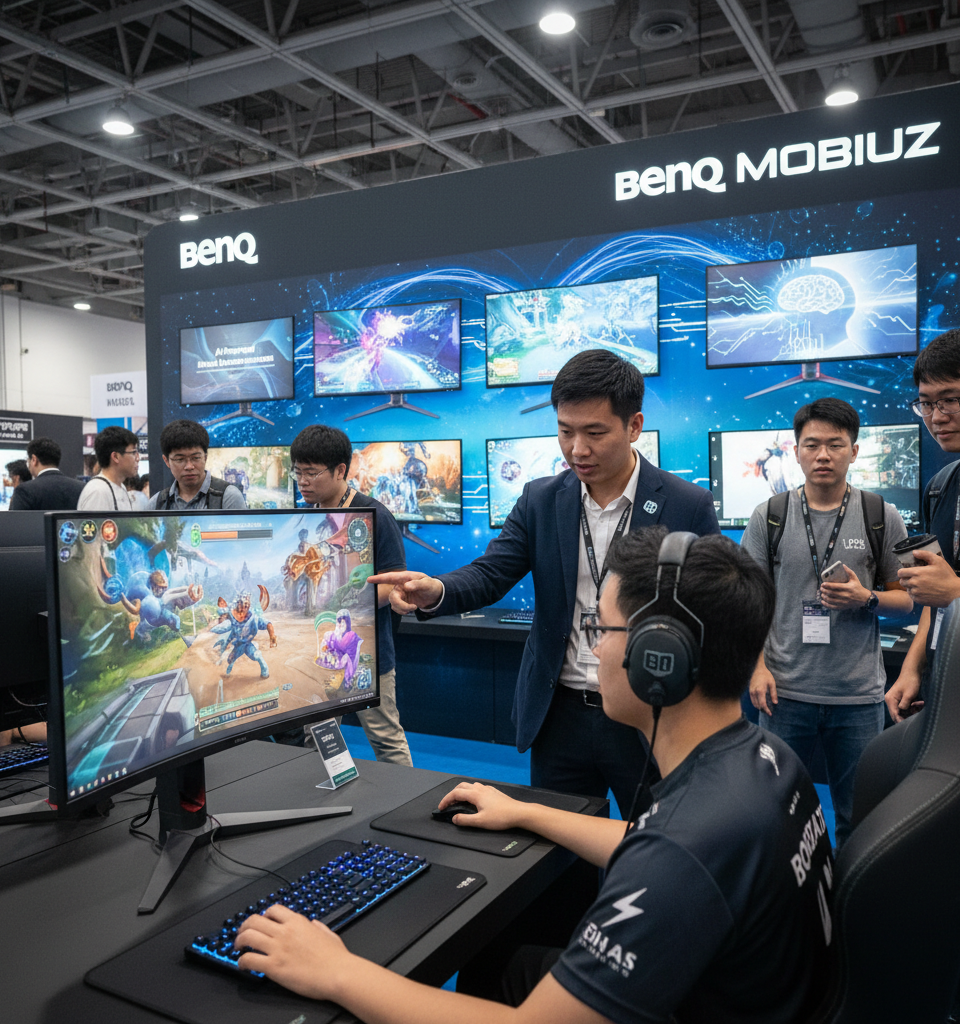
BenQ's latest iteration of its MOBIUZ gaming monitors is poised to introduce a significant shift in how visual enhancements are delivered to gamers. These new displays will leverage advanced AI-powered Smart Color and Color Shuttle technologies, designed to perform real-time visual auto-tuning directly on the monitor itself. This development marks a concerted effort by BenQ to provide superior in-game aesthetics without burdening the graphics processing unit (GPU), a common limitation with software-based filters.
The Evolution of In-Game Visuals
For years, gamers have sought various methods to optimize their visual experience, ranging from in-game settings to third-party overlay filters. NVIDIA's RTX filters, for instance, offer customizable visual tweaks post-rendering but often come with a performance trade-off, utilizing GPU cycles that could otherwise be dedicated to frame rates. BenQ's approach with the MOBIUZ series seeks to circumvent this dilemma entirely by shifting the processing of these enhancements from the PC's internal components to the display hardware. This on-monitor processing promises a performance-neutral solution for visual refinement.
Core Technologies: Smart Color and Color Shuttle
The linchpin of BenQ's new strategy lies within its proprietary Smart Color and Color Shuttle technologies. Smart Color is described as an AI-driven system that intelligently analyzes and adjusts color output, contrast, and brightness to optimize the visual presentation of various game genres and scenes. This dynamic adjustment aims to create more vibrant, detailed, and immersive environments. Complementing this is Color Shuttle, a feature enabling users to save and share specific visual presets. This functionality fosters a community aspect, allowing gamers to experiment with and distribute optimized display settings, potentially creating a rapidly evolving library of visual profiles tuned for popular titles.
Impact on the Gaming Ecosystem
The introduction of display-side visual processing by BenQ could have a notable impact on the broader gaming monitor market and the competitive landscape. By offering a solution that enhances visuals without incurring a performance hit, BenQ is positioning its MOBIUZ line as a compelling alternative to GPU-intensive software filters. This might encourage other monitor manufacturers to explore similar hardware-accelerated visual enhancement technologies, potentially leading to a new arms race in display innovation. For consumers, it translates to a more accessible way to achieve high-fidelity graphics, especially for those with mid-range GPUs who might otherwise struggle to maintain high frame rates with demanding visual filters enabled.
User Customization and Shareability
A key aspect of BenQ's new monitor features is the emphasis on user customization and community sharing. The ability to create, save, and share personalized color profiles through Color Shuttle is a distinct advantage. This feature moves beyond simple pre-set modes, empowering users to fine-tune their visual experience to an unprecedented degree. Imagine a scenario where professional esports players or popular streamers could share their meticulously crafted visual settings, allowing their audience to replicate their in-game experience with a few clicks. This not only enhances personalization but also fosters a sense of community around optimizing visual gameplay.
Outlook: A New Paradigm for Display Enhancement
Looking ahead, BenQ's move could signal a broader trend in the display industry towards more intelligent, self-optimizing hardware. As AI continues its integration into consumer electronics, monitors may evolve beyond mere output devices into sophisticated visual processors. The company’s initiative suggests a future where the monitor plays a more active role in enhancing the user experience, offloading tasks from the primary computing components and offering a more seamless, integrated solution. If successful, this could set a new standard for what gamers expect from their displays, moving visual customization from a software concern to a fundamental hardware capability.