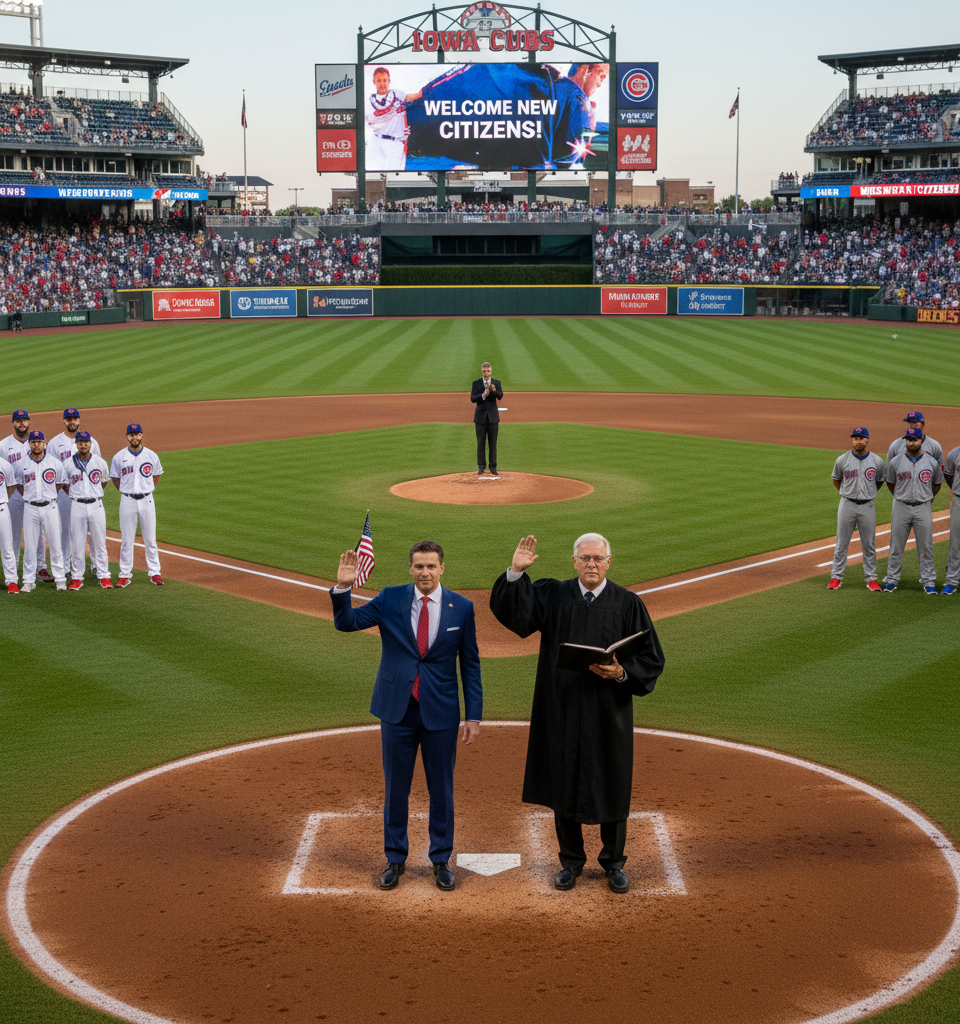
Greg Abel, the Chief Executive Officer of Berkshire Hathaway Energy and a prominent figure within the broader Berkshire Hathaway conglomerate, was sworn in as a U.S. citizen during an annual naturalization ceremony held at an Iowa Cubs baseball game on Thursday night in Des Moines. The event underscored a personal milestone for Abel, who has resided in Iowa for an extended period, despite his birth in Edmonton, Canada, in 1962.
A Public Affirmation of Citizenship
The ceremony, a recurring community event organized by the Iowa Cubs, served as a public forum for a diverse group of immigrants to formally embrace their new nationality. Abel was one of roughly two dozen individuals representing 16 distinct countries who participated in the solemn occasion. This public induction into U.S. citizenship for such a high-profile business leader adds a unique human-interest dimension to the often-private process of naturalization.
Context of Leadership at Berkshire Hathaway
Abel’s naturalization comes at a significant juncture in his career and within Berkshire Hathaway. As CEO of Berkshire Hathaway Energy, he oversees a vast portfolio of utility and energy companies. More critically, he has been publicly identified as the likely successor to legendary investor Warren Buffett as the chief executive of Berkshire Hathaway Inc. This makes his personal status as a U.S. citizen relevant given the substantial domestic footprint and international influence of the conglomerate he is poised to lead. While his Canadian nationality never impeded his leadership roles within the predominantly U.S.-based corporation, his naturalization solidifies his ties to the nation where Berkshire Hathaway is headquartered and where the majority of its operations are concentrated.
The Naturalization Process
The ceremony itself is the culmination of a rigorous naturalization process, which typically involves a period of continuous residence, an application, an interview, and passing civics and English tests. For those participating, like Abel, it represents a profound personal journey and commitment to the United States. The decision to hold such ceremonies at community events, such as baseball games, aims to make the process more accessible and celebratory for the new citizens and the public.
Broader Implications for Integration
While largely a personal matter, Abel’s public naturalization can be seen as emblematic of the integration of global talent into the American economic and social fabric. Many top executives and innovators in the U.S. are first- or second-generation immigrants. His journey from Canada to becoming a leading figure in American business, now cemented by citizenship, highlights the enduring appeal and opportunities within the United States for international professionals. It also subtly reinforces the idea that leadership in major American institutions is not exclusively tied to birthright citizenship.
The Role of Community Events
The Iowa Cubs’ long-standing tradition of hosting these ceremonies underscores the role of local institutions in civic life. By integrating such an important event into a widely attended communal activity like a baseball game, the organization helps to normalize and celebrate the naturalization process, making it a shared experience rather than a bureaucratic formality. This approach helps foster a sense of welcome and belonging for new citizens.
What This Means for Berkshire Hathaway
For Berkshire Hathaway, Abel’s naturalization does not fundamentally alter its operational or strategic direction. However, it does complete a personal journey for its presumptive future leader, aligning his personal civic status with the national identity of the corporate behemoth he is set to helm. It symbolizes a deeper commitment to the United States that, while perhaps symbolic, contributes to the narrative of a fully integrated U.S. corporate leader. His long-term residency in Iowa already placed him firmly within the American context, but his citizenship officially closes that chapter of his personal migration story.
The ceremony in Des Moines provides a poignant reminder that even leaders at the apex of global business undergo significant personal transitions, underscoring the universal human experience of seeking and affirming belonging.