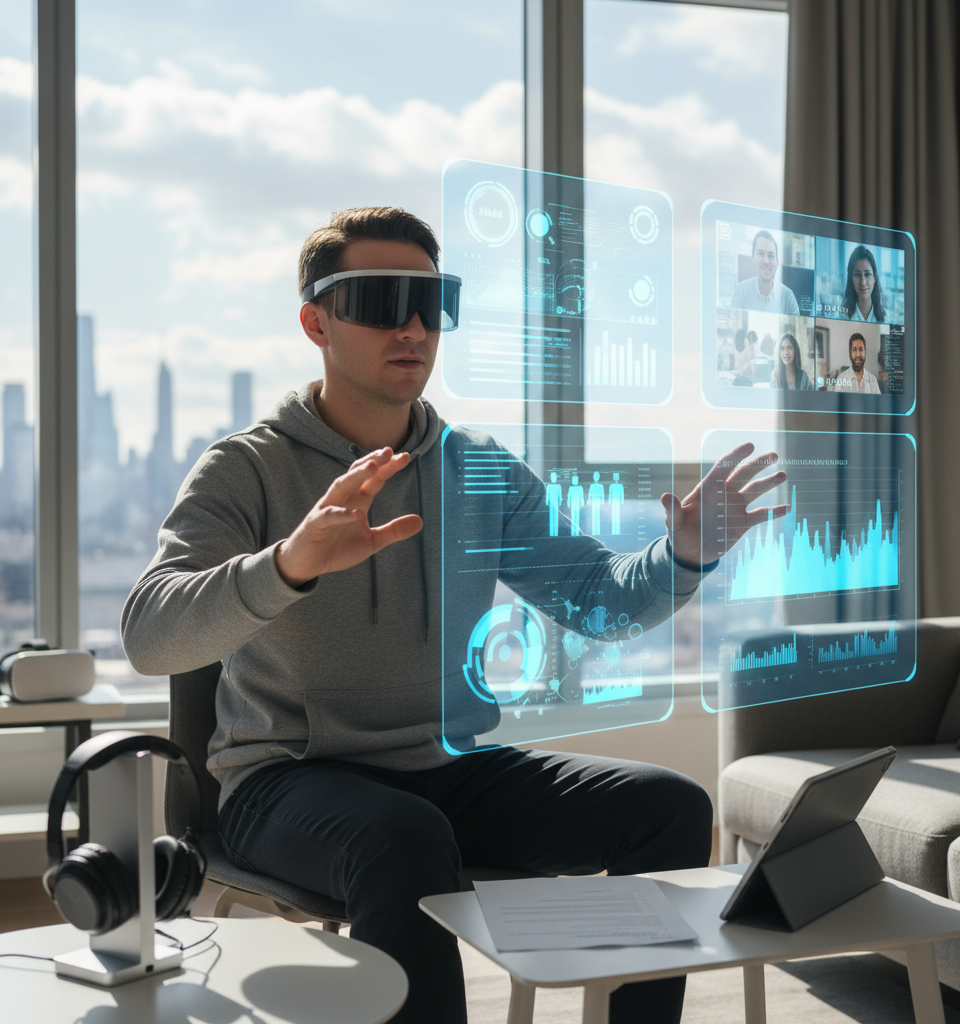
Over a concentrated 30-day period, a comprehensive trial was conducted to evaluate the efficacy and user experience of five distinct remote work setups, each designed to potentially supplant the conventional laptop. This intensive assessment pitted emerging technologies such as extended reality (XR) glasses, standalone virtual reality headsets, and high-performance tablets against the established paradigm of portable computing. The objective was clear: to determine if any of these innovative devices could offer a comparable, or even superior, environment for professional productivity and connectivity in an increasingly distributed work landscape.
The Shifting Sands of Remote Work Technology
The inquiry into laptop alternatives arrives at a pivotal moment, as remote and hybrid work models continue to entrench themselves within the global economy. Before the COVID-19 pandemic, laptops were nearly universally accepted as the enterprise standard for mobile productivity. However, the subsequent surge in remote work has accelerated demand for devices that offer greater portability, reduced footprint, and often, enhanced security. This shift has fueled significant investment in new form factors and computational paradigms, with an estimated global remote work technology market projected to reach $75.6 billion by 2027, growing at a CAGR of 16.7% from 2023. The inherent limitations of laptops in highly mobile or space-constrained environments have spurred innovation, leading to a diverse array of contenders.
Performance Across the Board: Hits and Misses
The month-long trial meticulously documented performance metrics, software compatibility, ergonomic considerations, and overall user satisfaction for each device. XR glasses, for instance, offered a compelling multi-screen virtual desktop experience, rated highly for immersion and potential future applications, but faced limitations in text input and prolonged comfort. Standalone headsets presented a similar immersive advantage, particularly for collaborative virtual environments, yet suffered from isolation—a significant drawback in certain home office settings.
Tablets, while offering superior portability and touch interaction, struggled with the transition to complex multi-application workflows without significant accessory investment. Meanwhile, a top-tier Chromebook emerged as a surprisingly strong, cost-effective contender for basic productivity tasks, though it lacked the raw power and specialized software compatibility of a premium laptop. The most critical feedback across all non-laptop devices was the persistent challenge of seamless external display integration and the inherent limitations of their native input methods, often necessitating external keyboards and mice, thus eroding part of their portability advantage.
Impact on the Enterprise Landscape
This exploration highlights a burgeoning segment within the enterprise technology market. While no single device conclusively dethroned the laptop, the trial underscored the emerging potential for specialized tools. For instance, XR solutions could redefine collaborative design and training, offering spatial computing experiences unparalleled by traditional screens.
Tablets with advanced processors are already making inroads in fields requiring extensive data capture or client presentations. Analysts predict that enterprise spending on XR hardware and software alone could exceed $27 billion annually by 2025, indicating a strong belief in its transformative power. Companies are increasingly looking beyond a one-size-fits-all approach, seeking device ecosystems that empower diverse roles and workflows, moving towards a future of highly personalized digital workspaces rather than universal hardware.
Expert Insights and Future Trajectories
Technology analysts suggest that while the laptop's reign as the primary work device isn't immediately threatened, these alternatives represent a critical evolutionary step. "We're seeing an unbundling of the traditional computing experience," notes Dr. Evelyn Reed, a lead analyst at TechTrends Research.
"Users desire more flexibility in how and where they work. " She emphasizes that the key to wider adoption lies in seamless software integration, robust peripheral support, and, crucially, a dramatic improvement in ergonomic design for extended use. The convergence of AI with hardware optimization is also seen as a crucial factor, enabling more intuitive user interfaces and reducing computational overhead.
The Road Ahead: Integration and Specialization
The immediate future will likely see continued refinement of these alternative devices, rather than a sudden displacement of the laptop. Developers are focusing on enhancing software ecosystems, addressing ergonomic concerns, and improving cross-device compatibility. We may see more modular devices where the 'compute' engine is separate from the display and input, allowing users to configure their setup based on the task at hand.
Furthermore, the push towards 5G and Wi-Fi 6E connectivity will enable more powerful cloud-based applications, potentially reducing the need for high-end local processing. The trajectory points towards a highly specialized future where professionals select from a diverse toolkit of computing devices, each optimized for specific aspects of their remote or hybrid work, with the laptop potentially evolving into just one of many powerful options rather than the sole one.