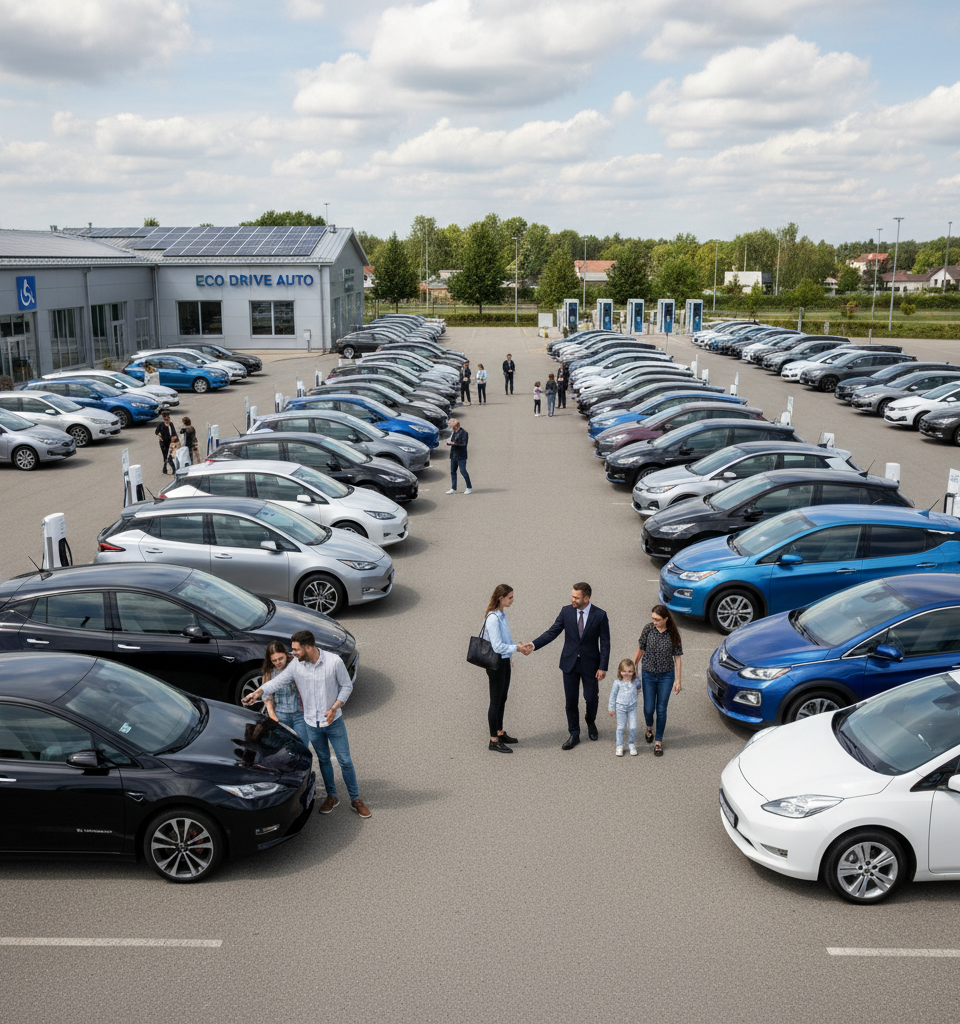
The secondary market for electric vehicles (EVs) is witnessing a remarkable surge in popularity, driven by a complex interplay of factors extending far beyond the volatile price of gasoline. This growing demand, observed across major automotive markets in North America and Europe, signifies a maturing EV ecosystem and a shifting consumer mindset towards sustainable and economically viable transportation solutions.
A Maturing Market Emerges
Historically, the used EV market was often perceived as a niche segment, heavily influenced by incentives for new vehicles and the unpredictable nature of fuel costs. However, recent trends indicate a fundamental shift. While elevated gasoline prices undoubtedly contribute to EV appeal, the sustained growth in used EV sales points to a broader acceptance and understanding of electric mobility. This maturity is a critical development for the automotive industry, signaling a viable long-term future for electrification across all price points.
Unpacking the Drivers of Demand
Several key factors are fueling this accelerated growth. Decreased Depreciation: Early EVs often suffered from rapid depreciation, but as battery technology improves and longevity is proven, residual values are stabilizing, making used EVs a more attractive investment. For instance, data from Cox Automotive indicates that while new EV transaction prices have seen some fluctuations, used EV prices have demonstrated a more consistent and attractive value proposition. Technological Advancements: Newer used models benefit from significant leaps in battery range, charging infrastructure availability, and in-car technology, making them more practical for a wider range of buyers. A 2020 Chevrolet Bolt, for example, offers a significantly improved range compared to its 2017 predecessor. Robust Supply: As the initial wave of new EVs enters the secondary market, the availability of diverse models and price points has expanded dramatically, offering consumers greater choice. Large fleet operators and early adopters are now cycling out their first-generation EVs, providing a steady stream of inventory.
Economic and Environmental Imperatives
The economic viability of used EVs is a powerful draw. Beyond fuel savings, reduced maintenance costs due due to fewer moving parts compared to internal combustion engine (ICE) vehicles present a compelling financial argument. A study by AAA found that EVs cost significantly less to maintain per year than comparable gasoline vehicles. Furthermore, the increasing awareness of environmental concerns and corporate sustainability initiatives contributes to a moral and social imperative for many consumers. Purchasing a used EV is often seen as a practical step towards reducing one's carbon footprint without the premium associated with a brand-new model.
Expert Insights and Industry Shift
Automotive industry analysts are keenly observing these trends. "The perception of range anxiety and battery degradation is steadily diminishing, largely due to real-world performance data and manufacturer warranties," states Jessica Caldwell, an executive director at Edmunds. "Consumers are recognizing the inherent value proposition in a pre-owned EV, especially as the upfront cost barrier becomes less formidable compared to new models." This shift is compelling traditional dealerships to invest more in EV servicing and sales training, profoundly impacting their business models.
Looking Ahead: A Sustained Trajectory
The trajectory for used EV sales appears robust. Upcoming developments, such as advancements in solid-state battery technology promising even greater range and faster charging, will further enhance the appeal of future used models. Governments are also exploring incentives for used EVs, mirroring existing programs for new vehicles, which could provide another significant boost. The continued expansion of public charging infrastructure, funded by government initiatives and private investment, will solidify the practicality of EV ownership for an even broader demographic. This burgeoning market is not merely a transient trend but a foundational component of the electric revolution, signaling a future where sustainable transportation is accessible to a wider populace.