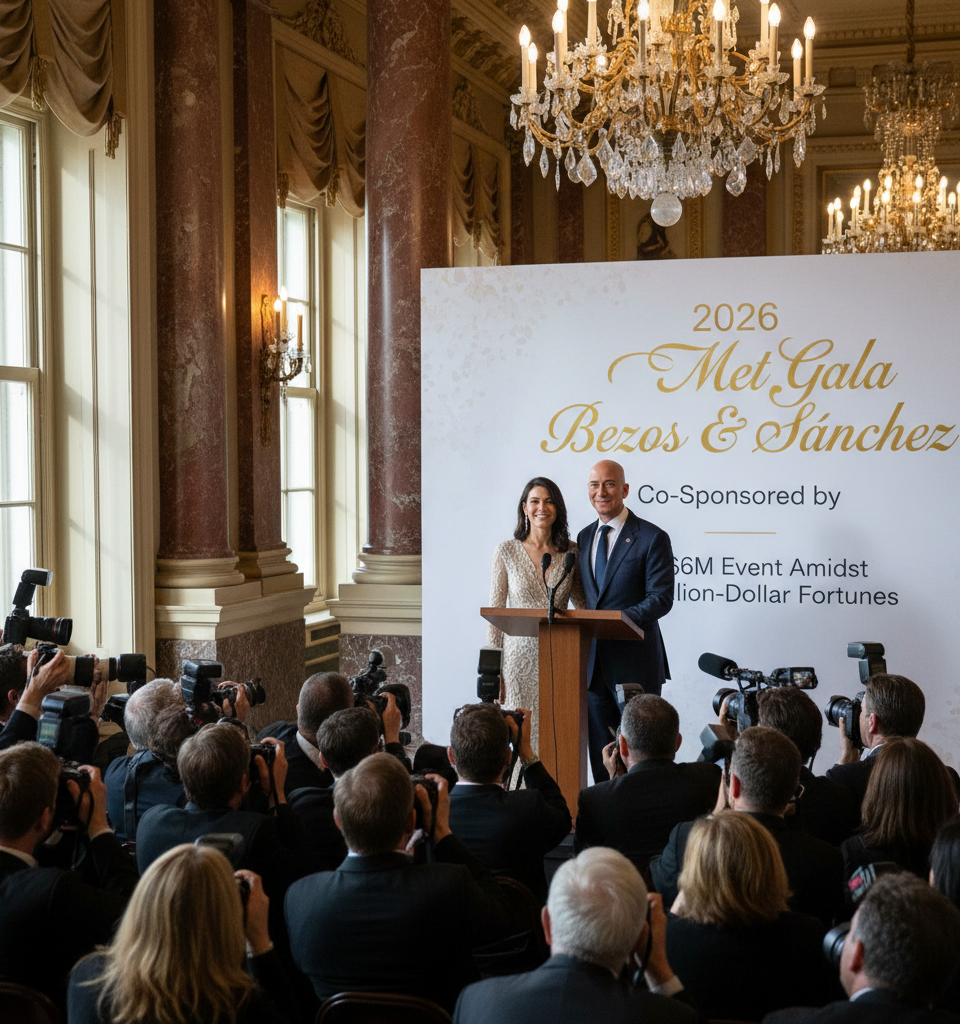
Jeff Bezos, the founder of Amazon and one of the world's wealthiest individuals, along with his fiancée Lauren Sánchez, will be prominent figures at the 2026 Met Gala, serving as both co-chairs and principal sponsors. The announcement underscores a significant philanthropic gesture at an event renowned for its exclusivity and opulence. The Metropolitan Museum of Art's annual fundraising spectacular, often dubbed "fashion's biggest night out," is estimated to cost upwards of $6 million to produce, a figure that, while substantial for charitable events, represents a mere fraction of the couple's collective multi-billion-dollar fortune and the value of their vast real estate holdings.
The Met Gala's Enduring Gravitas
The Met Gala has, for decades, stood as a pinnacle of cultural and philanthropic convergence, raising critical funds for the Metropolitan Museum of Art's Costume Institute. Its origins trace back to 1948, when fashion publicist Eleanor Lambert conceived it as a benefit to support the newly established institute. Over time, particularly under the stewardship of Vogue editor-in-chief Anna Wintour since 1995, it has transformed into a global spectacle, where celebrities, designers, and business magnates showcase avant-garde fashion interpretations of a chosen theme. The event's financial contributions are vital, with each gala typically generating tens of millions of dollars to fund the institute's exhibitions, acquisitions, and operations.
Financial Scope and Philanthropic Implications
The projected $6 million expenditure for the 2026 Met Gala covers a vast array of logistical and creative elements, from floral arrangements and decor meticulously designed to fit the theme, to high-end catering, security, entertainment, and staffing for an event hosting hundreds of the world's most influential figures. Individual tickets for the gala are typically priced in the tens of thousands of dollars, with tables costing hundreds of thousands, purchased by corporate sponsors and wealthy individuals. The lead sponsorship role assumed by Bezos and Sánchez implies a significant financial commitment beyond standard ticket or table purchases, underscoring their dedication to supporting cultural institutions. This financial backing is crucial for maintaining the gala's grandeur and its ability to attract top-tier attendees and designers.
Impact on the Arts and Philanthropic Landscape
The involvement of figures like Bezos and Sánchez sends a powerful message about the increasing engagement of tech titans in the traditional arts and cultural philanthropy sector. Their participation not only provides direct financial support but also lends considerable star power and media attention to the Met, potentially inspiring other ultra-high-net-worth individuals to contribute to similar causes. This trend signifies a broader shift where wealth accumulated in technology and finance is increasingly directed towards established cultural institutions, impacting the arts funding landscape significantly. This synergy can foster innovation in museum programming and outreach, ensuring the longevity and accessibility of cultural heritage.
Expert Perspectives on High-Profile Sponsorship
Philanthropic analysts often view such high-profile sponsorships as a double-edged sword. While acknowledging the undeniable financial benefits, some express concerns about the potential for events to become too commercialized or to serve primarily as a platform for personal branding rather than pure charitable intent. "The optics of billionaires sponsoring multi-million dollar galas are always complex," notes Dr. Evelyn Reed, a cultural economics professor. "However, the practical reality is that these funds are indispensable for institutions like the Met, which rely heavily on private donations to sustain their world-class collections and educational programs. The challenge lies in balancing the glamour with the genuine philanthropic mission." Others highlight the crucial role these individuals play in broadening the donor base and engaging younger generations of philanthropists.
Future Trajectories for Arts Funding
Looking ahead, the growing involvement of billionaires like Jeff Bezos and Lauren Sánchez in events like the Met Gala could set new precedents for arts funding. It may encourage other prominent figures to step into similar roles, creating a more robust and diverse funding ecosystem for cultural institutions globally. This trend could also lead to more innovative partnerships between technology companies and the arts, leveraging digital platforms for greater reach and engagement. The 2026 Met Gala, with its powerful co-chairs, is poised to be more than just a fashion event; it will be a significant indicator of the evolving landscape of philanthropic support for the arts in the 21st century, potentially ushering in an era of unprecedented private investment in cultural heritage and public access initiatives.