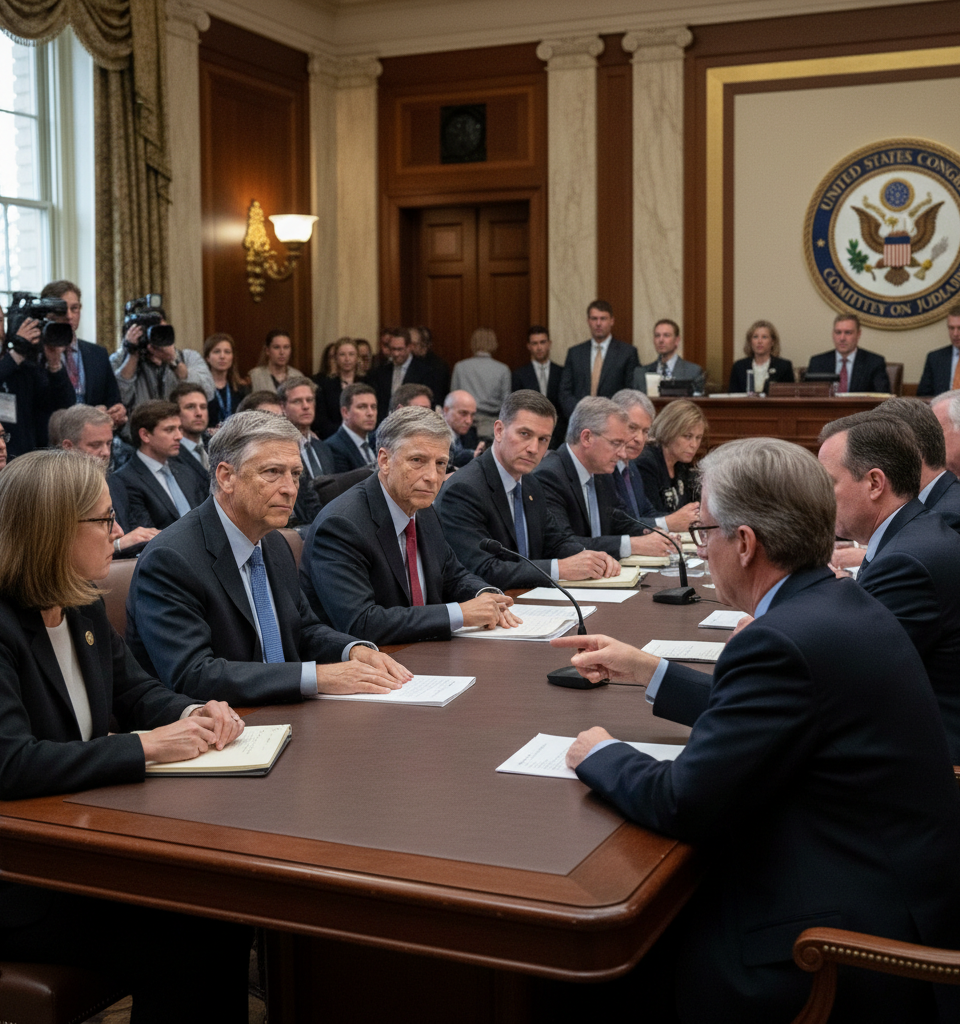
Bill Gates, the prominent co-founder of Microsoft and a globally recognized philanthropist, is set to appear before a United States Congressional committee investigating the activities and alleged wrongdoing of the late financier Jeffrey Epstein. This anticipated testimony places Gates among an expanding list of high-profile individuals voluntarily agreeing to participate in the ongoing inquiry, signaling a significant escalation in the scope and public scrutiny surrounding the investigation.
Mounting Congressional Scrutiny
Gates's forthcoming testimony underscores the persistent and broadening congressional efforts to unravel the complex network surrounding Epstein. The committee, which has been actively pursuing leads and interviewing numerous individuals, seeks to illuminate the extent of Epstein's alleged criminal enterprise and the potential complicity or knowledge of his associates. The decision by Gates to cooperate with the congressional panel is particularly notable given his stature and the intense media spotlight that has followed the Epstein scandal for years. His involvement could provide critical insights, or at the very least, shed light on the nature of his past interactions, directly or indirectly, with Epstein.
For nearly half a decade, the Epstein case has captivated international attention, raising serious questions about accountability among the powerful elite. The congressional investigation, launched following renewed public pressure and new revelations, aims to ensure transparency and justice. The committee's mandate extends beyond Epstein's immediate alleged crimes, delving into potential systemic failures or protective mechanisms that may have enabled his activities for so long.
Implications for High-Profile Figures
The agreement by Bill Gates to testify further solidifies the committee's unwavering commitment to leaving no stone unturned. His testimony is expected to delve into the nature of any relationships, meetings, or financial dealings he may have had with Epstein. While the specifics of what Gates will discuss remain confidential until his appearance, the very act of his testimony is a powerful indicator of the committee's reach and the seriousness with which they are approaching the investigation. It also sends a clear message to other individuals connected to Epstein that they may eventually face similar inquiries.
The broader implications for other prominent figures who had associations with Epstein are substantial. Each new testimony adds another layer to the public understanding of Epstein's network and could potentially lead to further inquiries or even criminal investigations, depending on the information revealed. The committee's strategy appears to involve a methodical approach, progressively summoning individuals who could offer firsthand accounts or relevant documentation.
Public Expectation and Future Proceedings
The public and media are keenly awaiting Gates's testimony, which is anticipated to be a pivotal moment in the ongoing investigation. The proceedings are expected to occur in Washington D.C., though specific dates and whether the testimony will be public or behind closed doors have not been fully disclosed at this time. Regardless of the format, transcripts or summaries of the testimony are likely to be made available, fueling further public discourse and analysis.
Experts suggest that the committee will likely focus on probing the extent of knowledge high-profile individuals had regarding Epstein's alleged illicit activities, examining if any facilitation occurred, or if there were attempts to obscure his actions. Gates's testimony may set a precedent for how future high-profile witnesses engage with the committee, shaping the trajectory of the remainder of the investigation. The outcome of these inquiries carries significant weight, potentially influencing legislative reforms concerning accountability for figures of power and influence.