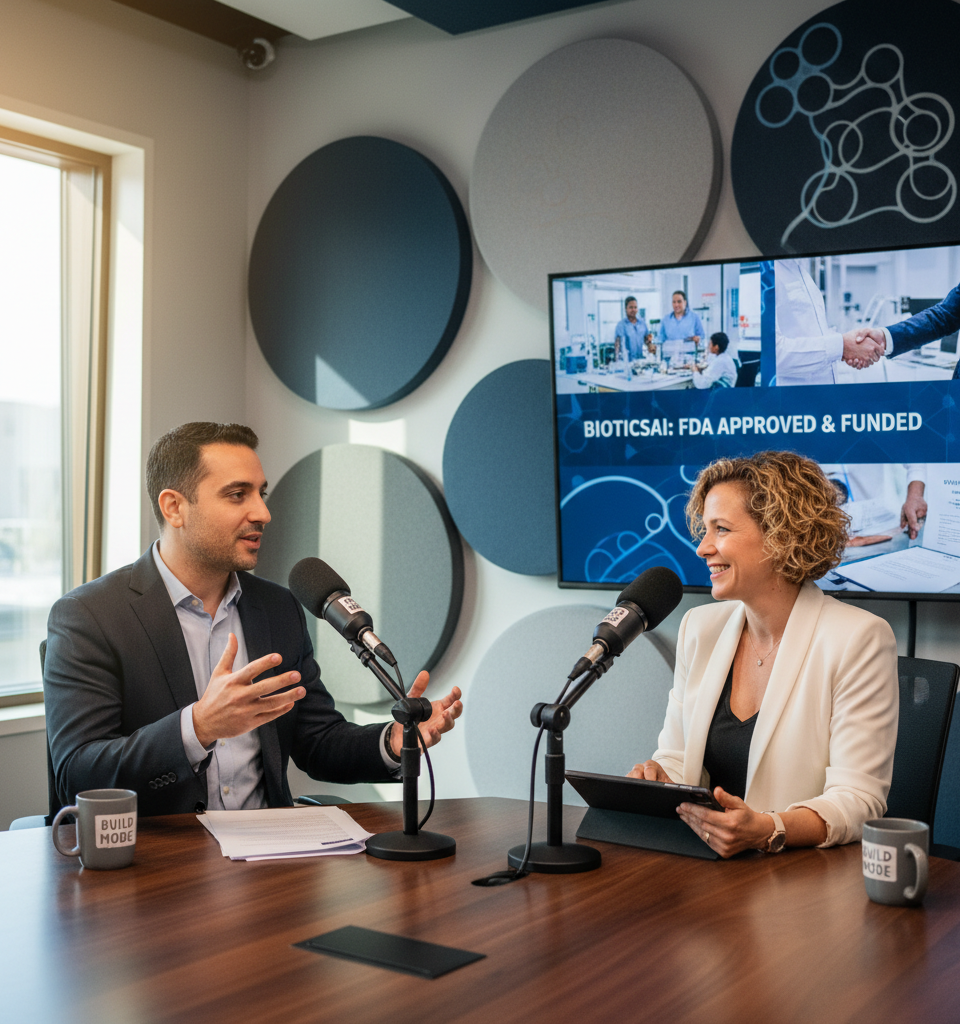
BioticsAI, a company at the forefront of integrating artificial intelligence into healthcare, recently marked a significant milestone with the Food and Drug Administration (FDA) approval of its flagship product. This achievement, coupled with successful fundraising efforts, underscores the company's resilience in an industry renowned for its stringent regulatory environment and extended development cycles. CEO Robhy Bustami, in a recent appearance on the 'Build Mode' podcast with Isabelle Johannessen, detailed the intricate journey of steering BioticsAI through bureaucratic red tape while maintaining team morale and an innovative edge.
The approval comes at a critical juncture for digital health, as the sector grapples with increasing demand for efficiency and personalized care balanced against rigorous safety and efficacy standards. BioticsAI's success is particularly noteworthy given that only a fraction of health tech startups ultimately achieve regulatory clearance, with many faltering due to the immense time and capital investment required. The average time to market for a medical device can range from 3 to 7 years, imposing significant financial burdens and requiring sustained investor confidence.
Overcoming Regulatory Labyrinths
Bustami highlighted that securing FDA approval was not merely a procedural step but the culmination of meticulous research, iterative development, and a deep understanding of regulatory pathways. The process involved extensive clinical validation, demonstrating the AI solution's effectiveness and safety, which is paramount in patient-facing technologies. He stressed the importance of proactive engagement with regulatory bodies, framing it as a collaborative rather than adversarial relationship. "You cannot afford to view regulators as adversaries; they are essential partners in bringing safe and effective technology to market," Bustami remarked. This proactive stance likely minimized delays and streamlined the approval process, a common pitfall for less experienced entrants.
Strategic Fundraising in a Specialized Market
Parallel to its regulatory pursuits, BioticsAI has successfully closed several funding rounds, attracting investors keen on disruptive healthcare technologies with a clear path to market. While specific figures were not disclosed, Bustami emphasized that these funds were crucial for sustaining operations, particularly in scaling research and development, undergoing clinical trials, and expanding the regulatory affairs team. The funding validates not only the technological promise of BioticsAI's solution but also the strategic acumen of its leadership in presenting a viable business model within a niche, high-barrier-to-entry market. Investor confidence often hinges on demonstrable traction toward regulatory milestones, making the FDA approval a significant derisking event.
Impact on the Healthcare Landscape
BioticsAI's product is poised to make a substantial impact on its target healthcare segment. While details regarding its specific application remain under wraps, the company's focus on leveraging AI suggests improvements in areas such as diagnostics, treatment personalization, or operational efficiency within clinical settings. The successful market entry of a new AI-driven solution can spur further innovation among competitors and encourage greater adoption of similar technologies, ultimately benefiting patients through enhanced care outcomes and potentially reducing healthcare costs that currently exceed $4 trillion annually in the U.S. alone. This move could also set new benchmarks for how AI applications are vetted and integrated into existing medical practices.
Expert Perspectives and Future Outlook
Industry analysts view BioticsAI's FDA approval as a positive signal for the broader health AI market, indicating a maturing regulatory environment capable of evaluating complex AI systems. Dr. Lena Khan, a lead healthcare technology analyst at Apex Research Group, commented, "BioticsAI's journey exemplifies the intricate dance between innovation and compliance.
" Looking ahead, BioticsAI plans to focus on market penetration and scaling its operations, potentially exploring partnerships with larger healthcare providers or institutions. Future developments may include broadening the scope of their approved solution or developing additional AI-driven tools, further solidifying their position as a key player in the evolving digital health ecosystem. The company's trajectory will be closely watched as a bellwether for AI's expanding role in transforming healthcare.