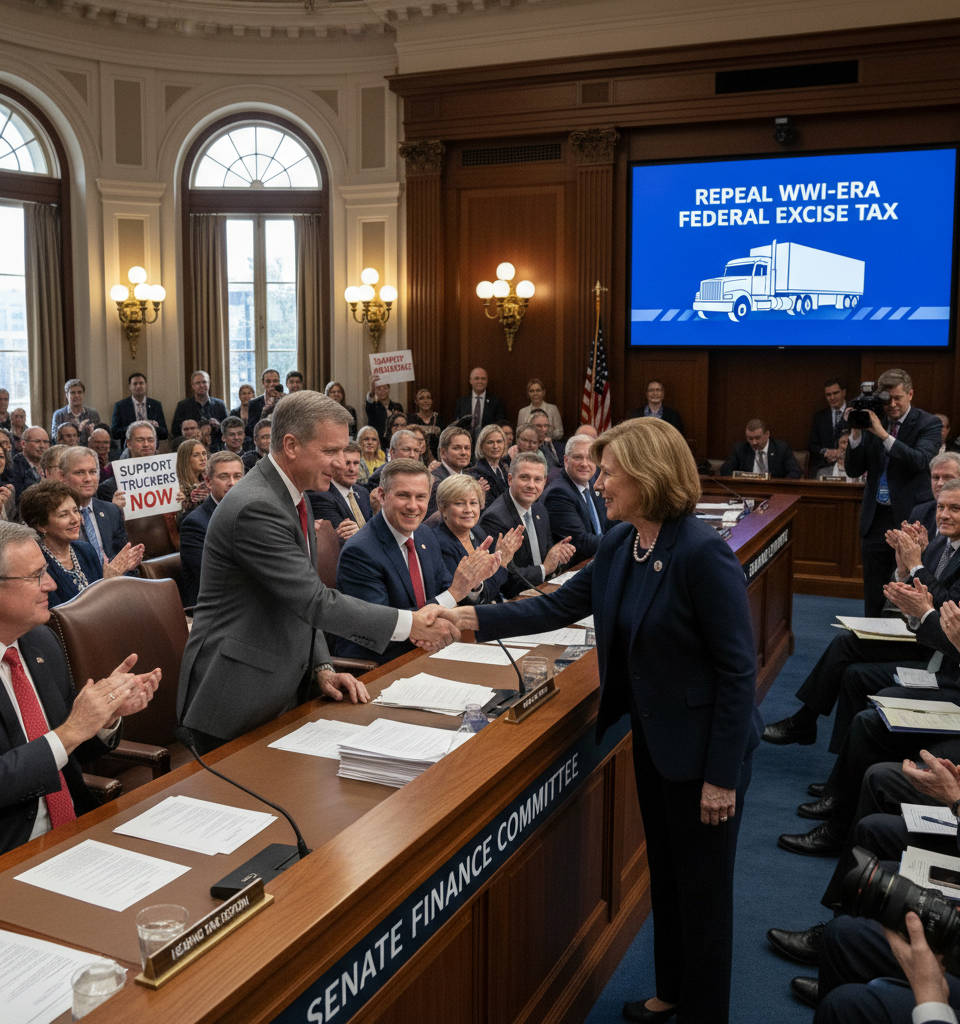
Senior senators have recently unveiled bipartisan legislation designed to repeal a World War I-era federal excise tax that applies to new heavy-duty trucks, tractors, and trailers. This legislative initiative represents a concerted effort from both sides of the political aisle to remove a tax burden that has been in place for over a century, directly affecting the commercial transportation industry and, by extension, the broader economy.
Historical Context and Economic Rationale
The federal excise tax in question was originally implemented in 1917 as a temporary measure to help fund the United States' involvement in World War I. Despite its initial transient purpose, the tax has persisted through various legislative changes and modifications, becoming a permanent fixture of federal revenue generation. Proponents of its repeal argue that the economic landscape and transportation dynamics have drastically changed since its inception, rendering the tax obsolete and a drag on modern commerce. The tax historically aimed to capture revenue from nascent industries during wartime; today, it imposes a significant upfront cost on essential capital equipment for businesses across the country.
Key Details of the Proposed Legislation
The proposed bipartisan bill seeks a full repeal of the excise tax. While specific details regarding the bill number or sponsoring senators were not provided in the announcement, the classification as "senior senators" suggests significant political weight behind the effort. The legislation targets new heavy-duty trucks, tractors, and trailers, indicating a focus on the core assets of the commercial freight and logistics sectors. The outright repeal, rather than a modification or reduction, underscores the legislative intent to completely remove this particular financial obligation for purchasers of new equipment.
Impact on the Transportation and Logistics Industry
For the transportation and logistics industry, the repeal of this excise tax could represent a substantial financial relief. The tax contributes to the overall purchase price of new heavy-duty vehicles, and its elimination would effectively lower the cost of acquiring essential equipment. This reduction in capital expenditure could enable trucking companies, agricultural businesses, and other entities reliant on heavy-duty vehicles to invest more readily in newer, more efficient, and potentially greener fleets. Such investments could lead to operational cost savings, improved fuel efficiency, and a reduction in maintenance expenses, all while potentially stimulating demand for new vehicle production.
Broader Economic Implications
The ripple effects of this repeal could extend beyond the immediate transportation sector. Lower acquisition costs for heavy-duty vehicles could translate into reduced operating expenses for businesses that utilize these vehicles, potentially stabilizing or even lowering prices for consumers on goods transported across the country. Industries ranging from agriculture and construction to retail and manufacturing rely heavily on these vehicles for their supply chains. A boost to the efficiency and cost-effectiveness of freight movement could therefore have a positive impact on overall economic activity and competitiveness, encouraging investment and job creation within related sectors.
Looking Ahead: Legislative Pathway
The introduction of this bipartisan legislation marks the beginning of what could be a complex legislative process. While bipartisan support often bodes well for a bill's chances, it will still need to navigate committee reviews, potential amendments, and votes in both the Senate and the House of Representatives. Lobbying efforts from the trucking industry and related manufacturing sectors are expected to intensify, advocating for the passage of the repeal. The current economic climate and the ongoing discussions around federal spending and tax reform will likely influence the momentum and ultimate fate of this particular legislative push. Observers will be watching closely to see how quickly this long-standing tax can be unwound in the current political environment.