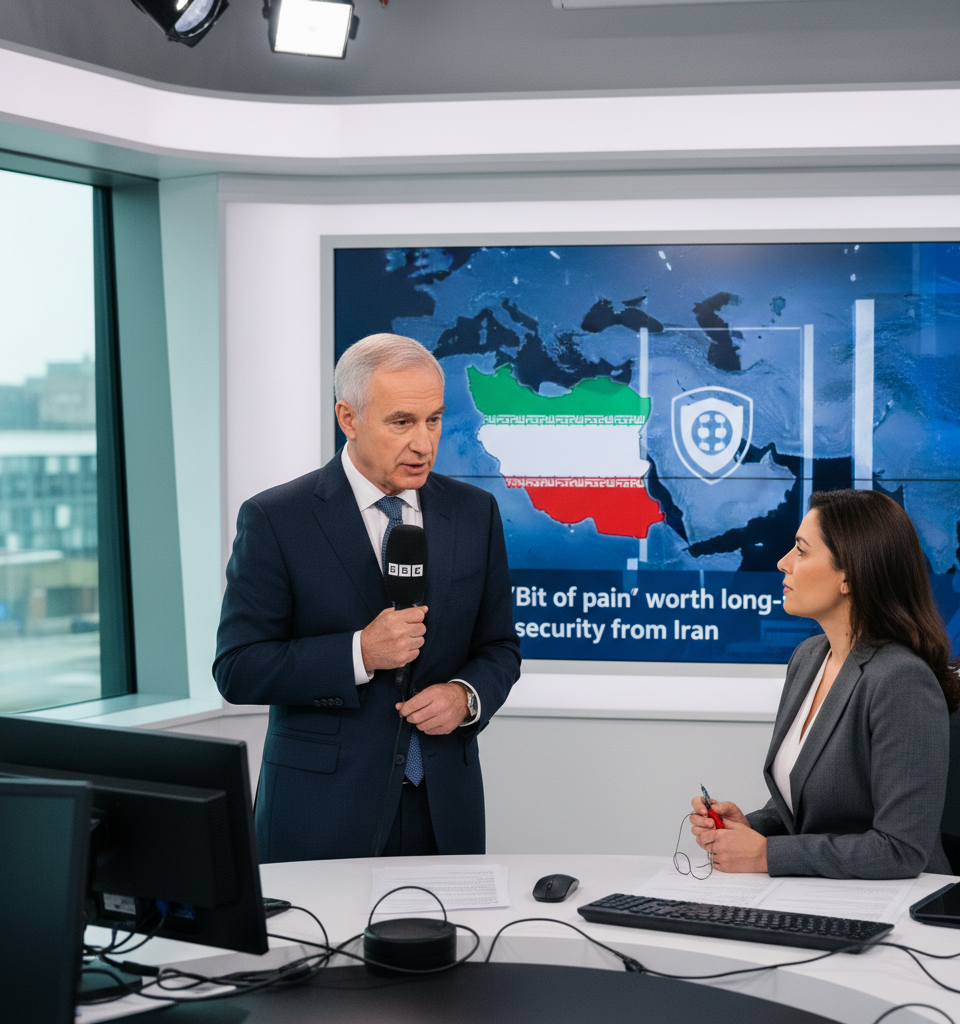
Washington D.C. – U.S. Treasury Secretary William Bessent stated in a recent interview with the BBC that enduring a "small bit of economic pain" is a justifiable and necessary sacrifice to ensure long-term security against potential Iranian strikes on Western capitals. Bessent's comments indicate a unwavering commitment by the United States to its current policy of applying economic pressure on Iran, framing it as a critical component of a broader strategy to neutralize perceived threats.
His remarks come amid heightened international scrutiny over the efficacy and humanitarian impact of sanctions, as well as persistent tensions in the Middle East. The U.S. administration has consistently argued that its robust economic measures are designed to curb Iran's nuclear ambitions and its support for regional proxy groups, which are seen as destabilizing forces. Bessent's statement reinforces the administration's resolve, suggesting that the perceived geopolitical benefits outweigh the immediate economic costs, both domestically and internationally.
Geopolitical Calculus and Strategic Framing
The strategic rationale underpinning Secretary Bessent's comments lies in a calculated assessment of risk versus reward. By emphasizing the threat of Iranian strikes on Western capitals, he aims to elevate the perceived security imperative, thereby securing public and international acceptance for the economic strain. This framing casts economic hardship not as an unfortunate side effect, but as a deliberate, even noble, investment in fundamental security.
This perspective is particularly salient given the current global geopolitical climate, where traditional alliances are being re-evaluated and regional conflicts have far-reaching implications. The U.S. Treasury's role in implementing and enforcing sanctions places Secretary Bessent at the forefront of this economic statecraft, making his public statements critical indicators of the administration's strategic thinking. His assertion directly addresses critics who argue that sanctions disproportionately affect civilian populations or destabilize global markets, by positing a greater existential threat that the sanctions aim to mitigate.
Broader Economic and Diplomatic Implications
Secretary Bessent's emphasis on "economic pain" suggests a recognition within the U.S. Treasury that sanctions against Iran are indeed having tangible economic consequences, both for Iran and potentially for those nations and entities engaging with it. However, the explicit declaration that this pain is "worth it" sends a clear message to allies and adversaries alike: the U.S. remains unwavering in its security objectives, even if it entails economic discomfort.
The implications for international trade and financial markets are significant. Companies and financial institutions operating globally are continually navigating the complexities of U.S. sanctions regimes. Bessent's statements serve as a reminder of the potent enforcement mechanisms at the Treasury's disposal and the potential risks associated with non-compliance. It also signals a continued intention to maintain, if not intensify, the current sanctions framework, which could prolong market uncertainty in sectors with exposure to the Iranian economy.
The Path Forward: Security Prioritization
Looking ahead, Secretary Bessent's remarks signal that the Biden administration is prepared to maintain a firm stance on Iran, prioritizing national security objectives above concerns about short-term economic disruption. This approach is likely to shape diplomatic engagements and international partnerships as the U.S. seeks to build consensus around its Iran policy. The challenge will be to manage the economic fallout while ensuring that the intended security outcomes are achieved without inadvertently escalating tensions in unintended ways.
The administration will likely continue to monitor Iran's activities closely, with economic measures remaining a primary tool in its diplomatic arsenal. The success of this strategy, as articulated by Secretary Bessent, will ultimately be judged by its ability to demonstrably reduce the perceived threat from Iran while navigating the intricate web of international economic and political interests. The pronouncements from the Treasury Secretary underscore a long-term commitment, suggesting that a swift reversal of this policy is not anticipated in the near future, despite any acknowledged economic repercussions.