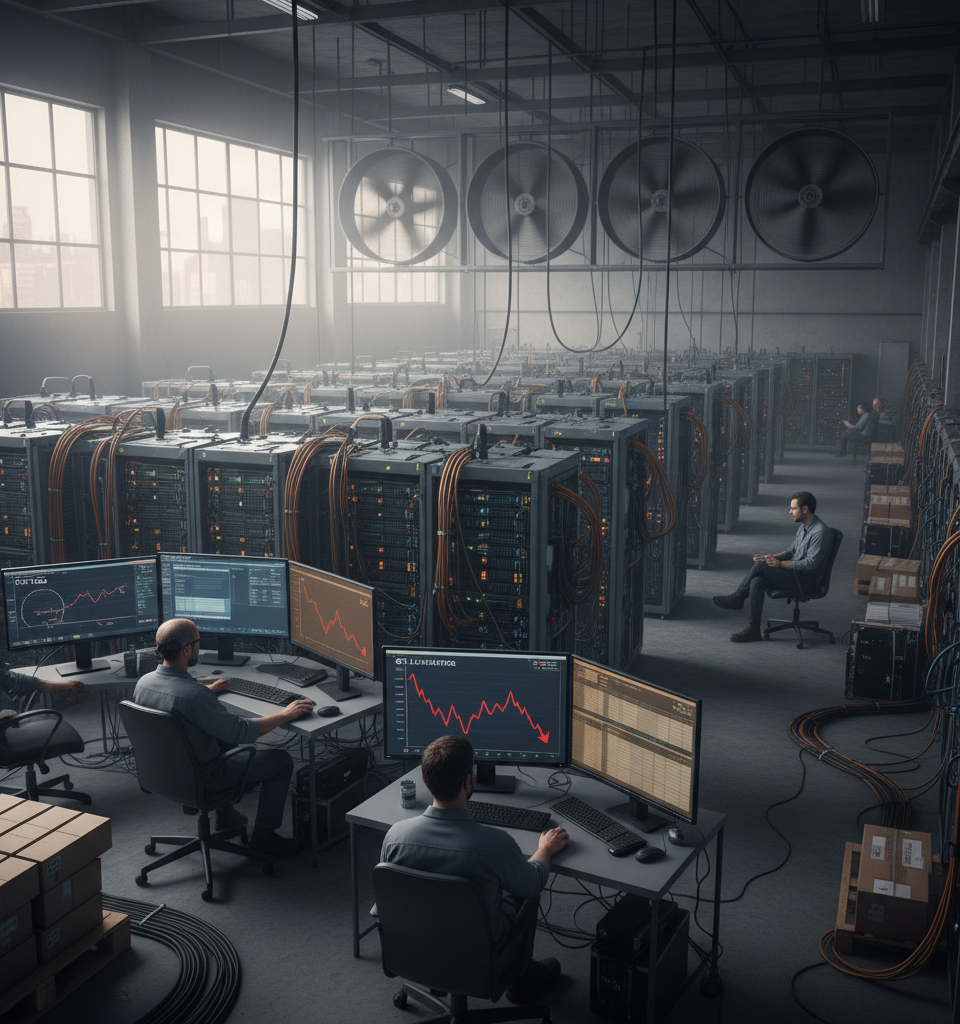
Publicly traded Bitcoin mining companies significantly increased their BTC liquidations in the first quarter of 2024, selling off a record 33,900 Bitcoins. This aggressive sell-off, a substantial 130% increase compared to the prior quarter's 14,700 BTC, represents a critical strategic pivot within the capital-intensive mining sector. The surge in sales, primarily concentrated among North American miners, underscores growing financial pressures and a changing landscape just weeks before the highly anticipated Bitcoin halving event.
Contextualizing the Q1 Sell-Off
This record divestment did not occur in a vacuum. It was driven by a confluence of factors, including escalating operational expenditures such as electricity and infrastructure upgrades, coupled with a fiercely competitive mining environment that saw network difficulty reach all-time highs. Miners, facing tighter margins, leveraged Bitcoin's price rally – which saw BTC soar past $70,000 in Q1 – to shore up their balance sheets, finance expansions, and manage debt. Historically, miners tend to sell a portion of their mined BTC to cover costs, but the scale of Q1 2024's liquidation points to a more pronounced need for capital prior to the halving, which traditionally tightens revenues.
Key Figures and Company Movements
Data from financial analytics firms indicates that several major players contributed significantly to this record-breaking quarter. Companies like Marathon Digital Holdings and Riot Platforms, among others, were noted for their substantial sales. While specific figures for each company were not uniformly disclosed, the aggregated data shows a clear trend: miners are prioritizing financial stability and strategic positioning over holding onto reserves. This move contrasts with previous cycles where accumulation was often the preferred strategy leading into a halving. The average production cost per Bitcoin for many public miners hovers around $20,000-$30,000, making sales at Q1's elevated prices highly profitable.
Industry-Wide Implications and Market Dynamics
The substantial influx of miner-sold BTC into the market inevitably adds selling pressure, which could influence short-term price movements. However, the market's absorption of such a large volume without a significant crash demonstrates the growing maturity and depth of the Bitcoin ecosystem. For the broader digital asset market, this liquidation signals a rationalization within the mining sector, preparing for a period of reduced block rewards. It also highlights the increasing professionalism of public mining operations, which are managed more like traditional businesses with an emphasis on cash flow and shareholder value, rather than purely speculative ventures.
Expert Perspectives on Miner Strategy
Industry analysts and experts offer varied interpretations of this strategic shift. "The record Q1 sales reflect a prudent financial strategy by miners to de-risk their operations before the halving," states Dr. Anya Sharma, a blockchain economist. "With the halving set to halve block rewards, ensuring robust cash reserves and upgraded infrastructure is paramount for survival and growth." Other experts suggest that some smaller, less efficient miners might be facing an 'exit liquidity' event, using strong Q1 prices to offload assets ahead of potential insolvency post-halving. This period could trigger a consolidation phase within the mining industry, favoring larger, more efficient players.
The Road Ahead: Post-Halving Landscape
The implications of this aggressive Q1 selling extend well beyond the immediate quarter. As the halving event cuts the new supply of Bitcoin in half, surviving miners will need to be hyper-efficient. Companies that successfully leveraged Q1's price strength to invest in next-generation mining hardware, reduce debt, or secure cheaper power sources are likely to emerge stronger. We can anticipate continued market repositioning, with potential mergers and acquisitions among mining firms. The Q2 and Q3 financial reports will be critical in assessing the true impact of the halving on miner profitability and the sustainability of their operations, as the hunt for efficient operations intensifies.
Future Outlook and Investment Considerations
Investors in the Bitcoin mining sector will pay close attention to operational efficiency metrics, such as hash rate deployment and all-in-sustaining costs per Bitcoin. The coming quarters will undoubtedly test the resilience of public miners. Companies with strong balance sheets, access to cheap and sustainable energy, and diversified revenue streams (e.g., specialized chips, hosting services) are best positioned to thrive in the post-halving era. The Q1 sell-off, while significant, might ultimately be viewed as a necessary deleveraging and preparation for a new phase of growth and consolidation in the Bitcoin mining industry.