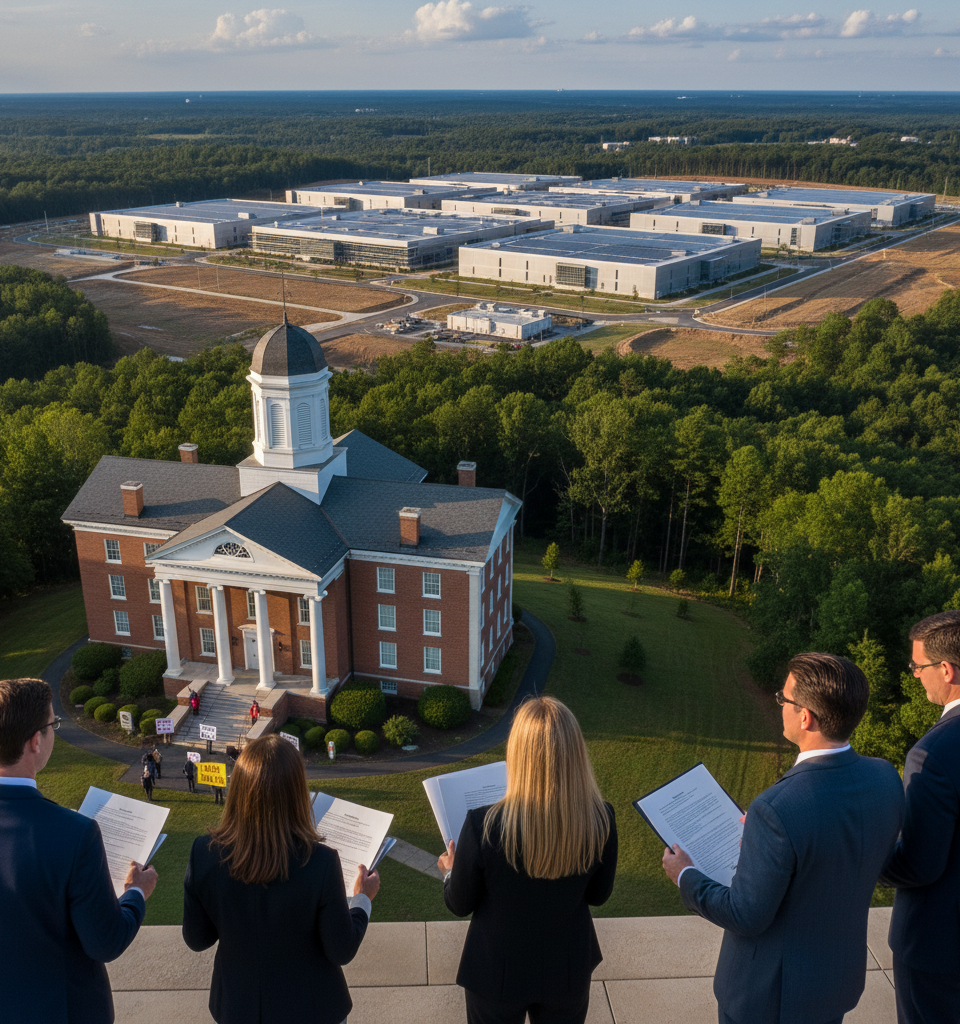
QTS Data Centers, a subsidiary of the world's largest alternative asset manager, Blackstone, has formally filed an appeal against a Circuit Court ruling that invalidated its special use permitting for a monumental 800-acre data center campus in Gainesville, Prince William County, Virginia. The move signals a determined effort by the real estate giant to revive one of the nation's most significant data infrastructure projects, following strong local opposition and a subsequent legal setback.
The initial approval of the "Digital Gateway" project by the Prince William Board of County Supervisors in November 2022 had been met with immediate legal challenges from a coalition of concerned citizens and environmental groups. Their lawsuit argued that the county's approval process was flawed, citing issues with proper notice, public review, and adherence to environmental impact assessments. The Circuit Court of Prince William County sided with the plaintiffs earlier this year, rescinding the special use permit and effectively halting the estimated multi-billion dollar development.
Project Scope and Economic Stakes
Dubbed one of the largest planned data center campuses globally, the QTS Digital Gateway project envisions a sprawling complex designed to house dozens of data center buildings. These facilities are critical for supporting the rapidly expanding digital economy, including cloud computing, artificial intelligence, and e-commerce. The project had been touted by its proponents, including state and county officials, as a major economic boon, promising thousands of high-paying jobs – both in construction and operations – and generating substantial tax revenues for Prince William County over several decades. Estimates had placed the potential annual tax revenue in the hundreds of millions once fully operational, a significant draw for local government budgets seeking diversified income streams.
Escalating Land Use Conflicts in Northern Virginia
This legal battle is emblematic of a broader, intensifying conflict over land use in Northern Virginia, particularly in counties like Loudoun and Prince William. This region, often referred to as "Data Center Alley," hosts the highest concentration of data centers in the world, processing an estimated 70% of the world's internet traffic. While these facilities bring immense economic benefits, they also consume vast tracts of land, demand considerable power and water resources, and raise concerns about noise pollution, visual impact, and environmental degradation among residents. The QTS appeal highlights the increasingly complex balance between fostering economic development and preserving community character and natural landscapes.
Expert Perspectives on Data Center Growth
Industry analysts widely acknowledge that the demand for data center capacity, particularly in Northern Virginia, shows no signs of abating. "The insatiable appetite for AI computing and cloud services is driving unprecedented investment in data infrastructure," notes Dr. Emily Chen, a senior analyst at TechData Insights. "However, the challenge lies in sustainable development. Developers like QTS, backed by formidable capital, are now facing much more organized and effective community resistance. This appeal will set a precedent for how such large-scale projects navigate regulatory and public sentiment hurdles moving forward." She emphasizes that future projects will likely require more robust community engagement and environmental planning from their inception.
The Path Forward and Broader Implications
The appeal now moves to a higher court, where QTS will argue for the reinstatement of its special use permit. The legal proceedings could stretch for months, or even years, further delaying a project critical to Blackstone's real estate portfolio and QTS's expansion strategy. The outcome will have significant ramifications not just for the Digital Gateway but for similar large-scale industrial developments across the Commonwealth and potentially nationwide. It will influence how local governments weigh economic incentives against environmental and community concerns, and how developers approach public engagement and regulatory compliance. Regardless of the final judicial decision, this case underscores the growing power of organized citizen groups in shaping the future of industrial development in increasingly urbanized and technologically dependent regions.
Unresolved Questions and Community Dialogue
Beyond the raw legal arguments, the appeal process will continue to spotlight unresolved questions regarding infrastructure strain, environmental impact, and the long-term character of Prince William County. Community advocates argue that the county supervisors did not adequately address these concerns during the initial approval, leading to the legal challenge. A more transparent and inclusive dialogue between developers, local authorities, and residents may be crucial for navigating future large-scale projects, especially as the demand for digital infrastructure continues its exponential rise, placing further pressure on finite land and resources.