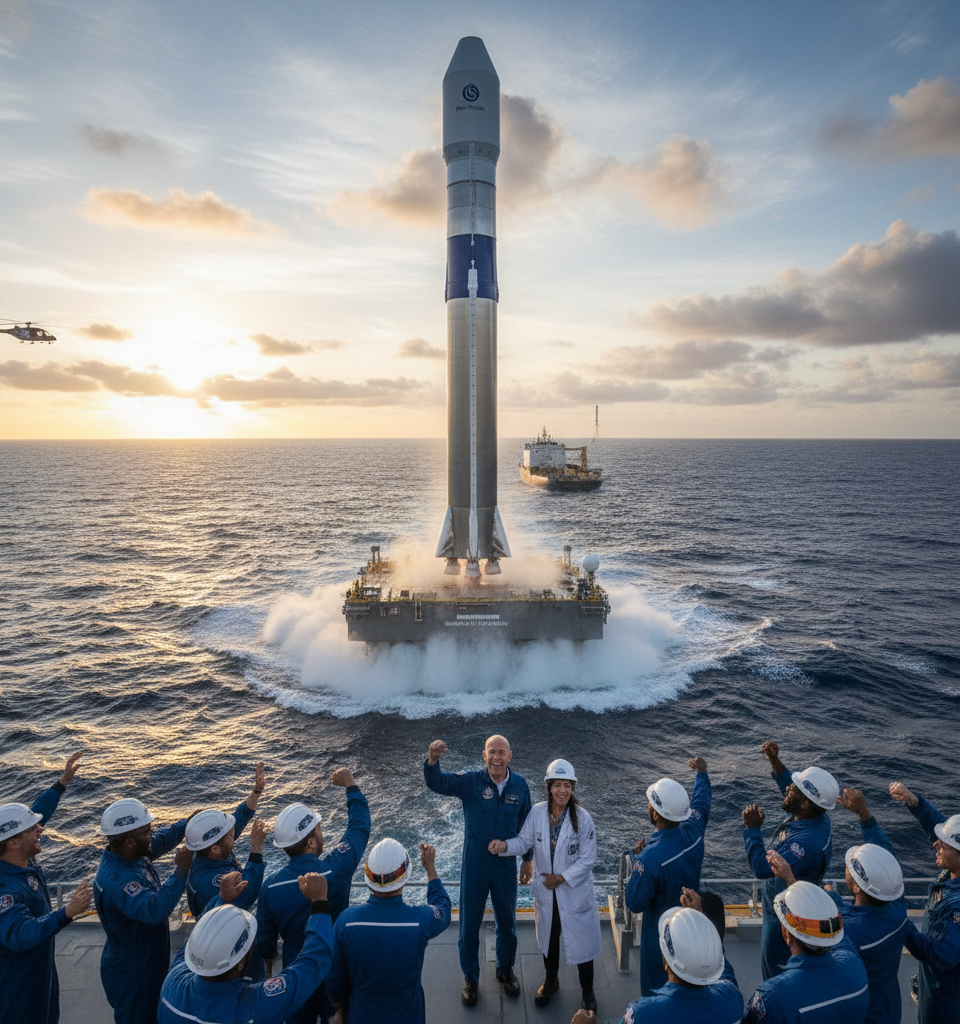
Blue Origin Achieves Historic New Glenn Reuse, Escalating Challenge to SpaceX Dominance
Sean O'Kane•April 19, 2026•4 min read
Key Takeaways
Read this first — then go as deep as you need.
Blue Origin Achieves Historic New Glenn Reuse, Reshaping Commercial Space Landscape Blue Origin, the aerospace company founded by Jeff Bezos, has announced the successful first reuse of its New Glenn heavy-lift rocket, a landmark achievement that significantly advances its capabilities in the competitive commercial space launch sector. The critical mission, occurring on, saw the reusable first stage of the New Glenn booster return safely to Earth and be prepared for future flights. This operational success positions Blue Origin as a formidable challenger to SpaceX's long-standing dominance in the reusable launch vehicle market, promising enhanced efficiency and potentially reduced costs for orbital access. The ability to reliably reuse rocket components is a cornerstone of modern space economics, dramatically lowering the per-launch cost and enabling higher flight frequencies. SpaceX pioneered this approach with its Falcon 9 and Falcon Heavy rockets, fundamentally reshaping the industry. Blue Origin's New Glenn, explicitly designed with reusability in mind – including a highly integrated landing system – has now demonstrated this critical capability. This development not only validates years of research and development but also signals a mature entry into a market previously monopolized by a single private entity. Key details of the historic reuse event include the successful booster recovery after delivering its payload to orbit, followed by a comprehensive inspection and subsequent readiness assessment for a second flight. While specific figures on the cost savings from this initial reuse are not yet independently verified, industry analyses suggest that every successful re-flight can reduce launch costs by 30-50% compared to expendable systems. Blue Origin executives, though not immediately providing specific financial data, have consistently emphasized the economic imperative of reusability. A spokesperson commented, "This first reuse is not just an engineering feat; it's a profound step towards making space access routine and affordable for a wider range of customers." The impact on the global launch market cannot be overstated. With companies like Amazon (Bezos's other venture) planning vast satellite constellations such as Project Kuiper, reliable and affordable launch services are paramount. Blue Origin's New Glenn, with its impressive payload capacity of up to 45,000 kg to Low Earth Orbit (LEO) in its expendable configuration or significant reusability benefits for slightly reduced payloads, is now a direct competitor for lucrative contracts that previously went almost exclusively to SpaceX or international partners. This increased competition could lead to competitive pricing and innovative service offerings, benefiting satellite operators, government agencies, and research institutions worldwide. Industry experts and financial analysts view this development as a significant de-risking event for Blue Origin. "For years, Blue Origin has been perceived as playing catch-up to SpaceX," noted Dr. Elena Petrova, a space industry analyst at AstroDynamics Consulting. "This successful reuse of New Glenn shifts that narrative. It demonstrates a level of operational maturity and engineering prowess that can no longer be ignored. We anticipate a more aggressive pursuit of launch contracts, especially in the coming 18-24 months as their flight cadence increases." Petrova also highlighted the strategic implications for national space programs seeking diversified launch options, moving away from monopolistic dependency. Looking ahead, Blue Origin has several critical objectives. The company aims to increase its New Glenn launch cadence, targeting multiple missions per year by [Projected Year, e.g., 2025]. Further enhancements to the reusability cycle, including faster turnaround times between flights and reduced refurbishment costs, will be central to maximizing the economic advantages. Additionally, New Glenn is slated to carry out missions for NASA, including components for the Artemis lunar program, showcasing its versatility and reliability for high-stakes governmental contracts. The continued development of the BE-4 engines, which power both New Glenn and United Launch Alliance's Vulcan Centaur, also underscores Blue Origin's foundational position in the American space launch ecosystem. This momentous achievement by Blue Origin marks a new chapter in the commercial space race. With New Glenn now proving its reusability, the stage is set for an intensified battle for market share, potentially driving down costs and accelerating innovation across the entire aerospace industry. The coming years will undoubtedly see Blue Origin solidify its position as a key player, challenging the status quo and expanding the horizons of space exploration and commerce.
Discussion
Join the discussion
Sign in to leave a comment on this article.
Loading comments...
Enjoying this article?
Get more like it delivered to your inbox — free.
This article was compiled by GlobalSell News from publicly available reporting and has been edited for clarity and length. For full details, read the original source.