Contextualizing BMW's EV Strategy
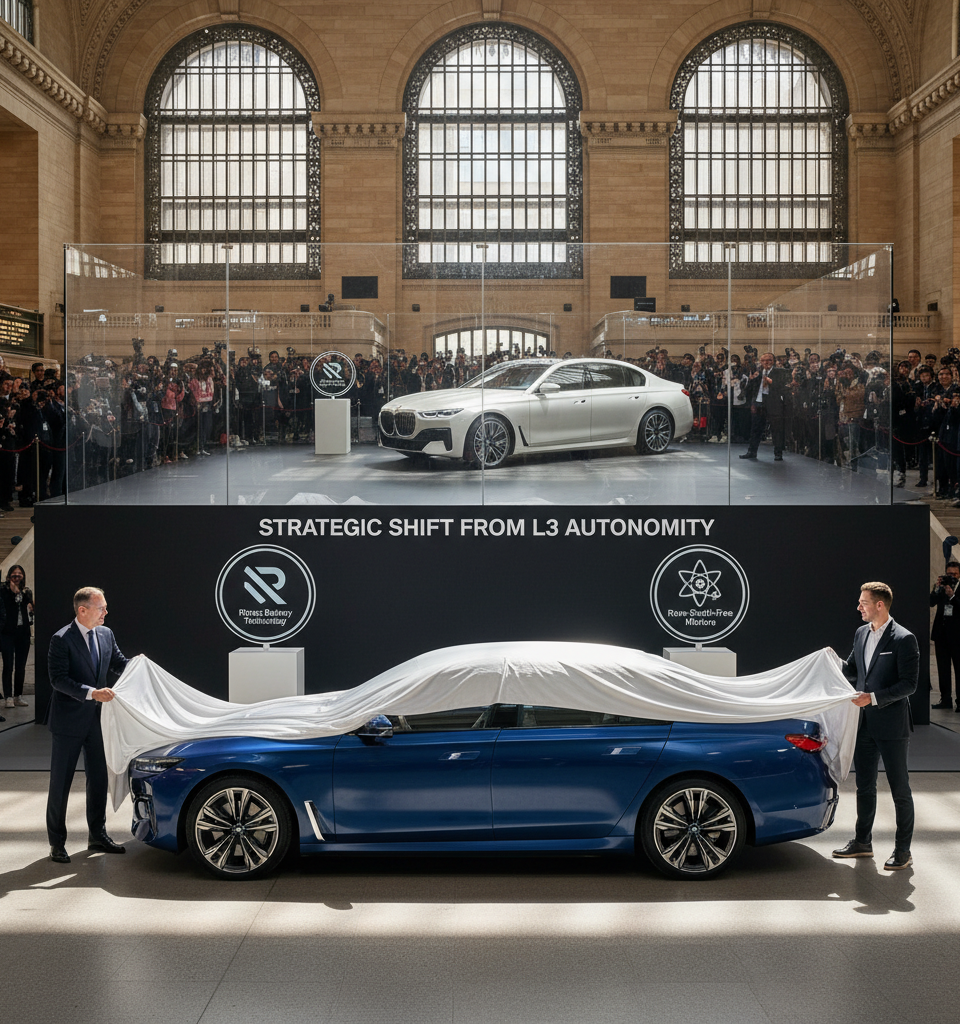
This launch comes at a pivotal moment for the automotive industry, where luxury automakers are intensely competing for market share in the rapidly expanding electric vehicle segment. BMW's decision to integrate advanced battery technology from Rimac, a leader in high-performance EV components, underscores its commitment to pushing the boundaries of range and efficiency. The shift to rare-earth-free permanent magnet synchronous motors addresses growing concerns over supply chain sustainability and the environmental impact of critical raw material extraction, aligning with global efforts towards greener manufacturing. Furthermore, the strategic withdrawal of L3 autonomy reflects a cautious approach to widely deploying nascent autonomous technologies, likely influenced by regulatory complexities and the technical challenges of ensuring universal reliability.
Performance and Technical Specifications The 2027 i7 line-up promises impressive performance figures.
The i7 60 xDrive variant is targeting an EPA-estimated range exceeding 350 miles (approximately 563 kilometers) and a WLTP-certified range of up to 728 km. The entry-level i7 50 is expected to achieve a WLTP range of 611 km, while the high-performance M70 model targets 686 km WLTP. These improvements are largely attributed to the new Gen6 cylindrical cells, which offer higher energy density, and the efficiency gains from the new Silicon Carbide (SiC) inverters paired with the rare-earth-free motors. A key highlight is the enhanced 250 kW DC fast-charging capability, which BMW states can add significant range in a short period, though specific charging times were not detailed. The previous L3 self-driving system, which had been previously offered or planned, has been omitted, with BMW focusing on refining its advanced Level 2+ driving assistance features.
Industry and Market Implications
BMW's updated i7 could send ripples across the luxury EV market. The integration of Rimac battery technology, previously seen in hypercars, positions the i7 as a leader in battery innovation for premium sedans. This could pressure competitors like Mercedes-Benz, Audi, and Tesla to accelerate their own battery development or strategic partnerships. More broadly, the adoption of rare-earth-free motors by a major automaker provides a significant boost to sustainability efforts within the automotive sector, potentially encouraging other manufacturers to follow suit. The decision to drop L3 autonomy, however, could be interpreted in different ways: some might see it as a pragmatic pivot, while others might view it as a concession to the complexities of true autonomous driving, potentially tempering consumer expectations for fully self-driving cars in the near future.
Expert Analysis and Outlook
Automotive analysts are viewing BMW's moves with keen interest. Dr. Eleanor Vance, an EV powertrain specialist at Global Auto Insights, commented, "The partnership with Rimac for battery tech is a game-changer for BMW, signaling a pursuit of top-tier performance and efficiency. It clearly positions the i7 at the forefront of battery development in the luxury segment." On the Level 3 autonomy decision, Mark Johnston, an autonomous vehicle expert at TechDrive Research, noted, "BMW's pivot from Level 3 is a pragmatic step. The regulatory and liability landscape for L3 remains highly fragmented globally, and focusing on perfecting Level 2+ systems offers a more consistent and safer user experience in the short to medium term." Many experts believe this strategic choice will allow BMW to divert resources to core EV performance and user interface improvements, which directly impact customer satisfaction.
The Road Ahead: Future Developments
The introduction of the 2027 i7 with these advanced features sets a new benchmark for BMW's 'Neue Klasse' electric vehicle architecture. While the immediate focus is on the i7's market launch, the underlying technologies—Gen6 batteries and rare-earth-free motors—are expected to proliferate across BMW's future EV portfolio. This heralds a more sustainable and high-performing generation of BMW electric vehicles. The company is likely to continue its investment in perfecting L2+ advanced driver-assistance systems, iteratively enhancing features like highway assist, automatic lane changes, and sophisticated parking aids, while closely monitoring the evolving regulatory and technological landscape before committing to higher levels of autonomy. Dealers are expected to begin taking orders for the 2027 i7 in late 2025, with first deliveries anticipated in early 2026, solidifying BMW's competitive stance in the luxury EV market for years to come.