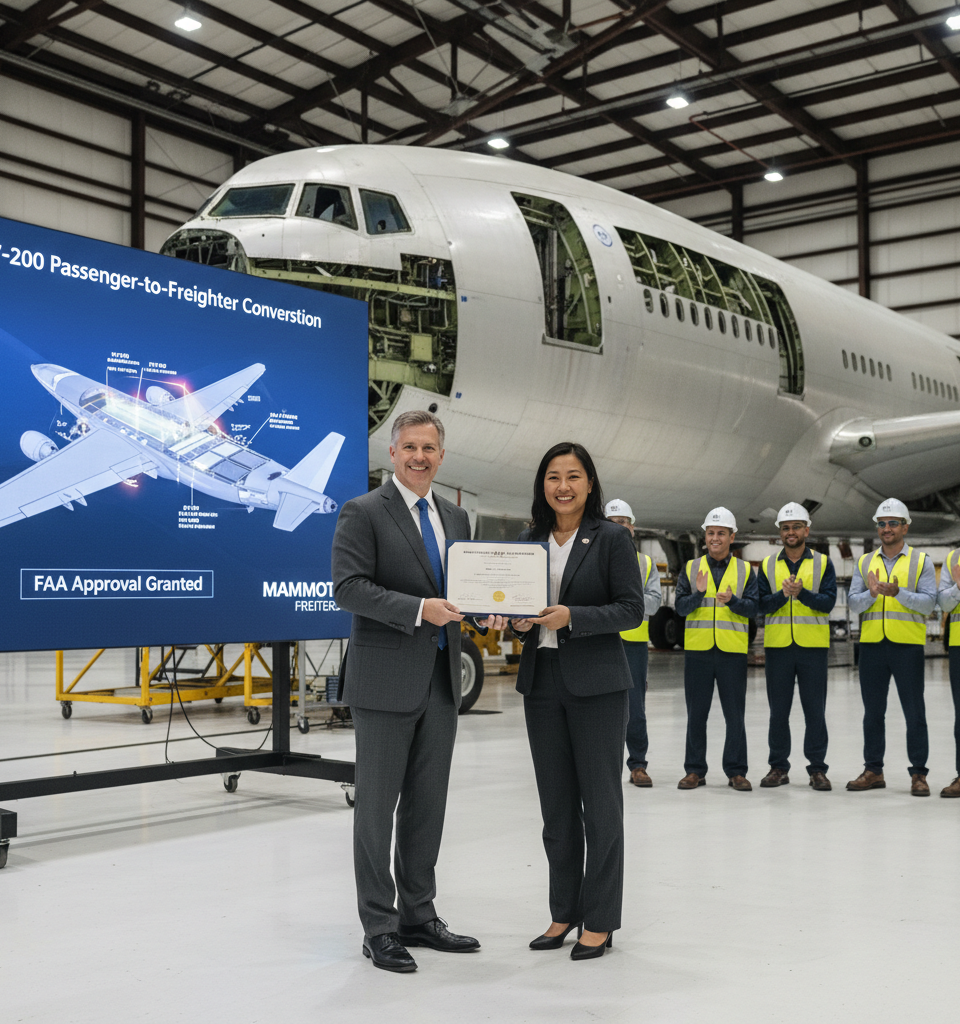
The Federal Aviation Administration (FAA) has officially granted its first-ever approval for the comprehensive conversion of a Boeing 777-200 passenger aircraft into a dedicated freighter. This pivotal decision, announced in a recent development, marks a significant milestone for Mammoth Freighters, the U.S.-based aircraft engineering firm responsible for redesigning the wide-body jet. The certification clears the path for these re-engineered aircraft to commence revenue-generating cargo operations as early as later this year, promising to inject much-needed capacity and efficiency into the global air freight market.
This momentous approval arrives at a time of sustained logistical challenges and surging e-commerce demand, which have amplified the need for robust air cargo capabilities. Historically, the demand for dedicated freighters has often outstripped supply, leading airlines and cargo operators to seek innovative solutions. The conversion of established passenger aircraft models into freighters represents a cost-effective and relatively swift alternative to purchasing new, purpose-built cargo planes, which often entail lengthy order backlogs and higher capital expenditure. The Boeing 777-200, known for its long-range capabilities and substantial payload capacity, has long been identified as an ideal candidate for such a transformation, yet the complex engineering and regulatory hurdles have only now been successfully navigated.
Key to this approval is Mammoth Freighters' extensive re-engineering process, which involves significant structural modifications to the aircraft. These modifications typically include the installation of a large cargo door (LCD) on the main deck, reinforcement of the fuselage and floor beams to support heavy cargo, and the removal of all passenger amenities. The converted 777-200 freighters are expected to offer a competitive payload capacity, potentially exceeding 100 metric tons, and an impressive range of over 5,000 nautical miles, making them suitable for transatlantic and transpacific routes. This capability positions them directly against purpose-built freighters like the Boeing 747 and 777F, but with potentially lower acquisition and operating costs due to the use of readily available passenger frames.
The advent of the 777-200 converted freighter (known as the 777-200SF for Special Freighter, or P2F for Passenger-to-Freighter) is set to reshape the landscape of the air cargo industry. It offers cargo airlines and integrators a new, mid-market option to expand their fleets without the prohibitive costs and lead times associated with new production freighters. This will likely lead to increased competition on key cargo lanes, potentially stabilizing freight rates which have seen significant volatility in recent years. Furthermore, it provides passenger airlines with an avenue to repurpose older aircraft nearing the end of their passenger service life, extending their economic viability and contributing to a more circular aviation economy.
Analysts are largely optimistic about the economic and operational impact of this development. Aerospace industry consultant, Dr. Amelia Rostova, commented, "The FAA's approval for the 777-200 P2F opens up a crucial segment of the freighter market. It’s a validation of the technical feasibility and commercial viability for these conversions. We could see a wave of orders as airlines look to capitalize on the robust air cargo demand without the premium of new builds. This also addresses the environmental aspect, as it extends the life of existing airframes rather than scrapping them prematurely." Initial projections suggest that the demand for wide-body freighters will continue to grow at an average of 4-5% annually over the next decade, with conversions playing a significant role in meeting this demand.
Looking ahead, Mammoth Freighters expects to deliver its first converted 777-200 aircraft to launch customers later this year. Several airlines and cargo operators have already expressed significant interest, with some reportedly holding options for multiple conversions. The company also has plans to develop a similar conversion program for the larger Boeing 777-300ER, which would offer even greater cargo volume, further diversifying the mid-to-large wide-body freighter market. This strategic move could solidify Mammoth Freighters’ position as a leading player in the aircraft conversion sector, offering a compelling alternative to established programs and ushering in a new era of flexible and efficient air freight operations globally.
The long-term implications extend beyond fleet expansion. The increased availability of dedicated freighters could facilitate the growth of specialized cargo sectors, such as pharmaceutical logistics and express parcel delivery, which rely heavily on timely and reliable air transport. The reduced average age of the freighter fleet, thanks to these conversions, could also lead to lower maintenance costs and improved fuel efficiency across the industry, albeit modestly compared to new-generation freighters. This FAA approval is not just about a single aircraft type; it’s a bellwether for the future of commercial aviation's adaptation to evolving global trade demands.