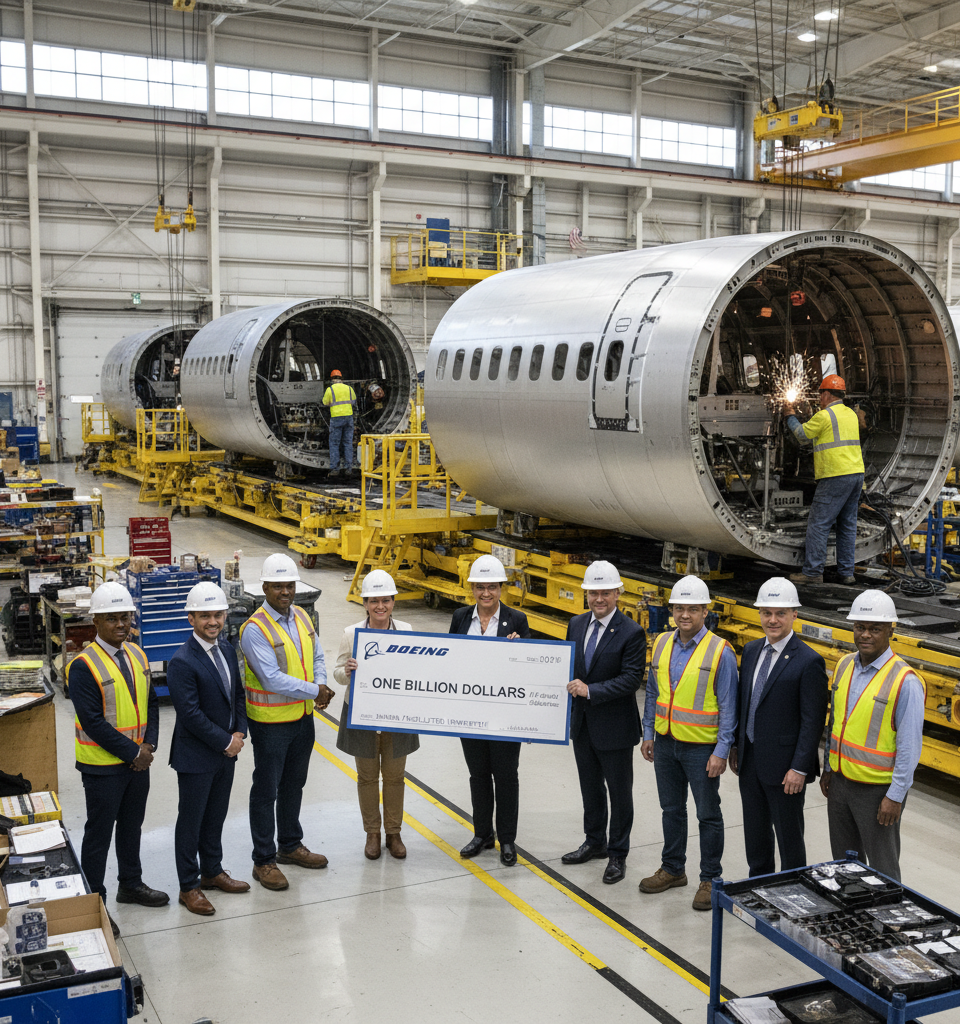
Boeing has unveiled plans for a substantial $1 billion investment in its manufacturing facilities across Kansas. This strategic financial commitment is directly tied to the aerospace titan's efforts to enhance production capabilities for its popular 737 MAX aircraft line and integrate the fuselage plants of Spirit AeroSystems in Wichita into its operational fold. The investment underscores Boeing's determination to ramp up monthly 737 MAX production from the current 42 units to an ambitious 47 units later this year, a critical step in addressing robust market demand and ongoing supply chain complexities.
Contextualizing Boeing's Strategic Imperative
This significant investment arrives at a pivotal time for Boeing. The company has been navigating a challenging period marked by supply chain disruptions, quality control scrutiny, and the imperative to meet a burgeoning backlog of aircraft orders. The decision to invest heavily in Kansas, particularly in facilities tied to its core single-aisle aircraft, highlights a concentrated effort to reinforce its manufacturing base and gain greater control over key components. The integration of Spirit AeroSystems' fuselage operations is particularly noteworthy, representing a move towards vertical integration designed to streamline production and mitigate risks associated with external suppliers, following recent quality issues that have plagued both companies.
Investment Details and Operational Impact
The $1 billion capital infusion will be allocated towards a range of strategic initiatives. A significant portion is expected to fund upgrades in tooling, automation technologies, and infrastructure improvements within the Kansas plants. This will include investments in advanced robotics, new assembly lines, and enhanced quality inspection systems, all designed to improve efficiency and consistency in fuselage production. Furthermore, the investment is anticipated to support workforce training and development programs, ensuring that employees are equipped with the skills needed to operate new technologies and adhere to stringent quality standards. The goal is to create a more resilient and efficient supply chain for the 737 MAX, ultimately shortening delivery times and enhancing overall product reliability.
Broader Industry and Market Implications
Boeing's substantial investment in Kansas carries significant implications for the broader aerospace industry. For Spirit AeroSystems, the integration represents a transformative, if at times challenging, shift, as it moves from being an independent supplier to a more direct part of Boeing's manufacturing ecosystem. This could set a precedent for how major original equipment manufacturers (OEMs) manage their supply chains and critical component production in the future. For airlines, a more stable and accelerated 737 MAX production rate means a quicker delivery of new aircraft, potentially alleviating capacity constraints and modernizing fleets. This also intensifies competition with rival Airbus, which has also been aggressively expanding its production capabilities.
Expert Analysis on the Investment's Significance
Aerospace analysts largely view Boeing's $1 billion investment as a necessary and strategic move. "This isn't just about spending money; it's about regaining control over critical aspects of their supply chain and fundamentally improving quality," commented Dr. Eleanor Vance, an aviation industry expert at Global Insights Group. "The vertical integration of Spirit's operations, backed by this capital, is crucial for Boeing to mitigate future risks and rebuild confidence with customers and regulators. The focus on automation and quality in Kansas will be key to meeting their production targets sustainably." Others point to the long-term benefits of in-sourcing, suggesting it could lead to better cost control and innovation over time, despite the initial capital outlay.
Looking Ahead: Future Prospects and Challenges
While the $1 billion investment marks a significant commitment, its success hinges on flawless execution and sustained operational improvements. Boeing will need to carefully manage the integration process, ensuring minimal disruption while simultaneously scaling up production. Key challenges include maintaining a skilled workforce, navigating potential legacy operational differences between Boeing and Spirit, and consistently upholding stringent quality control standards across all production phases.
If successful, this investment could not only solidify Boeing's position in the single-aisle market but also serve as a blueprint for future supply chain strategies, ultimately contributing to the company's long-term financial health and reputation. The aerospace community will be closely watching the initial production ramp-up with the expectation of tangible, positive results in the coming months and years.