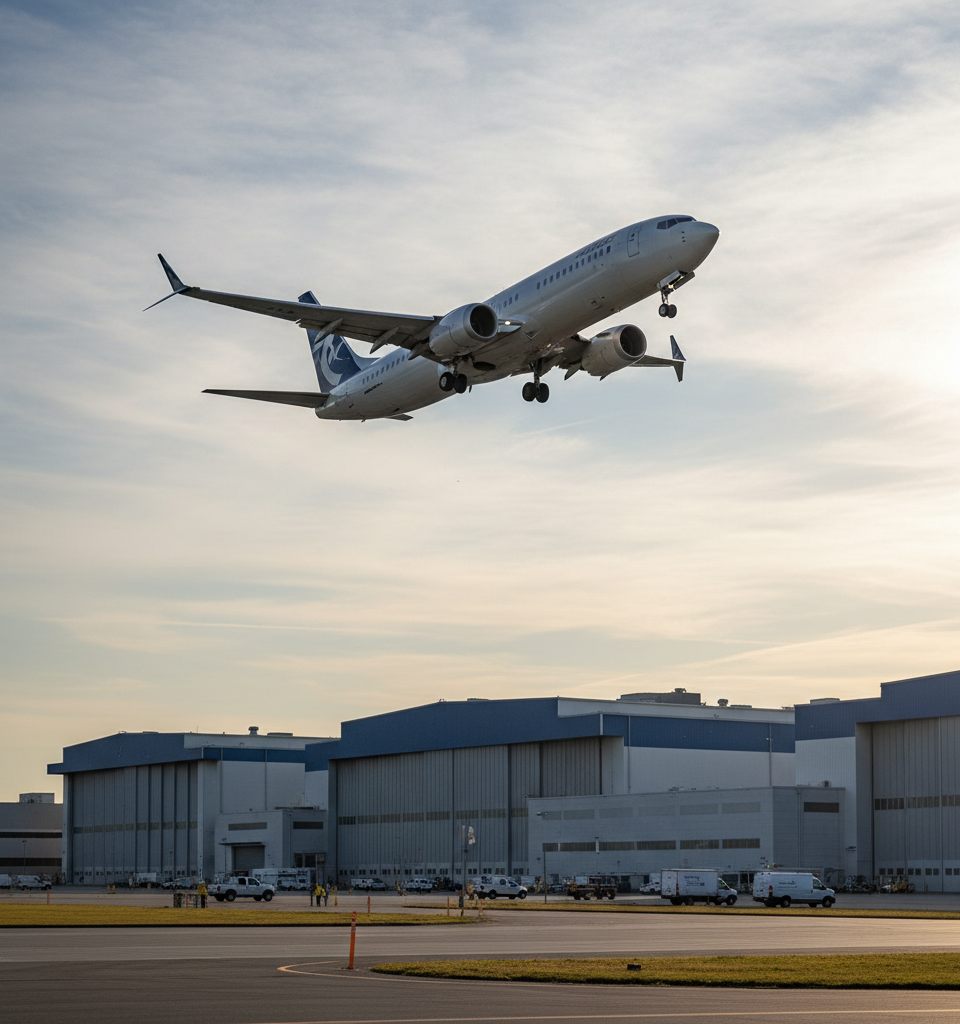
Global supply chains and the cross-border movement of goods and services depend critically on efficient, reliable air freight and passenger capacity. The resurgence of a major aerospace manufacturer like Boeing directly impacts the lead times, costs, and availability of new aircraft, thereby influencing the strategic expansion plans and logistical capabilities of businesses operating internationally.
Boeing has announced a strong second quarter, with the aerospace behemoth reporting an impressive $24.6 billion in revenue, underpinning expectations of a sustained recovery trajectory. This financial uplift marks a significant moment for the company, which has navigated considerable challenges in recent years.
Financial Performance and Forward Outlook
Beyond the headline revenue figure, the company anticipates generating between $1 billion and $3 billion in cash flow by the close of the fiscal year. This projection reflects improved operational efficiencies and a strengthening order book. A key performance indicator for the company's manufacturing health and market demand is its delivery targets; Boeing is setting an ambitious goal of delivering up to 600 commercial aircraft by the end of 2026.
Context and Market Significance
This robust performance and optimistic outlook are particularly significant within the aerospace sector, which has been grappling with supply chain disruptions, labor shortages, and fluctuating demand. Boeing, as one of the world's two dominant commercial aircraft manufacturers, plays a pivotal role in global connectivity. Its recovery is a bellwether for the broader aviation industry, impacting airlines, logistics providers, and myriad ancillary businesses that rely on air travel and cargo. The ability to increase aircraft deliveries is crucial for airlines looking to modernize their fleets, meet rising passenger demand, and expand international routes.
Industry Repercussions
The aerospace industry has experienced a dynamic period, with fluctuating demand for new aircraft compounded by the complex task of ramping up production following earlier slowdowns. Boeing's stated targets for cash flow and aircraft deliveries suggest a stabilization and potential acceleration in its production lines. This could alleviate some pressure on airlines eager to expand capacity and replace older, less fuel-efficient models. For global businesses, increased aircraft availability can translate into more options for air cargo and passenger travel, potentially easing logistical bottlenecks and supporting international trade routes.
Looking Ahead
The path to achieving the stated delivery targets will require careful management of its extensive global supply chain, which involves thousands of suppliers worldwide. The successful realization of 600 commercial aircraft deliveries by year-end 2026, coupled with the projected cash flow, would solidify Boeing's recovery. Investors and industry observers will be closely monitoring the company's progress on these operational goals, as they are crucial indicators of its long-term financial health and its capacity to meet the resurgent demand from global air carriers.
This quarter's results lay the groundwork for what Boeing hopes will be a period of sustained growth and operational stability, positioning the company to regain its pre-eminence in the aerospace market.