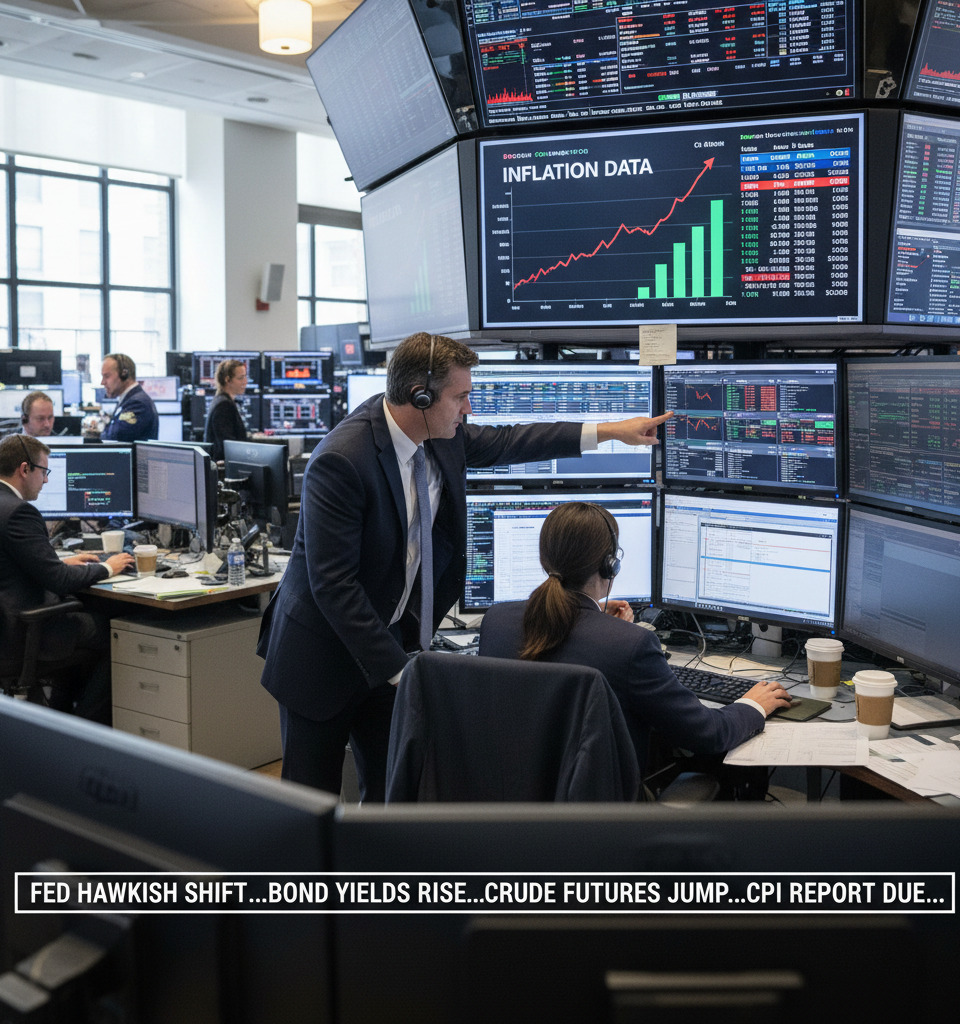
Bond market participants are keenly awaiting this week’s release of U.S. personal spending data, seeking crucial insights after the Federal Reserve's recent pivot towards a more hawkish stance. This shift has compelled traders to reposition their portfolios for the possibility of sustained or even elevated interest rates, making the upcoming economic indicators particularly impactful.
The reevaluation follows recent signals from the Federal Reserve that have suggested a potentially faster or more aggressive tightening cycle than previously anticipated. This updated outlook has injected considerable volatility into the bond market, prompting a re-pricing of debt instruments across various maturities. The personal consumption expenditures (PCE) price index, embedded within the personal spending report, is the Fed's preferred inflation gauge, and its trajectory is paramount to future policy decisions.
Market participants are specifically looking for any signs that inflation, which has exceeded central bank targets, might be moderating or intensifying. A higher-than-expected PCE reading could solidify the market's hawkish expectations, potentially driving bond yields further upwards as investors price in more aggressive rate hikes. Conversely, a softer inflation figure might offer some relief, perhaps easing the pressure on the Fed to act as swiftly.
Broader Market Implications
Beyond inflation data, the price of crude oil is also emerging as a significant factor influencing bond market sentiment. Energy prices have a direct impact on headline inflation, and a sustained rise in oil could exacerbate inflationary pressures, further complicating the Federal Reserve's efforts to manage price stability. Traders are therefore monitoring global oil benchmarks closely, understanding that fluctuations here could directly feed into the narrative around monetary policy.
The current environment underscores the interconnectedness of various economic indicators and asset classes. Bond yields, particularly those on U.S. Treasuries, serve as a foundational benchmark for global financial markets, influencing everything from corporate borrowing costs to mortgage rates. Therefore, any sustained shift in bond market expectations has ripple effects across the broader economy and other asset markets, including equities and currencies.
Expert Perspectives
Analysts are suggesting that the bond market is in a crucial phase of adjustment. Many had initially underestimated the persistence of inflation and the Fed's willingness to respond decisively. The recent recalibration reflects a growing consensus that the era of ultra-low interest rates may be drawing to a close, at least temporarily. Experts emphasize that while the Fed aims for a "soft landing," where inflation is tamed without severely impacting economic growth, the path remains fraught with uncertainty.
What Lies Ahead
Looking forward, the personal spending report this week will be a critical data point, but it is unlikely to be the sole determinant of the Fed's future actions or bond market direction. Traders will continue to scrutinize subsequent inflation readings, labor market data, and central bank communications for clarity. Geopolitical developments, particularly those affecting energy supplies, will also remain a key variable. The coming weeks are expected to be highly dynamic as the market attempts to fully price in the implications of a more aggressive monetary policy stance, continually adjusting to incoming economic realities and central bank rhetoric.