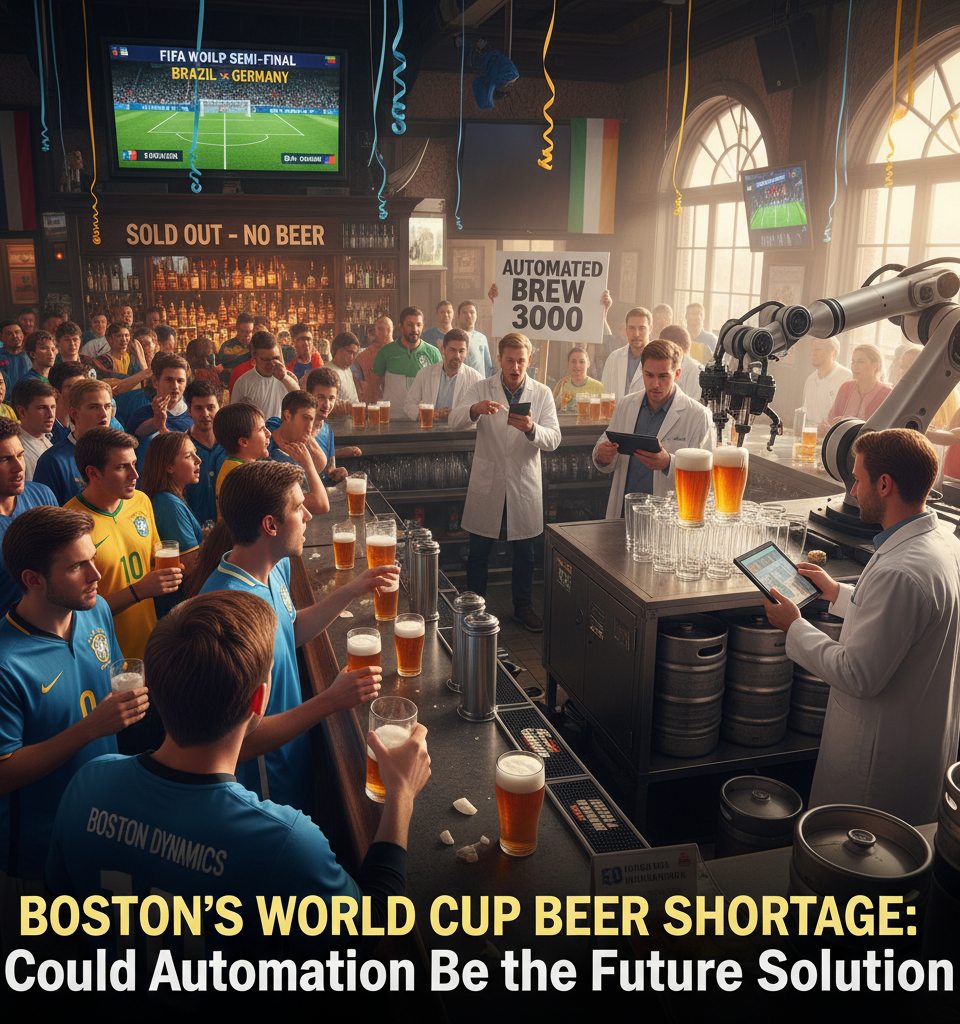
Boston experienced a significant and unexpected beer shortage during the recent World Cup festivities, an event that has brought into sharp focus the vulnerabilities within supply chains for even seemingly abundant consumer goods. The scarcity, occurring amidst widespread public celebrations, underscores a potential disconnect between enthusiastic consumer demand and the agility of current production and distribution mechanisms.
This localized but impactful scarcity highlights broader issues concerning manufacturing responsiveness and inventory management. In a world where demand can surge unpredictably due to cultural events, sporting achievements, or even viral trends, the ability to rapidly scale production and distribution becomes paramount. Historical precedents suggest that disruptions, whether from natural disasters, labor issues, or sudden demand spikes, can quickly expose weaknesses in traditional supply chains, leading to frustrated consumers and lost revenues for businesses.
The core of the discussion now revolves around whether automation, specifically within the manufacturing and logistics sectors, could provide an answer to such product shortfalls. Proponents suggest that integrating advanced robotic systems and AI-driven predictive analytics into breweries and distribution centers could revolutionize how product availability is managed. By automating processes from raw material intake to final packaging and delivery, companies might achieve unprecedented levels of efficiency and flexibility.
Automation's potential impact on the brewing industry, and indeed on consumer goods production more broadly, is multifaceted. Automated systems could enable greater consistency in product quality, reduce human error, and, crucially, allow for faster shifts in production volumes. Furthermore, AI algorithms could analyze real-time sales data, social media trends, and event calendars to accurately forecast demand surges, prompting manufacturers to proactively increase output or adjust inventory levels well in advance of a potential shortage. This predictive capability could transform reactive supply chains into highly responsive, anticipation-driven networks.
Industry experts are increasingly pointing to smart factories—facilities where machines and systems are interconnected and communicate with each other—as the archetype for future production. These factories could autonomously adjust production lines for different SKUs, manage equipment maintenance predictively, and optimize energy consumption. For sectors like brewing, this means less downtime, more consistent output, and the ability to pivot quickly to meet unexpected demand, potentially preventing a recurrence of Boston's recent predicament.
Looking ahead, the incident in Boston serves as a compelling case study for companies across various industries to re-evaluate their supply chain resilience. Investment in automation, while requiring substantial initial capital, could yield long-term benefits in terms of operational efficiency, cost reduction, and, critically, enhanced customer satisfaction by ensuring product availability. The conversation shifts from merely addressing shortages after they occur to building systems designed to prevent them entirely.
The integration of automation is not without its challenges, including the need for skilled labor to manage and maintain advanced machinery, and the significant financial outlay required. However, the rapidly evolving landscape of consumer expectations and the increasing frequency of market disruptions suggest that the embrace of smart, automated solutions may no longer be an option but a strategic imperative. As celebrations like the World Cup continue to generate unpredictable demand, the question of whether automation can reliably "brew up a solution" will remain a key focus for manufacturers and supply chain strategists alike.