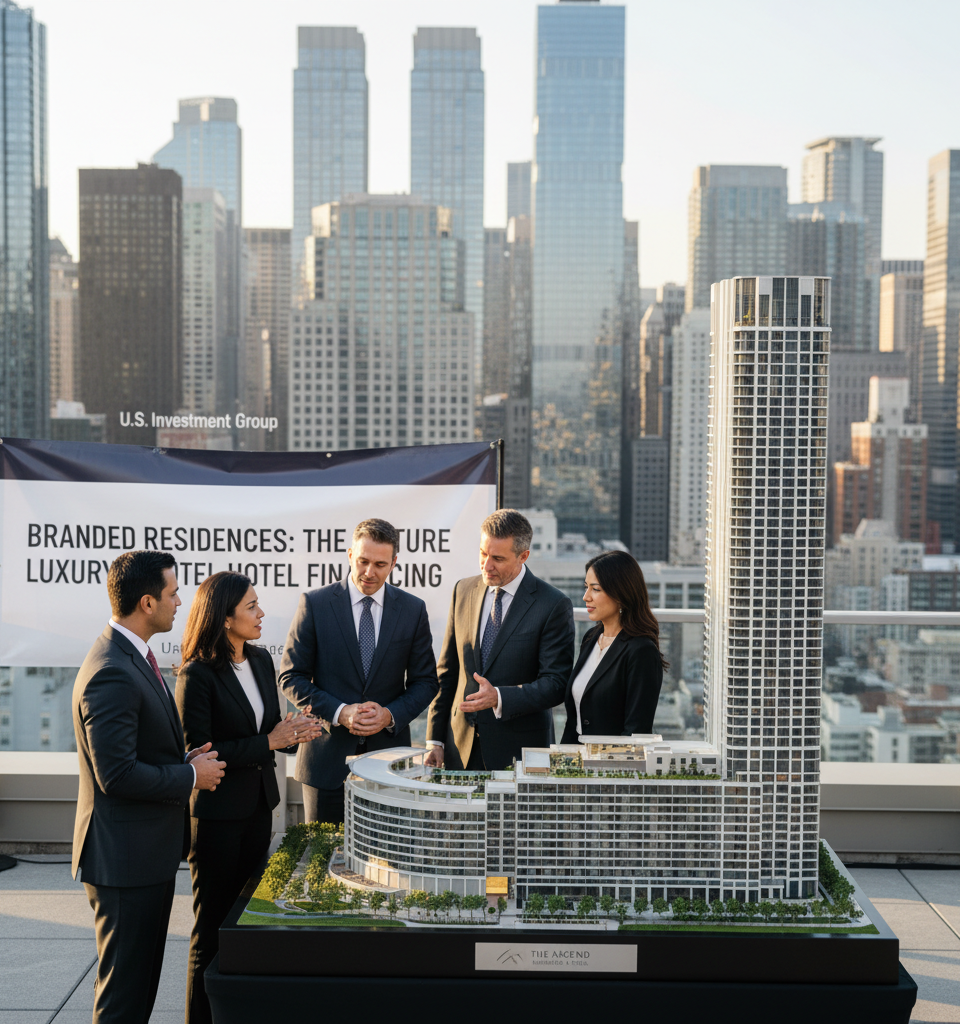
The landscape for financing new luxury hotel developments in the United States has undergone a significant transformation, with industry leaders now emphatically stating that a branded residential component is not merely an optional amenity but a fundamental prerequisite for securing capital. This paradigm shift, highlighted by hoteliers at recent industry forums, underscores the difficulty of obtaining traditional financing for standalone luxury hotels in a challenging economic environment, effectively making branded condominiums the financial engine driving such projects.
This shift reflects a confluence of factors, including escalating construction costs, higher interest rates, and a more cautious lending environment post-pandemic. Historically, hotels could rely on a mix of debt and equity, with luxury properties attracting investors based on their long-term value and operational income. However, the sheer capital outlay required for a new luxury build – often exceeding $1 million per key – has made these projects prohibitive without an additional, immediate revenue stream. Branded residences offer just that, providing upfront capital through sales that can significantly offset development costs and de-risk the project for traditional lenders.
Industry veterans confirm this trend. "Financing new hotels is a nightmare without branded condos," remarked one prominent developer at a recent hospitality conference. This sentiment is echoed across the sector. These residential units, typically sold at a premium due to their association with a luxury hotel brand (e.g., Four Seasons, Ritz-Carlton, St. Regis), inject vital liquidity into the development cycle. Buyers are drawn not just to the opulent living spaces, but also to the extensive amenities and services provided by the adjoining hotel, including concierge services, fine dining, and spa access, generating a robust market for these high-value properties.
This reliance on branded residences has profound implications for the broader U.S. luxury hospitality market. It means that future luxury hotel development will likely be concentrated in prime urban and resort markets where there is sufficient demand from high-net-worth individuals for condominium purchases. Projects in secondary or tertiary markets, or those without the capacity for a residential component, may find themselves at a severe disadvantage. This could lead to a more concentrated and perhaps less diverse luxury hotel footprint across the country, prioritizing financial viability over broader geographical spread.
Experts and analysts have been tracking this evolution. "The branded residence model effectively turns a long-term capital-intensive hotel project into a potentially self-financing or significantly derisked venture," noted a hospitality real estate analyst from a global consulting firm. They elaborated that lenders view the presales of residential units as a tangible commitment from buyers, providing a crucial buffer against construction cost overruns or market fluctuations for the hotel portion. This model has proven particularly resilient, with branded residences often achieving sales premiums of 20-30% compared to comparable unbranded luxury condominiums.
Looking ahead, this trend is expected to solidify further. Developers are actively seeking sites that can accommodate both a luxury hotel and a substantial residential component. The design and architectural integration of these dual-purpose projects will become increasingly critical, ensuring a seamless and synergistic relationship between the hotel and residences. We can anticipate more announcements of mixed-use luxury developments incorporating this strategy, particularly in high-demand urban centers like New York, Miami, and Los Angeles, as well as established luxury resort destinations like Aspen and Hawaii. The ability to innovate within this integrated model will differentiate successful projects in an increasingly capital-constrained environment.