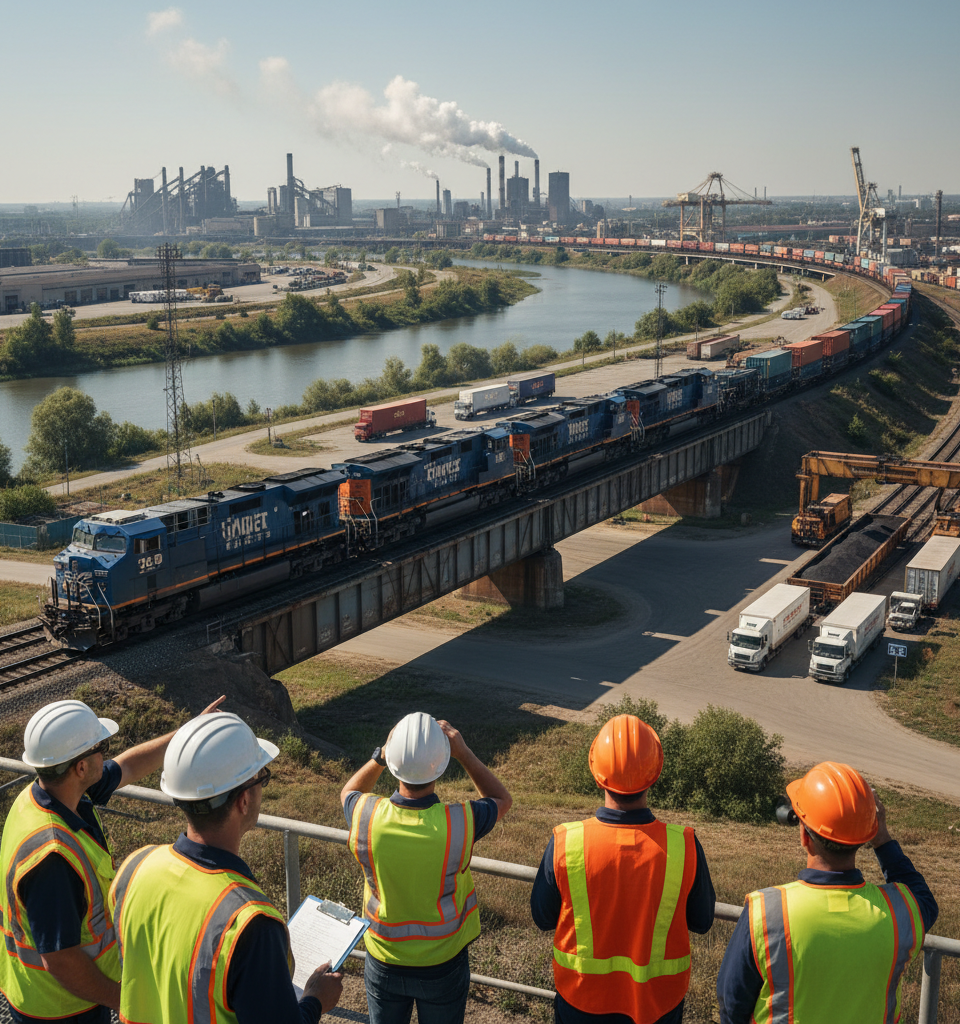
During its Wednesday live show, FreightWaves Today provided an in-depth analysis of the current state of the freight industry, with a particular focus on the burgeoning rail sector. Broad rail traffic gains were underscored as a primary indicator of a strengthening industrial economy, signaling positive momentum across various transportation segments.
Contextualizing the Rail Market Surge
The observed upturn in rail traffic is consistent with a broader economic recovery and expansion. Rail transportation, often considered a bellwether for industrial activity due to its heavy reliance on the movement of raw materials, manufactured goods, and bulk commodities, offers a clear perspective on the health of the manufacturing and production sectors. This current surge follows a period of fluctuating demand, making the recent sustained gains particularly noteworthy for economists and industry analysts alike.
Key Drivers and Technological Advancements
The FreightWaves Today discussion elaborated on several factors contributing to the rail market's robust performance. Beyond the general economic uplift, technological advancements are playing an increasingly critical role. The integration of advanced transportation management systems (TMS) automation was a key topic, with presenters detailing how these systems are streamlining operations, improving efficiency, and enhancing decision-making processes within the rail and broader logistics industries. Such automation facilitates better load planning, real-time tracking, and optimized route selections, directly contributing to the increased capacity and fluidity of rail networks.
Regulatory Landscape and Future Implications
Another significant area of discussion centered on FMCSA regulatory vetting. The Federal Motor Carrier Safety Administration's ongoing efforts to ensure safety and compliance within the trucking industry indirectly impact rail, as both modes are often interconnected within complex supply chains. Rigorous vetting processes and evolving regulations can influence modal shifts and overall freight movement strategies. The broadcast likely explored how these regulatory frameworks are being adapted to meet the demands of a growing industrial economy while maintaining safety standards.
Industry-Wide Impact and Outlook
The positive developments in rail traffic are expected to have a ripple effect across the entire supply chain. Increased rail activity often translates to greater demand for trucking services for first-mile and last-mile deliveries, as well as an uptick in warehousing and logistics operations. This interconnectedness suggests a holistic improvement in the freight sector's performance. The sustained growth in industrial output, as reflected by rail volumes, bodes well for employment in manufacturing and related sectors, as well as for the overall gross domestic product.
Forward-Looking Analysis
The ongoing trends discussed by FreightWaves Today indicate a period of sustained growth for the industrial economy. The continued adoption of automation technologies in transportation management systems is anticipated to further enhance operational efficiencies and capacity. Simultaneously, the evolving regulatory landscape will continue to shape how freight is moved, necessitating ongoing adaptation from carriers and logistics providers. The confluence of these factors points towards a dynamic and expanding freight market for the foreseeable future, with rail continuing to play a foundational role in the movement of goods across the nation.