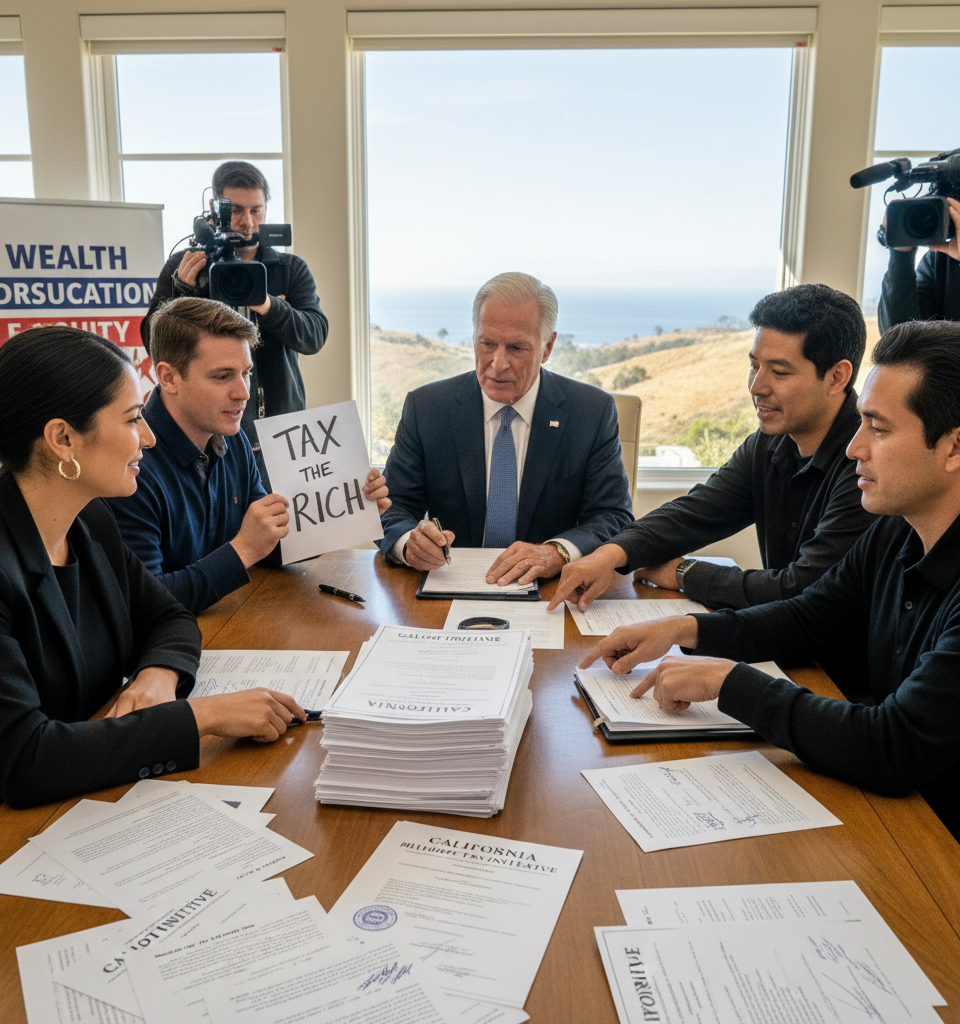
A groundbreaking initiative proposing a one-time 5% levy on California's wealthiest residents, specifically targeting billionaires, has successfully garnered the requisite signatures and will appear on the November 3rd general election ballot. This development marks a significant turning point in the ongoing national discourse surrounding wealth inequality and the role of progressive taxation in state finances. The measure, if passed, seeks to generate substantial revenue for the state, with proponents arguing it is a crucial step toward addressing social and economic disparities.
This ballot measure arrives amidst a period of unprecedented wealth concentration and growing demands for increased funding for public services, including education, healthcare, and infrastructure. California, often at the forefront of progressive policy, has long grappled with the implications of its booming tech sector creating immense fortunes alongside persistent social challenges. Previous attempts at more modest wealth or income tax increases have often faced stiff opposition, making this targeted, one-time levy a particularly bold gambit.
The proponents highlight the rapidly expanding wealth of the state's billionaires, arguing that a small fraction of their gains could profoundly benefit the broader population.
Key Details and Financial Projections
The initiative specifically targets individuals whose estimated net worth exceeds a yet-to-be-defined threshold, likely in the billions of dollars. The 5% tax would be a one-time assessment on their total net worth, not just income, distinguishing it from traditional income taxes. While specific revenue projections are still being refined by state financial analysts, early estimates suggest the tax could generate tens of billions of dollars, potentially reaching $20 billion to $30 billion. Proponents emphasize that this is a targeted measure affecting a very small fraction of the state's population – likely fewer than 200 individuals. The mechanics of valuing such diverse and complex wealth portfolios, spanning real estate, private equity, and illiquid assets, present significant implementation challenges that the initiative’s language attempts to address.
Potential Economic and Social Impact
The ripple effects of such a tax could extend far beyond the immediate revenue generation. Supporters contend that channeling these funds into public services would stimulate the economy, create jobs, and reduce social inequalities. Conversely, critics express concerns that it could lead to an exodus of wealthy residents and businesses, negatively impacting California’s tax base and entrepreneurial ecosystem in the long run. The state's status as a global hub for innovation and capital could be jeopardized if high-net-worth individuals perceive the tax environment as punitive. The debate will inevitably touch upon the balance between social equity and economic competitiveness.
Expert Analysis and Legal Challenges
Economists are sharply divided on the potential outcomes. Dr. Evelyn Chen, a tax policy expert at UC Berkeley, notes, “While the immediate revenue projection is enticing, the long-term behavioral response of high-net-worth individuals – whether they merely pay the tax or actively relocate assets and residency – remains the crucial unknown.” Legal scholars also anticipate a volley of challenges regarding the constitutionality of a wealth tax, particularly concerning asset valuation and potential double taxation issues, as well as the retrospective nature of assessing wealth accumulated over many years. Previous attempts at similar wealth taxes in other jurisdictions have often faced legal hurdles and implementation complexities.
The Road Ahead: Campaign and Outlook With the initiative officially on the ballot, both proponents and opponents are gearing up for an intense campaign season.
Significant financial resources are expected to be poured into advertising and public relations efforts from both sides. Proponents will frame the tax as a matter of fairness and societal investment, while opponents will likely emphasize economic freedom, potential capital flight, and the complexities of wealth assessment. The outcome will not only impact California’s fiscal health but also serve as a national bellwether for similar progressive wealth tax proposals in other states and potentially at the federal level, shaping future policy debates on economic inequality and taxation.
Upcoming Developments As the election draws closer, expect continued public debate, detailed analyses from various think tanks, and endorsements or condemnations from prominent political and business figures.
The precise language of the ballot measure will also undergo further scrutiny, particularly regarding the mechanisms of wealth valuation and the allocation of the generated funds. Furthermore, the state's Legislative Analyst's Office and Department of Finance will release more comprehensive fiscal impact statements, providing voters with updated financial projections and potential socioeconomic consequences. The November 3rd vote will be a pivotal moment, with long-lasting implications for California's economic landscape and its approach to wealth distribution.