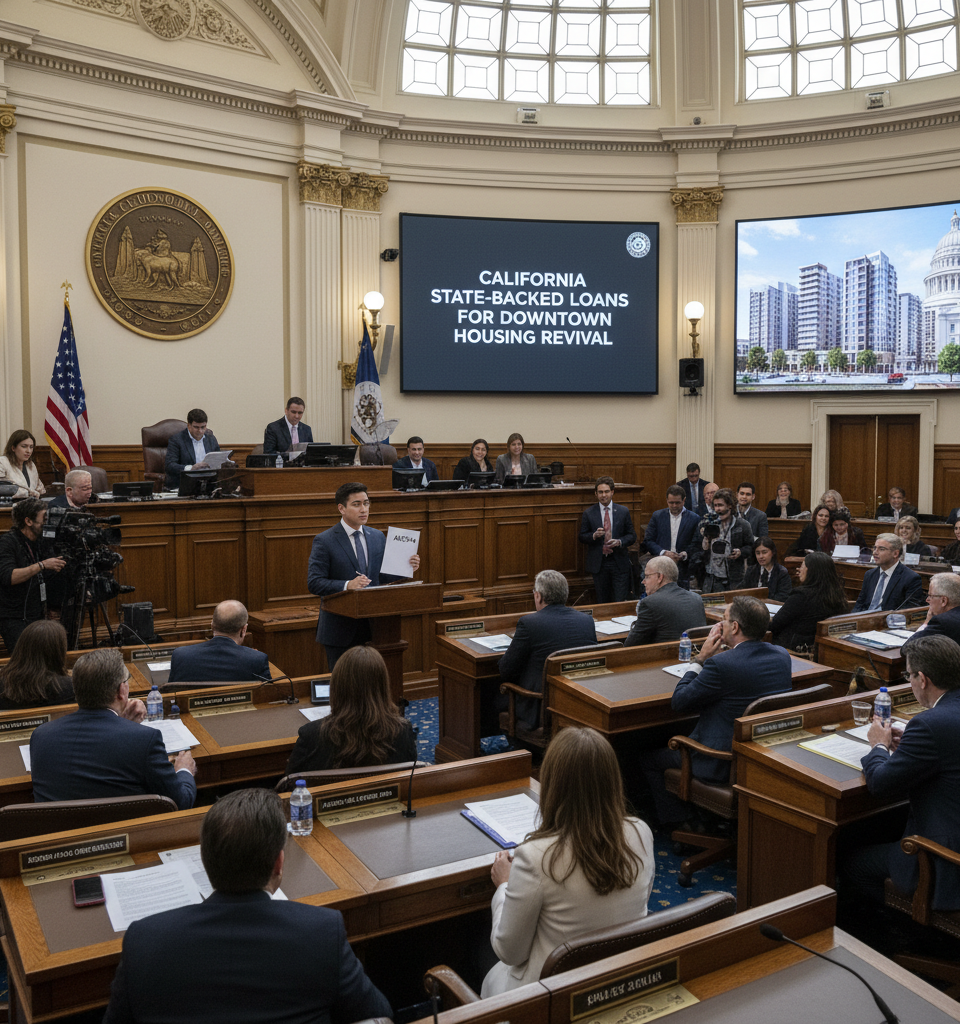
Sacramento, CA – California is at a critical juncture in addressing its persistent housing deficit and revitalizing struggling urban centers as Assembly Bill 2074, dubbed the "Downtown Revitalization Act," advances through the state legislature. Spearheaded by Assemblymember Alex Lee (D-San Jose), the proposed legislation seeks to unlock a wave of high-density housing construction by providing state-backed, low-interest loans and easing regulatory hurdles for development projects situated within a half-mile of significant transit hubs. If enacted, the bill could fundamentally reshape California's urban fabric, driving substantial investment into downtown areas and significantly increasing housing supply in strategically important locations.
The Lingering Challenge of California's Housing Crisis
The impetus behind AB 2074 stems from California's well-documented and acute housing crisis, a decades-long challenge marked by soaring rents, unaffordable homeownership, and chronic undersupply. Experts estimate the state needs to build an additional 180,000 to 200,000 homes annually to meet demand and stabilize prices, yet construction has consistently fallen short. Simultaneously, many California downtowns, particularly post-pandemic, have struggled with reduced foot traffic, vacant office spaces, and a decline in ancillary businesses. AB 2074 directly confronts both issues, proposing a synergistic solution that transforms underutilized commercial zones into vibrant, mixed-use residential communities, thereby leveraging existing infrastructure and promoting sustainable urban growth.
Key Provisions and Financial Mechanisms of AB 2074
At the heart of the Downtown Revitalization Act lies its inventive financial architecture. The bill proposes the establishment of a state-backed loan program, offering significantly lower interest rates than conventional private financing, thereby reducing the financial risk and cost for developers. Eligibility for these funds would be contingent on projects being located within 0.5 miles of major transit stations, ensuring walkability and reduced reliance on personal vehicles. Furthermore, the legislation aims to streamline the notoriously complex and time-consuming local approval processes, often cited as a major impediment to housing construction, by allowing qualifying projects to bypass certain discretionary reviews. This includes provisions for projects with a substantial affordable housing component, potentially requiring 20% or more of units to be designated for low-to-moderate-income families, further addressing equity concerns within the housing crisis.
Potential Impact on Real Estate and Urban Redevelopment
If passed, AB 2074 is poised to send ripples throughout California's real estate and urban development sectors. By significantly de-risking high-density projects in downtown cores, the bill could unleash billions of dollars in development capital, attracting both established developers and new players. This could lead to a dramatic increase in the construction of residential towers, transforming skylines and populating downtowns that have become increasingly commercial-centric. The potential for a new housing supply, particularly in areas with existing transit infrastructure, could also exert downward pressure on rental costs in these specific markets, offering some relief to residents. Moreover, the influx of residents into downtowns would likely stimulate local economies, supporting retail, restaurants, and service industries that have suffered in recent years.
Expert Perspectives on Efficacy and Challenges
Urban planning experts and economists generally view AB 2074 as a promising, if ambitious, step towards tackling California's housing and revitalization challenges. Dr. Evelyn Chen, an urban policy analyst at UC Berkeley, notes, "The combination of financial incentives and regulatory streamlining is precisely what's needed to unlock development in areas that are otherwise economically viable but politically or financially challenging." However, some cautious voices highlight potential challenges. Local municipalities, accustomed to extensive control over land use, may resist the state's encroachment on their zoning authority. Concerns have also been raised about the potential for gentrification if sufficient affordable housing mandates are not rigorously enforced and monitored, pushing existing communities out of newly revitalized areas.
The Road Ahead: Legislative Hurdles and Implementation
AB 2074 still faces several legislative hurdles, requiring passage in both the Assembly and the Senate before reaching the Governor's desk. Debates are anticipated around the precise percentage of affordable housing required, the definition of "major transit hubs," and the scope of local control preempted by the state. Should the bill be signed into law, its implementation will require significant collaboration between state agencies, local governments, and developers. Monitoring mechanisms will need to be established to ensure projects meet their affordable housing targets and that the state-backed loans are utilized effectively and transparently. The success of the Downtown Revitalization Act will ultimately depend not just on its legislative passage, but on the careful orchestration of its ambitious vision into concrete, equitable outcomes for California's communities.