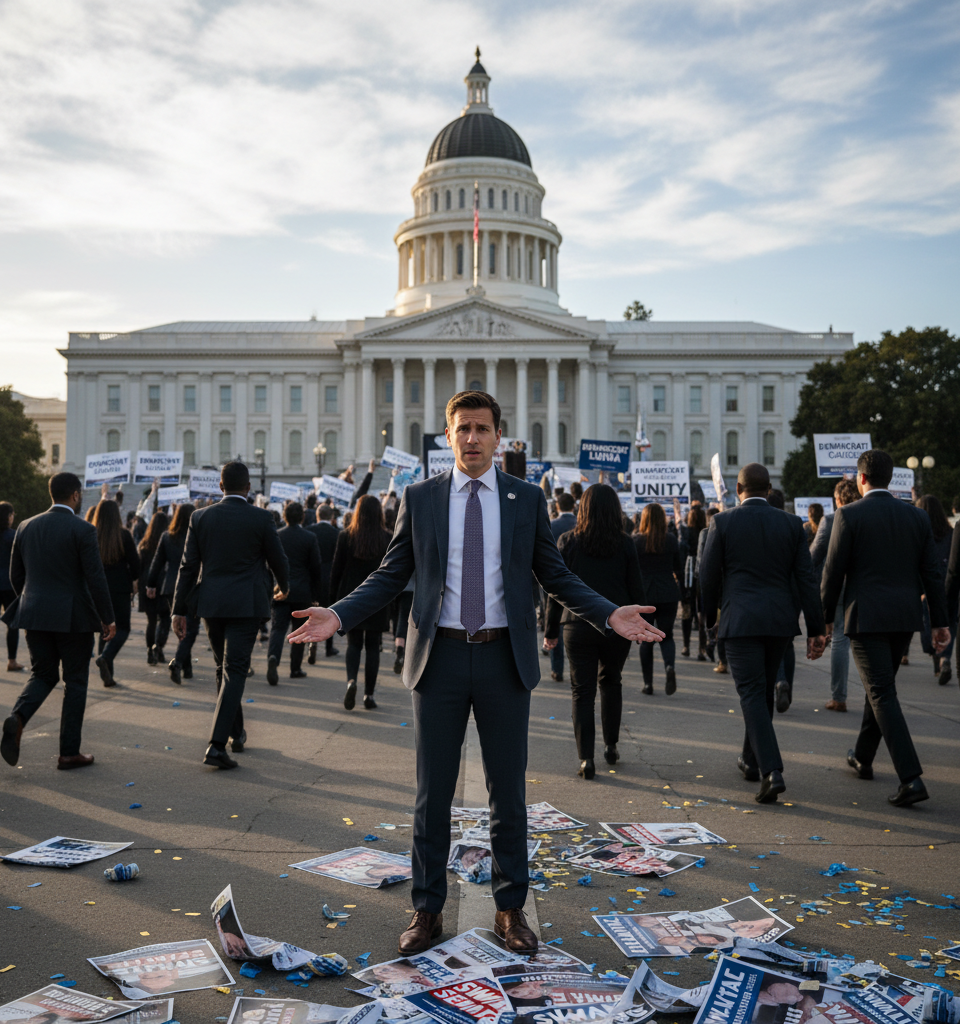
SACRAMENTO – The political landscape in California witnessed a swift and dramatic reversal in support for Representative Eric Swalwell’s nascent gubernatorial aspirations. Weeks before facing unspecified public accusations, Swalwell, a Washington-based figure with limited prior recognition within California's State Capitol, had begun to garner significant backing from influential Democratic groups. This enthusiastic initial support, however, evaporated with remarkable speed once the allegations surfaced, leaving his potential candidacy in a state of sudden vulnerability.
The Brief Ascent of an Unlikely Contender
Swalwell's entry into the California gubernatorial discussion was, by many accounts, an unexpected development. While holding a prominent position in national politics, his footprint in state-level California affairs was minimal. Despite this, a confluence of powerful Democratic organizations and individuals within the state apparatus began to coalesce behind his potential bid. This early momentum hinted at a well-orchestrated, if discreet, campaign to position him as a viable challenger or successor, suggesting a strategic effort to introduce him to a broader state electorate and establish a formidable fundraising base.
The swiftness of this initial endorsement wave raised questions within some political circles regarding the criteria and motivations behind such rapid alignment. Observers noted that for a candidate without deep roots in Sacramento's political establishment, the level of early, coordinated support was uncharacteristic. This momentum was indicative of influential groups perceiving him as a potentially strong contender, possibly due to national profile, fundraising capacity, or perceived electability in a crowded field.
The Precipitous Decline in Support
However, this carefully constructed foundation crumbled almost immediately upon the emergence of public accusations against Swalwell. The nature of these accusations remains unspecified in the initial reports, yet their impact was unequivocal. The very groups that had been quick to offer their endorsement and resources were equally, if not more, rapid in their withdrawal of support, effectively leaving Swalwell politically isolated just as his gubernatorial ambitions were taking shape.
This rapid abandonment underscores the hypersensitivity of political endorsements, particularly in a high-stakes race like a gubernatorial contest. Politicians and influential organizations are often quick to distance themselves from any perceived controversy to protect their own reputations and political capital. The speed of the withdrawal points to the severity or perceived risk associated with the accusations, even without public knowledge of their specifics.
Implications for California's Political Landscape
The incident serves as a stark reminder of the volatile nature of political campaigns and the fragile foundation upon which even well-connected candidacies can rest. For California Democrats, the episode highlights a potential vetting oversight or a miscalculation in the early assessment of a candidate. It also raises questions about the due diligence performed by endorsing bodies before committing their significant influence.
Looking ahead, this event could prompt greater caution among California's political power brokers when considering endorsements, especially for candidates entering the state-level arena from national politics. The rapid shift also leaves an open space in what was potentially shaping up to be a competitive field, underscoring the dynamic and unpredictable nature of California's election cycles. The episode for Eric Swalwell, therefore, serves as a cautionary tale of both the allure of rapid support and the dangers of swift political isolation when unforeseen challenges arise.