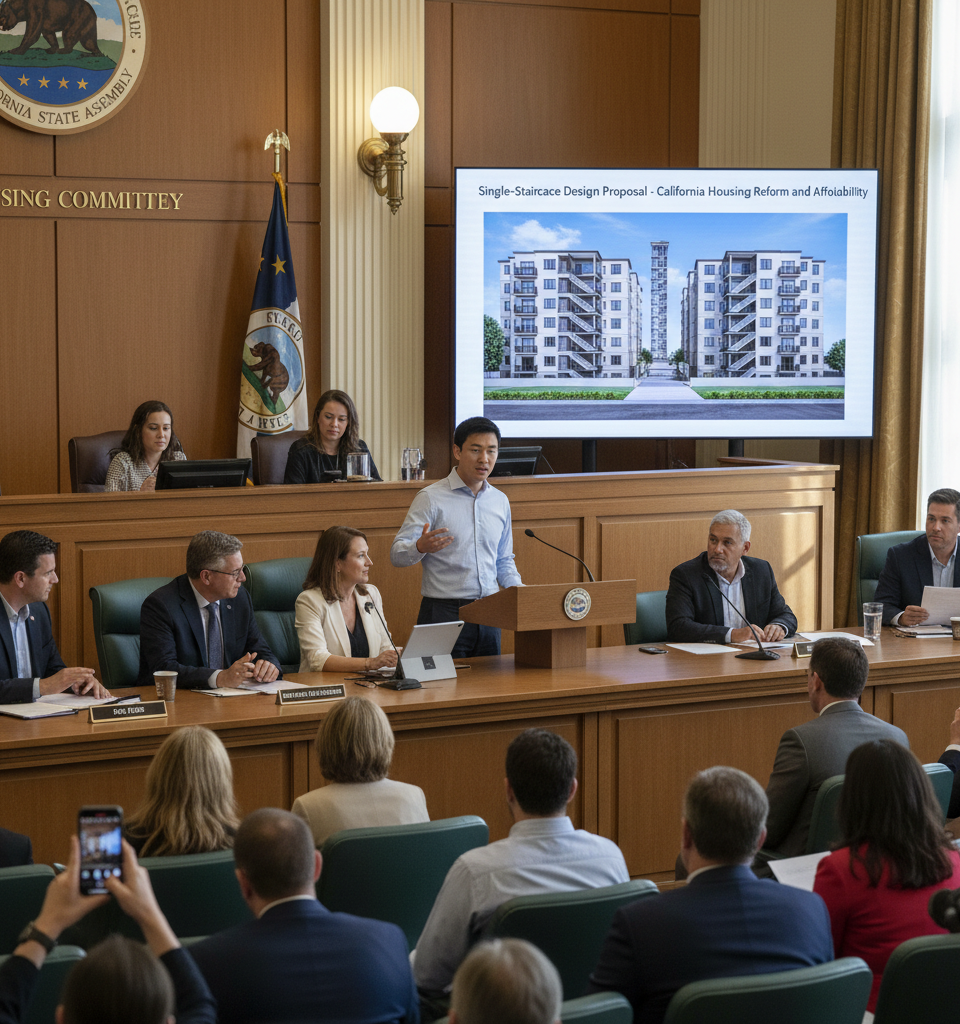
SACRAMENTO, CA – California is poised to join a growing national trend in housing policy reform, with new legislation introduced on Tuesday aiming to permit single-stair multifamily residential buildings. Assemblymember Alex Lee (D-San Jose) filed a bill that seeks to fundamentally reform California’s stringent building codes, a move intended to significantly increase housing construction and address the state's chronic affordability crisis. This initiative follows successful adoptions of similar reforms in numerous cities and states, signaling a critical pivot in California's strategy to expand its housing supply.
The Urgency of Housing Reform in California
California's housing crisis remains one of the most acute in the nation, characterized by soaring rents, prohibitive home prices, and a severe shortage of available units. Decades of restrictive zoning and complex building codes have bottlenecked development, making it extraordinarily expensive and time-consuming to construct new housing. The single-stair reform directly targets a longstanding requirement that mandates two staircases for multifamily buildings exceeding three stories. This mandate often leads to larger building footprints, increased material costs, and reduced usable space, ultimately limiting the number of units that can be built on a given parcel and driving up per-unit costs. Advocates argue that modern safety standards and building materials can safely accommodate single-stair designs, particularly for mid-rise buildings.
Key Details of Assemblymember Lee's Proposal
Assemblymember Lee's proposed legislation specifically targets building code sections related to egress requirements for residential structures. While the exact details of the bill are still emerging, it is expected to align with reforms seen in cities like Seattle and states such as Oregon, which have successfully implemented single-stair allowances for buildings up to six or even seven stories under specific conditions. These conditions typically include enhanced fire suppression systems, limited travel distances to exits, and robust fire-rated construction. The bill aims to leverage these proven safety measures to allow for more efficient and cost-effective building designs, potentially unlocking hundreds of thousands of new housing units across the state given California's high population density and demand.
Broad Impact on California's Real Estate and Construction Sectors
The adoption of single-stair reform could have profound implications for California's real estate and construction industries. Developers stand to gain significant flexibility in design and potentially reduce construction costs by 5-10% per unit, according to industry estimates, by optimizing floor plans and reducing the overall building footprint. This could, in turn, accelerate project timelines and make previously uneconomical projects viable. For consumers, the long-term impact could be a gradual increase in housing availability, potentially alleviating some of the upward pressure on rents and home prices. However, the exact market response will depend on the scale of implementation and supplementary housing policies.
Expert Perspectives on the Efficacy and Challenges
Urban planning experts and housing advocates largely view single-stair reform as a pragmatic step forward. "This isn't about compromising safety; it's about intelligent design and a common-sense approach to housing density," stated Dr. Emily Chang, a housing policy analyst at the University of California, Berkeley. "Many European and Canadian cities have safely utilized single-stair buildings for decades. California is simply catching up." However, some fire safety officials and established construction unions may raise concerns regarding potential safety compromises or impacts on labor requirements, necessitating careful legislative negotiation and robust public discourse to ensure all stakeholder concerns are addressed without diluting the reform's core intent.
The Road Ahead: Legislative Hurdles and Implementation
The path to full implementation for Assemblymember Lee's bill will involve navigating considerable legislative hurdles in Sacramento. It will require passage through multiple committees, a vote in both the Assembly and the Senate, and ultimately, the Governor's signature. Lobbying efforts from housing advocates, developers, and potentially opposition from certain interest groups will define the legislative process. Should the bill pass, its effectiveness will then depend on how quickly and uniformly California's myriad cities and counties adopt and integrate the new building code provisions, a process that historically can be fragmented. Nevertheless, this legislation represents a significant and optimistic stride towards addressing California's persistent housing deficit and moving towards a more affordable future.
A New Chapter for California Housing Policy
Ultimately, Assemblymember Lee’s initiative marks a crucial turning point for California’s housing policy. By embracing single-stair reform, the state signals a departure from overly prescriptive regulations towards more flexible, data-driven approaches common in leading global cities. This shift, combined with other ongoing zoning reforms, has the potential to redefine urban development in California, fostering greater affordability and accessibility in its housing markets for years to come. The success of this new chapter will not only be measured in the number of new units built but also in the enhanced quality of life for millions of Californians seeking attainable housing.