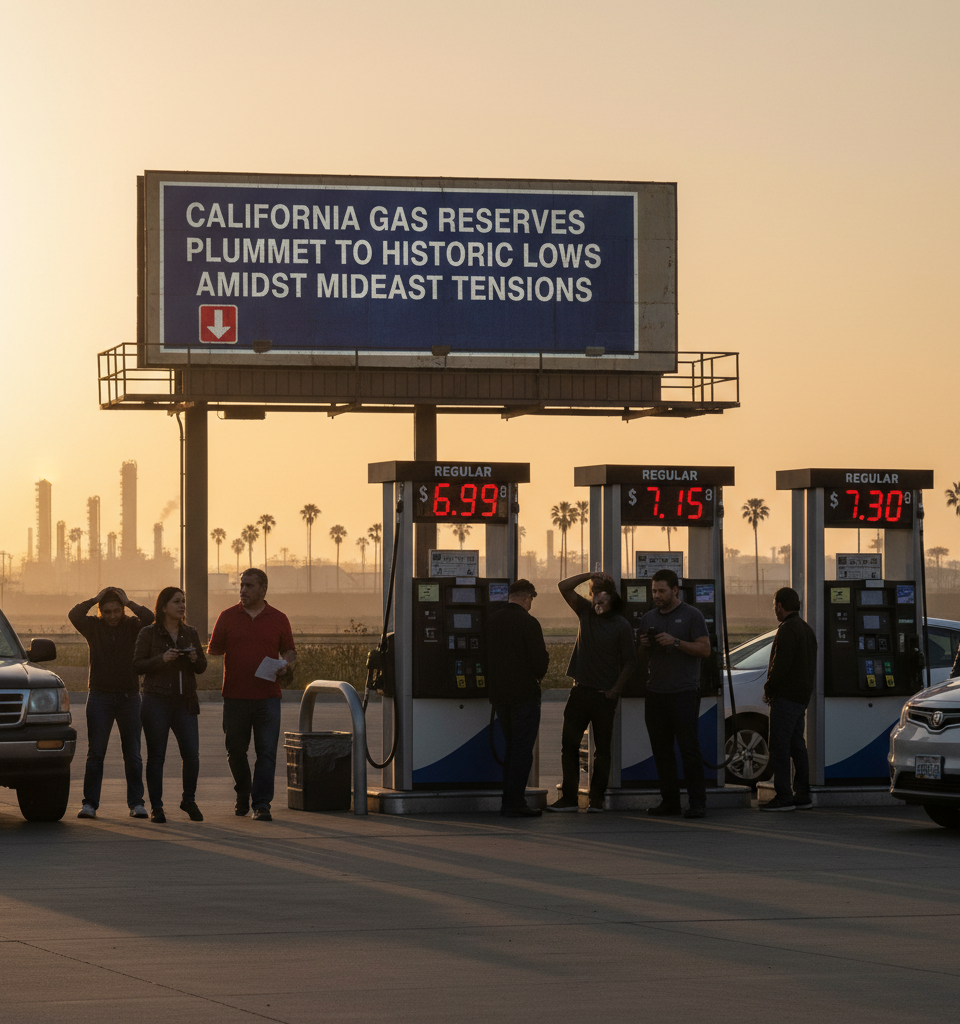
SACRAMENTO, CA – California's gasoline stockpiles have plummeted to their lowest recorded levels, triggering widespread concern among consumers and industry analysts alike. The dramatic decline, observed over the past week, is a direct consequence of escalating geopolitical tensions in the Strait of Hormuz, a vital maritime corridor for a significant portion of the world's crude oil supply. This unprecedented depletion threatens to exert upward pressure on fuel prices across the Golden State, compounding existing inflationary pressures.
The current crisis underscores California's vulnerability to global supply chain disruptions, particularly those impacting energy markets. Historically, the state maintains robust fuel reserves to buffer against such shocks. However, recent events in the Middle East, including a series of maritime incidents and increasingly aggressive rhetoric, have created significant uncertainty, leading to precautionary rerouting of crude shipments and a concomitant reduction in refined product availability on the West Coast. This situation mirrors historical periods of supply anxiety, such as the 1973 oil crisis, though the immediate cause is specific to geopolitical maritime chokepoints rather than an outright production cut.
According to data released by the California Energy Commission (CEC), gasoline inventories in the state fell by an alarming 15% in the last reporting week, settling at a meager 18.5 million barrels. This figure represents a 25% drop compared to the five-year average for this period and is the lowest recorded level since the CEC began tracking these statistics in the early 1990s. Industry sources indicate that several tankers carrying refined products destined for California have been delayed or rerouted around the Cape of Good Hope, adding weeks to transit times and significantly increasing shipping costs, which are ultimately passed on to consumers. One anonymous refinery executive stated, "We're seeing an unprecedented logistical headache. The risk premium for shipping through the Strait has become prohibitive for many operators."
The impact on the broader energy market is already palpable. Benchmark Brent crude oil futures have surged by over 7% in the past month, trading near $88 per barrel, largely driven by the perceived risk to Middle Eastern oil flows. West Coast gasoline futures have seen an even sharper increase, climbing by 11% in the same period. This regional premium reflects the isolated nature of California's gasoline market, which relies heavily on in-state refining capacity and limited pipeline connectivity. The increased cost of crude and the higher expense of securing refined products via alternative routes mean that retailers are bracing for significant increases at the pump, potentially adding an additional $0.20 to $0.35 per gallon within the coming weeks.
Energy market analysts are expressing deep concern. Dr. Evelyn Reed, an energy economist at Stanford University, commented, "California's energy infrastructure, while robust, is not entirely immune to global shocks. The Hormuz situation is a classic supply-side risk that demonstrates how geopolitical events can quickly cascade into local economic impacts. We are seeing a real-world example of the 'supply chain butterfly effect.'" She added that the state's stringent environmental regulations also contribute to its isolation, as fewer out-of-state refineries produce the specialized blends required for California, limiting options during shortages.
Looking ahead, the immediate future for California's gasoline supply remains precarious. Much hinges on the de-escalation of tensions in the Strait of Hormuz. Should the situation stabilize, a gradual replenishment of stocks could occur, albeit over several weeks to months. Conversely, any further escalation, such as a major tanker incident or a sustained blockade, could trigger a more severe supply crisis, potentially leading to rationing or even higher prices. State officials have reportedly begun internal discussions on contingency plans, though no public statements have been made regarding emergency measures.
Consumers are advised to anticipate higher prices at the pump and to consider fuel-efficient travel methods. Businesses reliant on transportation and logistics, in particular, should prepare for increased operational costs. The current situation serves as a stark reminder of the interconnectedness of global energy markets and the critical importance of geopolitical stability to everyday economic life in California.