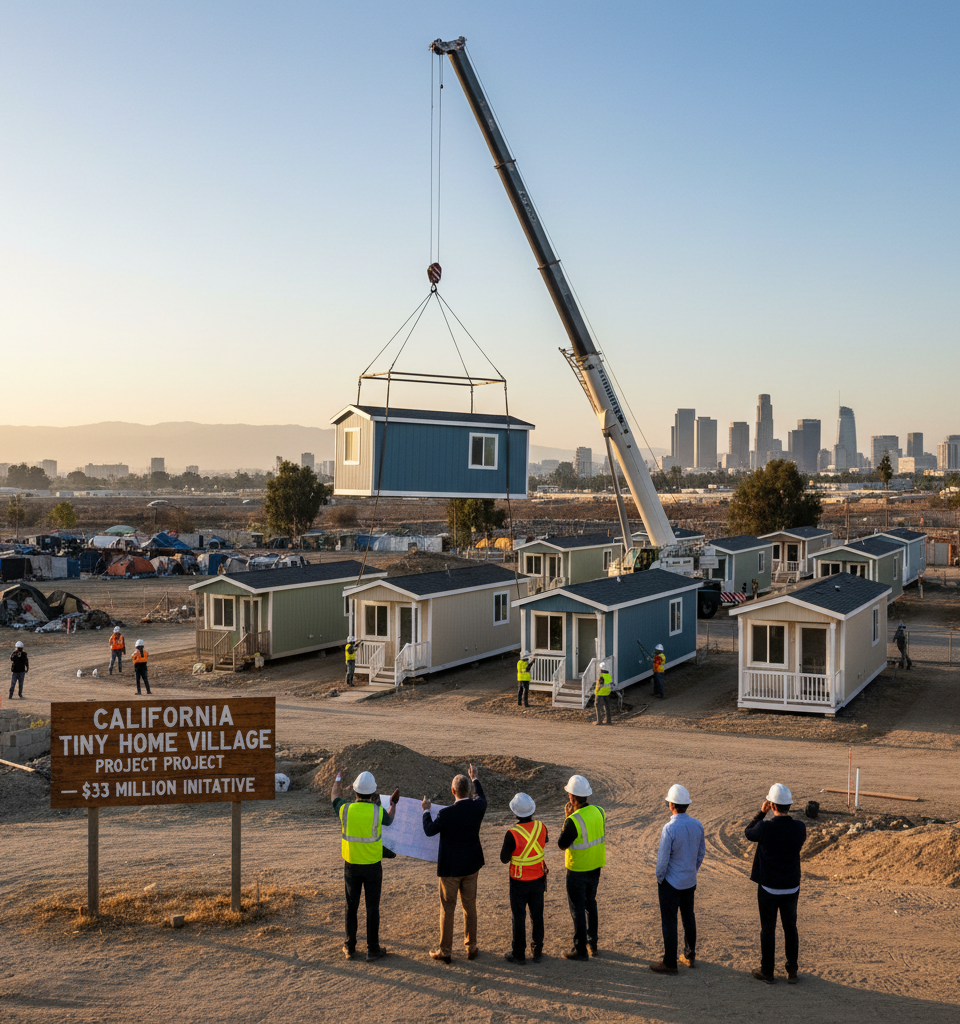
Los Angeles is set to become the focal point for the restart of California's ambitious, albeit previously stalled, $33 million tiny homes initiative. This program aims to deliver 1,200 compact housing units across the state, with the initial phase concentrating efforts in the sprawling Southern California metropolis. The revival of this project is particularly noteworthy given the broader landscape of dwindling public funds for homelessness, positioning these tiny homes as a critical, albeit small-scale, intervention.
Context and Background
California continues to face the nation's most acute homelessness crisis, with an estimated over 171,000 individuals experiencing homelessness as of 2023. The state's previous attempts to rapidly scale housing solutions have often been hampered by bureaucratic hurdles, community opposition, and escalating construction costs. The tiny home project, initially launched with considerable fanfare, then languished for over a year, drawing criticism regarding its efficacy and the slow pace of implementation. This restart underscores a persistent demand for immediate, albeit unconventional, housing solutions while traditional affordable housing projects face prolonged development timelines and higher price tags.
Key Details and Implementation
The $33 million allocation, part of a larger state initiative, is specifically earmarked for the construction and deployment of these tiny homes. Each unit is designed to provide individual or duo occupancy with basic amenities, offering a more stable alternative to traditional shelter settings. The operational cost per unit, while significantly lower than permanent supportive housing, still presents a funding challenge beyond the initial construction. Details regarding site selection in Los Angeles were not immediately available, though previous iterations of such programs have favored underutilized public lands or parcels acquired through expedited processes. Local service providers are expected to manage the sites, offering supportive services like case management, mental health assistance, and job placement to residents.
Industry and Market Impact
The tiny home model represents a growing segment within the broader housing solutions market, particularly in high-cost-of-living areas like California. While not a panacea, it offers a relatively rapid deployment pathway compared to conventional construction. Its success or failure could influence future state and municipal investments in modular and pre-fabricated housing solutions. However, the program's limited scale — 1,200 units against a backdrop of over 171,000 unhoused individuals — means its market-wide impact on the housing crisis will be symbolic rather than fundamentally transformative. Developers specializing in modular construction and affordable housing solutions are closely watching its progress, as successful deployment could unlock further opportunities for simplified, faster-built housing.
Expert Perspective
Housing policy experts offer a mixed perspective on the tiny home initiative. Dr. Evelyn Reed, a leading urban policy analyst, commented, "While tiny homes offer immediate, dignified shelter and can be instrumental in transitioning individuals off the streets, they are not a silver bullet. The true challenge lies in securing long-term operational funding for supportive services and ensuring robust pathways to permanent housing." Others point to the risk of creating 'solutionettes' if the program lacks integral wrap-around services and isn't integrated into a broader strategy. The recent cuts in state and federal funding for homelessness, impacting programs like the Homeless Housing, Assistance and Prevention (HHAP) grant program, particularly concern advocates who fear that without sustained operational support, these tiny communities could face significant challenges.
What's Next
The immediate focus will be on the expedited construction and placement of the first wave of tiny homes in Los Angeles. Success hinges not only on timely construction but, crucially, on the robust provision of essential supportive services and effective resident transitions. The state faces the daunting task of demonstrating the program's cost-effectiveness and its ability to significantly improve outcomes for residents, especially as it seeks to justify further investments amidst a tighter fiscal environment for homelessness initiatives.
Future phases, contingent on the performance of this initial rollout, may see expansion to other cities grappling with similar challenges, but long-term sustainability remains the paramount concern. Advocates will be closely monitoring how these tiny communities integrate into the existing ecosystem of housing and services and whether they truly serve as stepping stones to stability rather than simply temporary encampments.