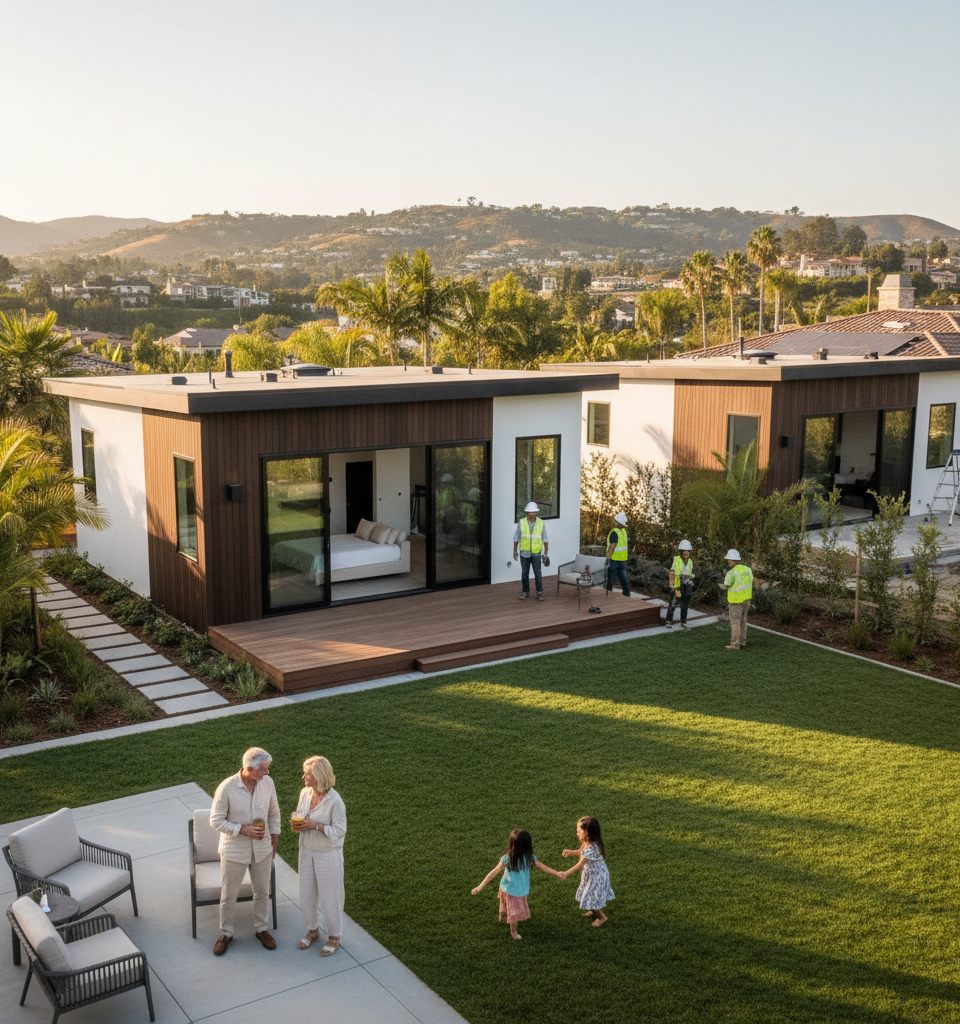
California's robust housing market, particularly within its high-tech luxury enclaves, is experiencing a significant paradigm shift driven by the resurgence of multigenerational living. This trend is manifesting conspicuously through a boom in the construction and utilization of Accessory Dwelling Units (ADUs), often referred to as granny flats, and integrated 'NextGen' suites. These secondary residential units are no longer merely quaint additions but rather strategic financial and lifestyle tools that enable families to navigate the state's sky-high property values, secure legacy homes, and provide flexible living arrangements for elderly parents, adult children, or even tenants.
While multigenerational households were once a norm, declining for much of the 20th century, economic pressures, demographic shifts, and evolving cultural preferences are propelling their return. The average home price in California now hovers around $830,000, making outright ownership challenging for many. ADUs offer a tangible solution, allowing families to pool resources, provide caregiving proximity, or generate rental income to mitigate soaring mortgage payments. This movement is particularly pronounced in areas like the San Francisco Bay Area, Silicon Valley, and parts of Southern California, where median home prices can easily exceed $1.5 million.
Policy and Economic Drivers
The current ADU boom is heavily influenced by recent legislative changes in California designed to alleviate the housing crisis. Since 2016 and subsequent amendments in 2019 and 2020, state laws have significantly streamlined the permitting process, reduced impact fees, and removed restrictive local ordinances, effectively incentivizing ADU construction. These policy shifts have led to a dramatic increase in ADU permits issued, from just under 9,000 statewide in 2018 to over 22,000 in 2021. Developers are increasingly incorporating these units into new constructions, often marketing them as 'NextGen' or 'dual-master' suites that form an integral part of the main residence, offering both privacy and connectivity.
Market Impact and Investment Value
The integration of ADUs is profoundly impacting the broader real estate landscape, transforming how properties are valued and marketed. A well-designed ADU can add significant value, with some reports indicating an increase of 20% to 35% to a property's market price. For homeowners, the potential for rental income, often ranging from $2,000 to $4,000 per month in affluent areas, can substantially offset primary mortgage costs. This financial incentive, coupled with the desire for flexible living arrangements, is reshaping buyer expectations, making properties with ADU potential highly desirable and competitive in luxury sectors.
Expert Perspectives
Real estate analysts and urban planners widely acknowledge the transformative role of ADUs. "These aren't just 'granny flats' anymore; they're sophisticated, income-generating assets," states Dr. Emily Chang, a senior housing economist at Pacific Institute for Urban Research. "The legislative changes have unlocked incredible potential, allowing homeowners to essentially create a two-for-one property. It's a pragmatic response to both the affordability crisis and changing family structures." Architectural firms are also noting a shift, with increasing demand for sophisticated ADU designs that blend seamlessly with the main residence, featuring high-end finishes and smart home technologies.
The Road Ahead
The trajectory for multigenerational living and ADU development in California appears robust. Industry forecasts suggest continued growth, with further refinements to state and local regulations expected to ease permitting and construction. As housing affordability remains a paramount concern and demographic trends indicate an aging population coupled with younger generations facing economic headwinds, ADUs are poised to play an even more critical role. Future innovations may include modular ADU construction becoming more widespread, further lowering costs and speeding up deployment, solidifying these units as an integral and evolving component of California's residential tapestry. This movement is not merely a fleeting trend but a fundamental recalibration of housing strategy aligned with contemporary economic realities and family needs.