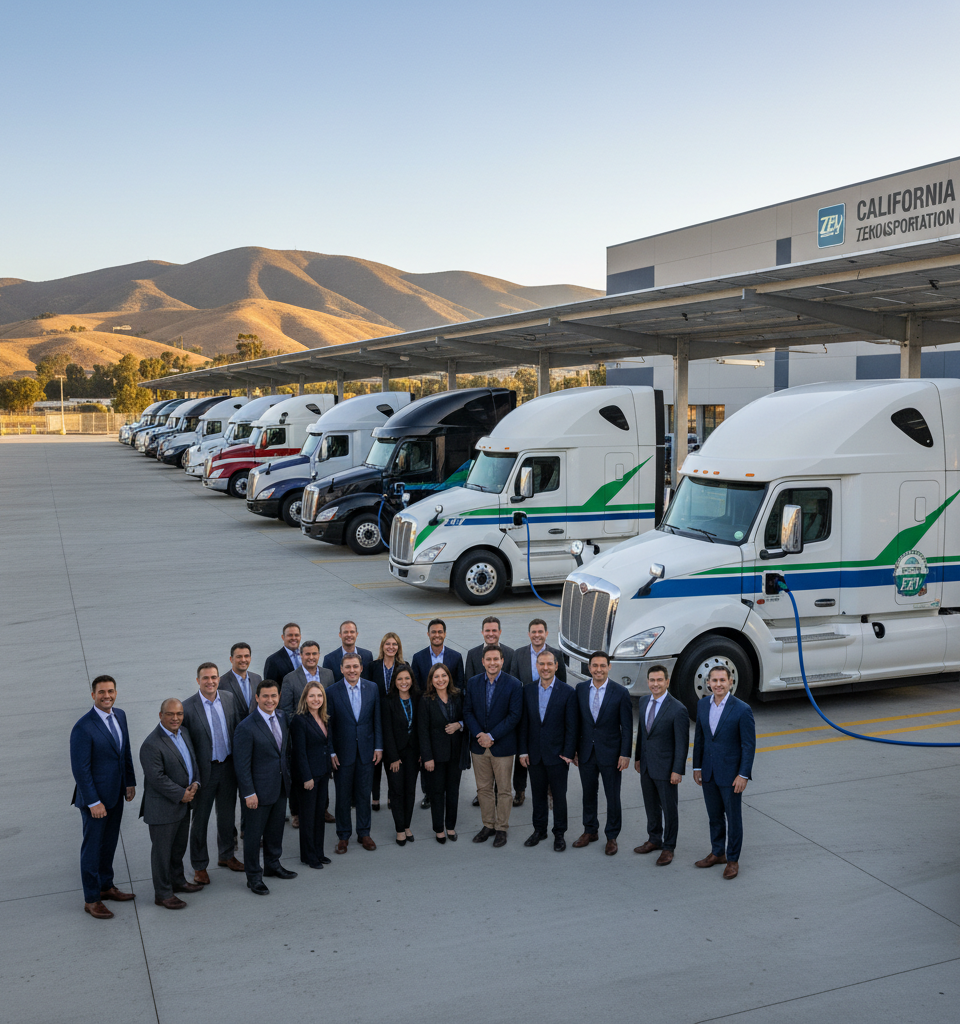
California has initiated its most recent incentive program to stimulate the procurement of zero-emission vehicle (ZEV) trucks, marking another critical step in its ambitious environmental agenda. The new funding, made available this week through various state agencies, targets commercial vehicle operators across the Golden State, offering substantial financial assistance to offset the higher upfront costs associated with battery-electric and hydrogen fuel cell trucks. This push is firmly aligned with California's aggressive mandates to phase out internal combustion engine commercial vehicles, aiming to improve air quality, particularly in disadvantaged communities, and significantly reduce greenhouse gas emissions.
Context and Historic Commitment to ZEVs
This latest incentive package is not an isolated effort but rather a continuation of California's long-standing and pioneering commitment to environmental stewardship and clean transportation. The state has consistently led the nation in adopting stringent emissions standards and fostering the development of ZEV technologies. Historically, California's Air Resources Board (CARB) has been instrumental in shaping policies like the Advanced Clean Trucks (ACT) rule, which mandates escalating percentages of ZEV truck sales beginning in 2024.
These incentives are crucial bridging mechanisms, designed to help fleet operators navigate the financial hurdles of transitioning to ZEVs, which, despite offering lower operating costs, often carry a premium purchase price compared to their diesel counterparts. The urgency also stems from the state's severe air quality challenges, exacerbated by heavy truck traffic in port communities and major urban corridors.
Key Program Details and Funding Structure
Specific details of the new funding pot reveal an intricate structure aimed at maximizing impact. The primary source of this capital is expected to come from existing state programs, potentially including allocations from the California Clean Air Initiative and the Hybrid and Zero-Emission Truck and Bus Voucher Incentive Project (HVIP). While exact figures for the total allocation are still being finalized, preliminary reports suggest an initial tranche of hundreds of millions of dollars will be made available.
HVIP, a cornerstone of California’s ZEV incentive strategy, typically offers point-of-sale vouchers that can reach up to $220,000 per vehicle, varying by vehicle class and technology. This reduces the upfront cost burden directly for purchasers. Additionally, programs like the Carl Moyer Memorial Air Quality Standards Attainment Program may also contribute, targeting older, higher-emitting diesel trucks for replacement with cleaner alternatives.
Eligibility often prioritizes small businesses and fleets operating within disadvantaged communities, ensuring an equitable distribution of environmental and economic benefits.
Industry and Market Impact Analysis
This fresh round of funding is expected to have a cascading effect across the heavy-duty trucking industry in California and beyond. For manufacturers of ZEV trucks, such as Navistar, Volvo, Daimler Truck North America, and Nikola, these incentives translate into a bolstered order book and increased production scale, driving down per-unit costs over time. For fleet operators, the financial relief could be the decisive factor in accelerating their transition plans.
Analysts predict a significant uptick in ZEV truck sales within California over the next 12-18 months. Beyond direct purchases, the incentives further stimulate investment in supporting infrastructure, including charging and hydrogen fueling stations, which are critical for widespread ZEV adoption. This market signal also encourages adjacent industries, from utility providers to cleantech innovators, to deepen their involvement in California's ZEV ecosystem.
Expert Perspectives on the Initiative
Industry experts and environmental advocates largely commend California's proactive stance. Dr. Evelyn Ramirez, a transportation policy analyst at the West Coast Environmental Institute, stated, "This latest injection of funds is absolutely crucial. While significant progress has been made, the cost differential for heavy-duty ZEVs remains a hurdle for many fleets, especially smaller ones. These incentives act as a vital bridge, getting more clean trucks on the road faster. The economic benefits, alongside the environmental ones, are undeniable in the long run." She emphasized the importance of sustained funding and streamlined application processes to ensure widespread participation. Supply chain specialists also note that as more carriers adopt ZEVs, it could lead to new logistical efficiencies and potentially differentiate carriers based on their environmental footprint.
Looking Ahead: Future Implications and Challenges
The immediate future will see various state agencies working to disburse these funds efficiently and transparently. The success of this program will be measured not just by the number of vouchers issued, but also by the sustained operation of these ZEV trucks and the corresponding reductions in emissions. Looking further ahead, California faces the ongoing challenge of scaling its charging and fueling infrastructure to keep pace with growing ZEV adoption.
While incentives are powerful, a robust and accessible charging network is equally vital. Future legislative efforts may include exploring innovative financing models and perhaps even extending such programs to other vehicle types as the state inches closer to its ultimate goal of a fully zero-emission transportation sector. California's continued leadership in this arena will likely influence similar policy developments in other states and at the federal level, shaping the broader trajectory of commercial transportation decarbonization in North America.