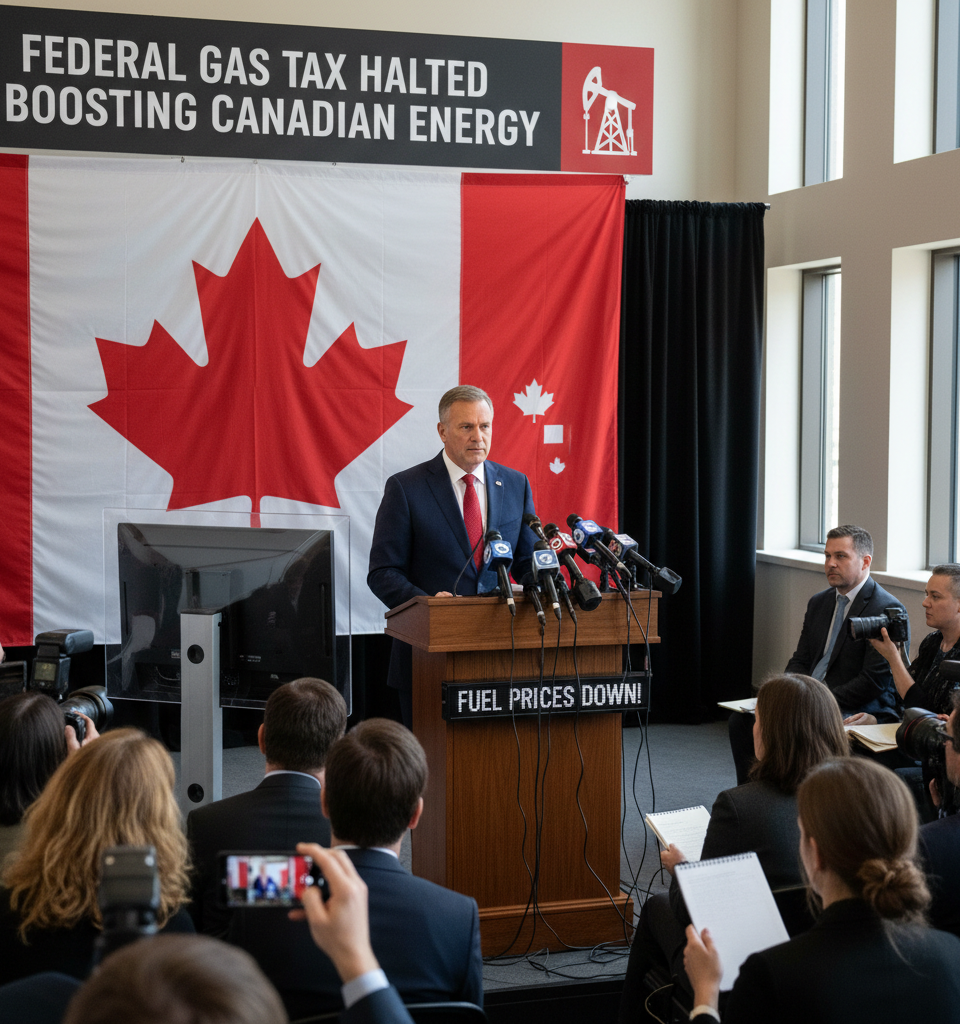
Ottawa, ON – In a direct response to the escalating global energy crisis and its profound impact on Canadian households, Prime Minister David Carney today declared an immediate and indefinite suspension of the federal gas tax. The sweeping measure, effective immediately, aims to provide significant financial relief to consumers grappling with historically high fuel prices, which have been exacerbated by geopolitical tensions and supply chain disruptions. Simultaneously, the Carney administration unveiled a strategic initiative to bolster domestic oil and gas production, signaling a dual approach to manage the current energy crunch and fortify Canada's long-term energy independence.
Unprecedented Measures to Combat Inflationary Pressures
This decision marks a significant intervention by the federal government into the nation's energy market. For months, Canadians have witnessed a relentless climb at the pumps, with average gasoline prices surpassing $2.00 per liter in many urban centers, a historic high. The driving force behind these increases is largely attributed to the ongoing conflict in Eastern Europe, which has sent shockwaves through global energy markets, restricting supply and driving up crude oil benchmarks. The federal gas tax, typically levied at a rate of 10 cents per liter, has been a consistent revenue stream for infrastructure projects, making its suspension a notable concession designed to directly impact consumer pockets.
Specifics of the Relief Package and Production Strategy
During a press conference held this morning on Parliament Hill, Prime Minister Carney elaborated on the specifics of the initiative. "Starting midnight tonight, Canadians will see the federal portion of the gas tax removed from every liter they purchase," Carney stated, emphasizing the immediate impact. While the exact duration of the suspension remains fluid, tied directly to global market conditions, the government has indicated it will be in effect "as long as necessary to stabilize prices and provide meaningful relief." Concurrently, the government detailed plans to allocate an initial C$5 billion towards accelerating key oil and gas projects, including pipeline expansions and exploration initiatives in Western Canada. This investment is projected to increase Canadian crude output by an estimated 300,000 barrels per day within the next 18 months.
Repercussions Across Industries and Households
The ripple effects of this policy are expected to be substantial. For the average Canadian commuter driving 15,000 km annually in a vehicle consuming 10 L/100km, the gas tax suspension could translate to annual savings of approximately C$150. However, the benefits extend beyond individual drivers, impacting freight companies, agricultural producers, and myriad businesses reliant on transportation, potentially mitigating inflationary pressures across the supply chain. The energy sector, particularly in Alberta and Saskatchewan, is buoyed by the commitment to increased production, anticipating a boost in investment and job creation. Conversely, environmental groups have expressed concern over the renewed emphasis on fossil fuel extraction, urging the government to maintain its long-term commitment to renewable energy transitions.
Expert Insights and Economic Projections
Economists have offered varied perspectives on the government's dual strategy. Dr. Evelyn Reed, a Senior Economist at the Canadian Institute for Economic Analysis, commented, "The gas tax suspension offers rapid, tangible relief, albeit at a significant cost to federal revenues—potentially billions annually. The more critical, longer-term play is the investment in domestic production. While it won't solve immediate price spikes, bolstering supply is fundamental to energy security and insulating Canada from future global shocks." Other analysts caution that simply increasing supply within Canada may not fully decouple domestic prices from international benchmarks, given the integrated nature of the global oil market.
The Road Ahead: Navigating Energy and Environmental Goals
Looking ahead, the government faces the delicate task of balancing immediate economic relief with its ambitious climate change commitments. The Prime Minister's office indicated that dedicated federal forums would be established to monitor fuel prices and assess the effectiveness of the tax suspension, with potential for adjustments. Furthermore, the C$5 billion investment in fossil fuels is being framed as a temporary, strategic necessity rather than a permanent pivot away from green initiatives. Upcoming provincial budget announcements and the federal fall economic statement are expected to shed further light on how these substantial policy shifts will integrate with broader fiscal and environmental strategies, as global energy dynamics continue to evolve.
Climate and International Implications
The move also holds international implications, reaffirming Canada's potential as a major energy supplier on the global stage, especially as European nations seek alternatives to Russian energy. However, it also opens Canada to scrutiny regarding its climate goals, particularly after its explicit commitments at COP26. The government maintains that increased production will conform to stringent environmental regulations and technology adoption aimed at reducing emissions intensity. The coming months will be critical in demonstrating how Canada intends to navigate this complex web of energy security, economic stability, and climate responsibility.