Historical Context and Shifting Dynamics
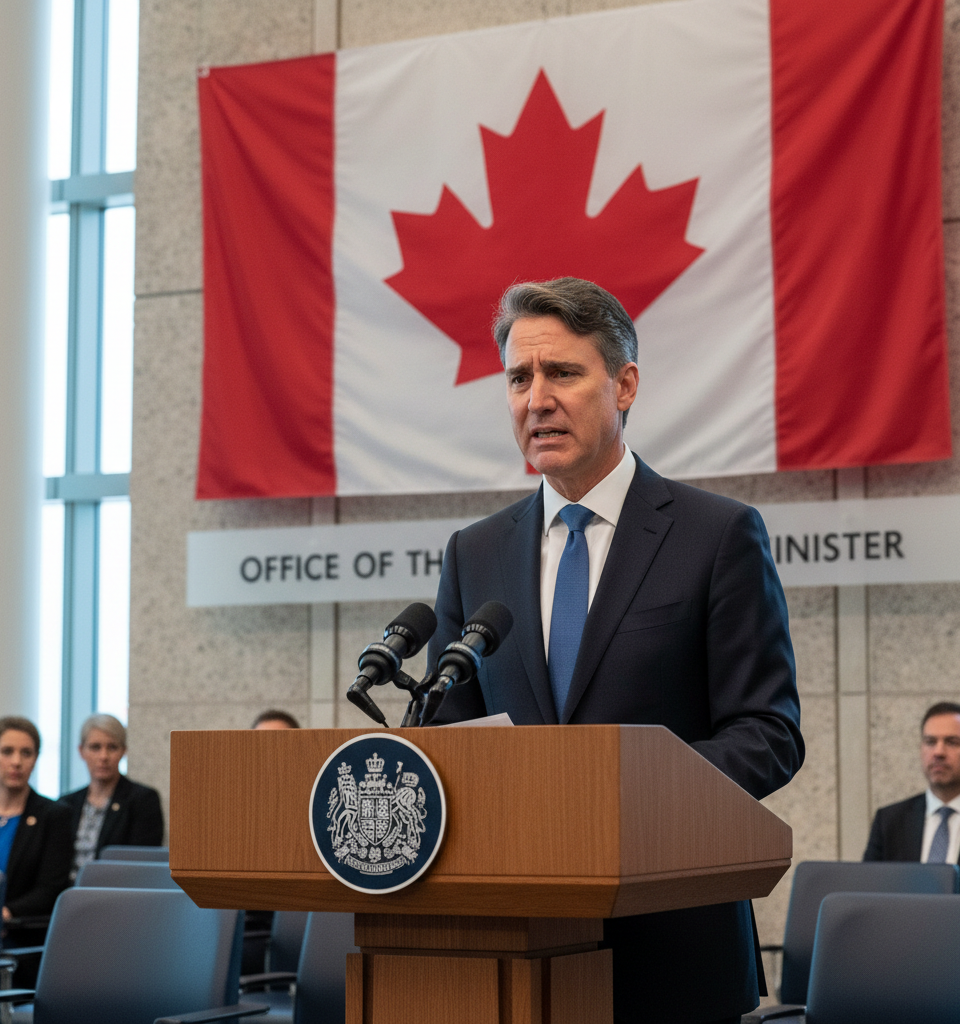
For decades, the Canada-U.S. economic relationship, epitomized by agreements like the North American Free Trade Agreement (NAFTA) and its successor, the United States-Mexico-Canada Agreement (USMCA), has been the bedrock of Canadian prosperity. Over 75% of Canadian exports typically flow to the U.S., translating to billions of dollars in trade annually and supporting millions of jobs. This deep integration has historically been championed as a competitive advantage. However, recent geopolitical shifts, protectionist tendencies in U.S. policy, and supply chain vulnerabilities exposed by global events such as the COVID-19 pandemic have prompted Ottawa to reassess this reliance. The Prime Minister's statement, "The U.S. has changed and we must respond," underscores a recognition that the foundational assumptions of this relationship are no longer fully valid.
Key Policy Implications and National Security Concerns The Prime
Minister's remarks extend beyond mere economic anxieties, encompassing broader considerations of national security and sovereignty. He explicitly linked the economic re-evaluation to "taking back control of our security, our borders and our future," suggesting an integrated approach to national well-being. This implies a potential diversification of trade partners, de-risking critical supply chains, and fostering domestic innovation in key sectors. While specific policy actions remain to be fully delineated, this rhetoric signals a strategic intent to reduce Canada's vulnerability to external shocks and unilateral actions by its largest trading partner. This could involve targeted investments in domestic manufacturing, strategic resource development, and strengthening alliances with other like-minded nations.
Impact on Bilateral Relations and Trade
This re-framing of the Canada-U.S. relationship as a potential weakness could introduce new complexities into an already intricate bilateral dynamic. While collaboration on continental defense and certain environmental initiatives remains strong, the economic sphere may see a more assertive Canadian stance. Industries heavily reliant on cross-border supply chains, such as automotive, aerospace, and energy, could face pressure to diversify operations or re-evaluate their reliance on U.S. markets for specific components or sales. The rhetoric also hints at increased scrutiny of U.S. industrial policies, like the Inflation Reduction Act, which have raised concerns in Canada about their impact on Canadian industries and investment.
Expert Analysis and Economic Diversification Economists and geopolitical analysts are widely interpreting the Prime
Minister's statement as a pragmatic, albeit challenging, acknowledgment of evolving global realities. Dr. Anya Sharma, a trade policy expert at the University of Toronto, commented, "Canada's economic health is intrinsically linked to the U.S. market. However, the world has become more volatile, and relying on a single dominant partner, no matter how close, can expose a nation to undue risk. This move towards diversification is long overdue and strategically sound, though implementation will require careful navigation and significant investment." Analysts suggest that Canada will likely seek to strengthen trade ties with the European Union, Indo-Pacific nations, and even within the Commonwealth, aiming to reduce its current 75-80% trade dependence on the U.S. to a more balanced 60-65% over the next decade.
The Path Forward: Strategic Investments and Global Re-alignment
Looking ahead, Canada's strategic response will likely involve a multi-pronged approach. This will include significant investments in critical domestic industries, particularly in green technologies, rare earth minerals extraction, and advanced manufacturing, aimed at creating sovereign capabilities. Furthermore, intensified diplomatic efforts to forge new trade agreements and strengthen existing ones with non-U.S. partners will be paramount. Initiatives like the Canadian Indo-Pacific Strategy will gain renewed urgency. The coming months are expected to bring more concrete policy announcements outlining how Canada intends to de-risk its economy and secure its future in an increasingly fragmented global order, marking a pivotal moment in Canadian economic foreign policy.