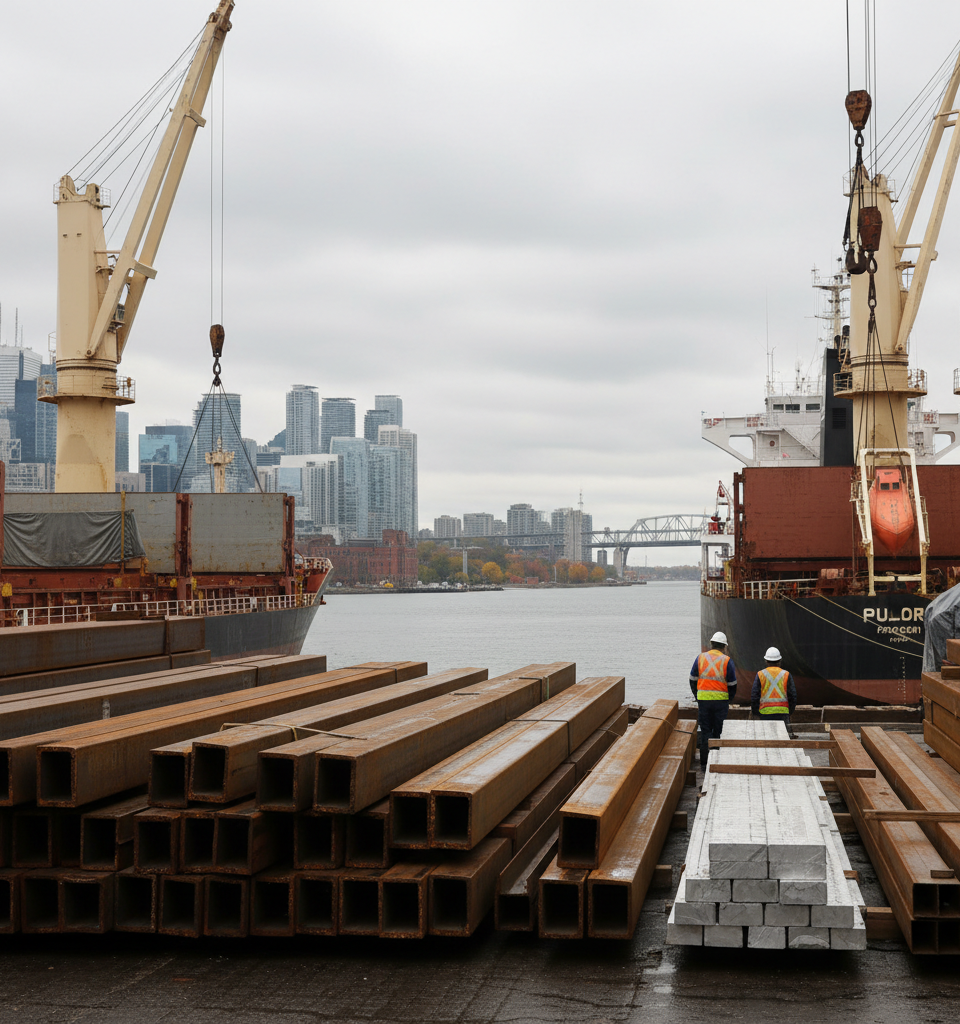
Global supply chain managers and procurement teams must factor in new import costs and potential disruptions as Canada prepares to impose tariffs on a broad range of US steel and aluminum products. These measures will directly impact cross-border sourcing strategies and material expenses for North American manufacturers.
Canada is set to implement retaliatory tariffs on a substantial list of US steel and aluminum products, with the measures taking effect on September 8. This move targets more than 300 metal product categories and their derivatives, specifically including high-volume items such as flat-rolled steel and aluminum bars. The impending tariffs signal a significant escalation in trade disputes between the two North American economic partners.
Context and Background of Trade Tensions
This action by Ottawa follows a period of increasing friction over metal imports, reflecting a tit-for-tat dynamic often seen in international trade disputes. The imposition of tariffs on such a wide array of products underscores Canada's firm stance against perceived protectionist policies from the United States. Historically, Canada and the U.S. have maintained one of the world's largest bilateral trading relationships, making such large-scale tariff actions particularly noteworthy and potentially disruptive.
The decision to target specific metal categories like flat-rolled steel, which is critical for automotive manufacturing and construction, and aluminum bars, vital for various industrial applications, suggests a strategic effort to exert maximum economic pressure. The selection of over 300 products indicates a comprehensive approach, designed to cover a broad spectrum of the US metals industry that exports to Canada.
Key Details of the Tariff Implementation
The tariffs are scheduled to commence on September 8, allowing a short period for businesses to prepare for the new cost structures. While specific tariff rates for each of the 300-plus items were not detailed in the original announcement, the sheer volume of products affected indicates a wide-ranging impact. Businesses involved in the cross-border trade of steel and aluminum will need to review their supply contracts and pricing models in anticipation of these changes.
The inclusion of both primary forms like flat-rolled steel and aluminum bars, alongside derivatives, suggests that Canadian authorities aim to cover the full value chain of targeted metals. This broad scope ensures that both raw material imports and processed metal products will face increased costs upon entering Canada from the United States.
Industry and Market Impact
The Canadian tariffs are expected to reverberate across several key industries. Manufacturers in Canada that rely on US-sourced steel and aluminum will face increased input costs, potentially affecting their competitiveness in both domestic and export markets. This could lead to price increases for end-products, or force companies to seek alternative, possibly more expensive, suppliers outside the United States. Conversely, Canadian metal producers may see an uptick in demand, benefiting from the reduced competitiveness of US imports.
In the United States, affected steel and aluminum producers could experience a contraction in their Canadian market share. The imposition of tariffs on such a wide range of products means that many US exporters will face higher barriers to entry into what has traditionally been a robust market. This could prompt US companies to explore new export markets or increase domestic sales efforts to offset the impact.
What's Next: Anticipating Future Developments
The implementation of these tariffs on September 8 will undoubtedly mark a new phase in Canada-US trade relations. The immediate aftermath will likely involve close monitoring by industry groups and government agencies in both countries to assess the economic consequences. It remains to be seen whether this move will prompt further retaliatory actions from the United States or if it will spur negotiations aimed at de-escalating the dispute.
Businesses are advised to conduct thorough analyses of their supply chains, assess the potential for increased costs, and explore mitigation strategies. The coming weeks leading up to the September 8 deadline will be critical for affected industries to adapt to the new trade landscape, preparing for potentially higher material costs and adjustments in sourcing strategies.