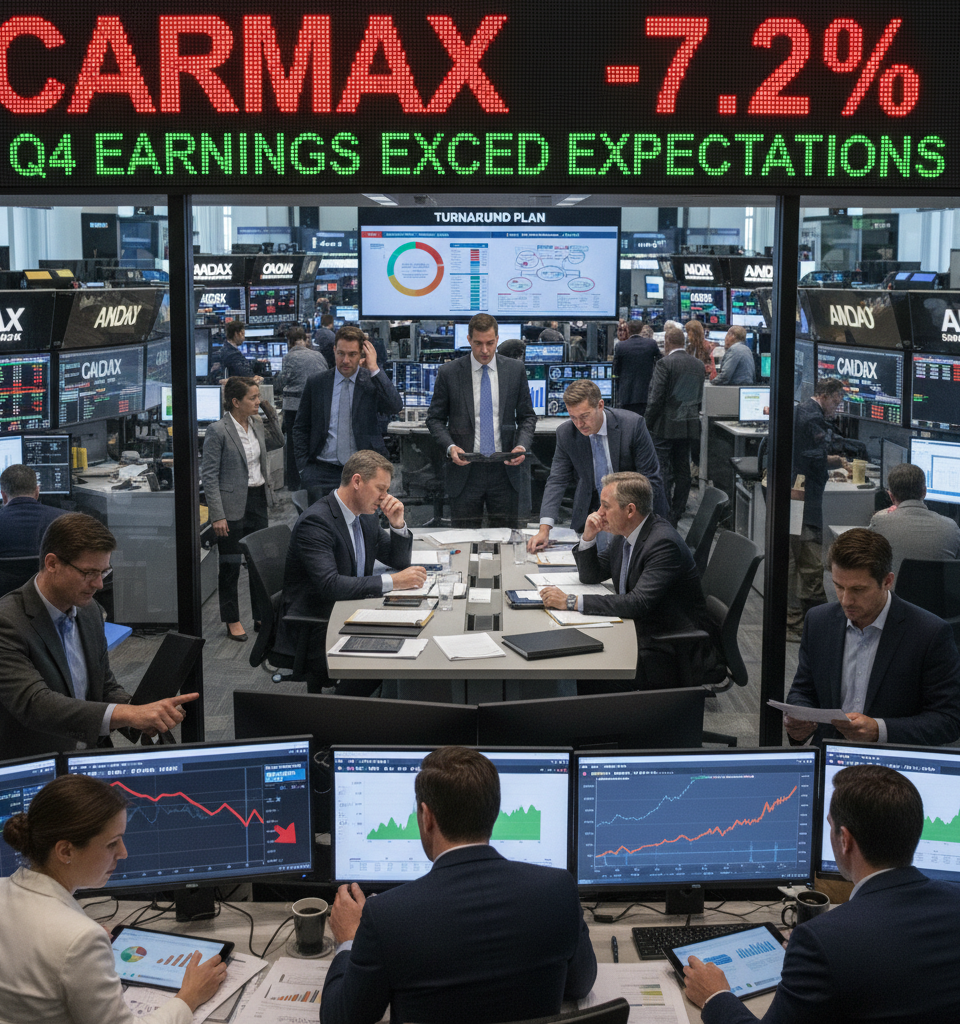
Shares of CarMax experienced a downturn following its recent earnings announcement, despite the used car retailer reporting figures that surpassed analyst predictions. The market's response underscores persistent skepticism regarding the long-term viability and effectiveness of the company’s current turnaround strategy under its chief executive. Investors appear to be weighing the reported beats against broader concerns about CarMax's ability to achieve sustainable growth and implement critical cost-cutting measures in an increasingly tough operating environment, marked by significant pressure on profit margins.
Context of Market Challenges
The used car market has faced considerable headwinds in recent periods, contributing to investor apprehension. Factors such as fluctuating consumer demand, inventory challenges, and shifting financing landscapes have created a complex sales environment. For a major player like CarMax, traditionally a bellwether for the sector, these broader market dynamics inevitably translate into intense scrutiny of its financial performance and strategic direction. The company's stock movement reflects a deeper concern than just the immediate earnings figures, gesturing towards structural challenges in its operating model amidst a less favorable economic climate.
CEO's Turnaround Plan Under Microscope
The strategic initiatives outlined by CarMax's CEO are central to the current investor sentiment. While the company has reportedly beaten earnings expectations, this achievement has not assuaged worries about the fundamental pillars of the turnaround plan. Key questions revolve around how effectively the plan can drive aggressive cost reductions and stimulate growth in unit sales and revenue. Analysts and investors are keenly observing whether the proposed strategies are robust enough to counteract the prevailing margin compression and restore investor confidence in CarMax's future profitability.
Industry-Wide Implications
CarMax’s performance often serves as an indicator for the broader used vehicle retail industry. The difficulties it faces, particularly concerning margin pressures, are not unique and are likely mirrored, to varying degrees, across the sector. A sustained period of uncertainty or underperformance from a market leader like CarMax could signal tougher times ahead for other participants, potentially leading to consolidation, revised business models, or increased price competition. This situation highlights the sensitivity of automotive retail to economic shifts and consumer spending habits.
Analyst Skepticism and Future Outlook
While specific analyst pronouncements were not detailed, the market's reaction clearly indicates a degree of skepticism. The focus for analysts likely extends beyond immediate quarterly results to the structural health of the business. Future reports will undoubtedly delve deeper into metrics such as inventory turns, average transaction prices, and, critically, gross profit per vehicle. The market will be looking for tangible evidence that the CEO's plan is not merely yielding short-term gains but is laying the groundwork for a resilient and profitable future for CarMax.
Path Forward for CarMax
Looking ahead, CarMax faces the significant task of demonstrating that its turnaround plan can deliver consistent, sustainable results. This will likely involve a continuous focus on operational efficiencies, innovative approaches to inventory management, and potentially a recalibration of pricing strategies to navigate the challenging margin environment. The company's ability to communicate clear milestones and progress against its strategic objectives will be crucial in rebuilding investor trust and proving its capacity for growth amidst enduring market pressures.